
Crohn’s & Colitis Center
Crohn’s & Colitis Center at UVM Health
At University of Vermont Health, we believe your health is our purpose. Inflammatory bowel disease (IBD) is a lifelong condition that needs ongoing care.
As an academic medical center, our multidisciplinary team offers advanced treatment in a compassionate and supportive environment. Through shared decision-making, we work with you to develop a comprehensive and personalized treatment plan that reduces your risk of complications and helps you live your healthiest life.

Why Choose UVM Health?
As the only comprehensive Crohn’s and Colitis care center in Vermont and northern New York, we offer:
- Integrated team-based care: Adult and pediatric gastroenterologists, surgeons, dietitians, pharmacists, nurses and psychologists collaborate to develop testing and treatment plans with your primary care and specialty care providers for seamless, person-centered care.
- Convenience: Our network of providers gives you access to IBD clinics throughout the region. Whenever possible, we schedule multiple appointments on the same day and offer telehealth options to bring expert care closer to home.
- Leading-edge treatments: We offer a range of options, including medications to reduce your need for surgery and access to clinical trials when appropriate.
A Message to Our Patients
At the UVM Health, our mission is to improve the health of our communities by integrating world-class patient care, education and research. We believe that your healthiest life is achieved through partnership.
As an academic medical center, we offer more than just treatment. We offer an integrated, multidisciplinary home. By bringing together gastroenterologists, surgeons, psychologists and dietitians, we ensure your care is seamless and personalized. Our commitment to research and clinical trials means you have access to tomorrow’s breakthroughs right here in Vermont and Northern New York, close to your home and family.
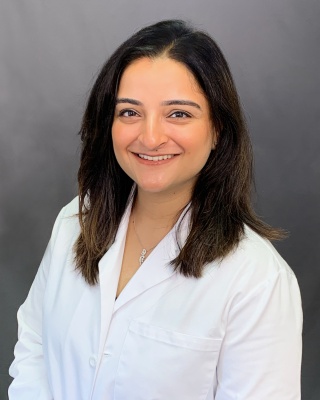
We are dedicated to working alongside you, using shared decision-making to navigate your IBD journey. Together, we are not just treating a condition, we are building a healthier community, one patient at a time. - Shruti Khurana, MD, Director of Crohn’s & Colitis Center at UVM Health
Conditions We Treat & Diagnose
Crohn’s disease can affect any part of your GI tract, causing abdominal pain, bloating, diarrhea and weight loss. Inflammation may extend through GI tract walls and cause inflamed pockets (abscesses) or holes (fistulas).
Inflammatory bowel disease (IBD), which includes ulcerative colitis and Crohn’s disease, is an immune-mediated condition that damages the gastrointestinal (GI) tract. Symptoms include abdominal pain, diarrhea, weight loss, bleeding in bowel movements and fatigue. IBD is often diagnosed by ruling out other conditions, so your provider may order tests including:
- Blood tests: Look for anemia and markers of inflammation
- Imaging tests: Identify areas of inflammation using CT or MRI scans
- Stool tests: Check for blood, inflammation or infection
- Biopsy: Your provider uses an endoscope (a thin, lighted tube with a camera at the end) to examine the inside of your GI tract. Small instruments passed through the endoscope take samples of abnormal tissue for analysis.
IBD can impact your daily life and affect other organs like skin, eyes and joints. Our gastroenterologists coordinate your care with specialists such as dermatology, rheumatology and ophthalmology across UVM Health.
Ulcerative colitis affects the large intestine (colon) and rectum. Symptoms include bloody diarrhea, abdominal pain, fatigue and weight loss. Inflammation is limited to the inner GI lining.
Microscopic colitis is inflammation of the large intestine (colon) visible only under a microscope causing frequent watery diarrhea, stomach pain, cramping, bloating, fatigue and weight loss.
Pouch-related conditions, such as pouchitis, cause diarrhea, bloody bowel movements, cramping and fatigue in patients who have undergone J-pouch surgery.
My care was fantastic! You all are great! You saved me and I thank you.
IBD Services
Dye-based chromoendoscopy is an endoscopic technique that allows better identification of cancerous spots in the esophagus, stomach or intestines, especially in long-term IBD patients.
A thin, flexible, lighted tube with a camera (colonoscope) is inserted into your rectum and colon to look for abnormal lesions or polyps. We use conscious sedation to ensure comfort.
A thin, flexible tube with a camera and tools is inserted through your mouth or rectum to remove abnormal tissue — like polyps or early cancers — from the lining of the digestive tract.
A gastrostomy tube (G-Tube) is placed through the belly into the stomach to deliver nutrition, fluids and medicine when you can’t eat or drink.
IBD affects physical and emotional well-being. Our GI psychologists offer cognitive behavioral therapy (CBT) and gut-directed hypnotherapy to help you manage IBD symptoms. We can also connect you to social work and behavioral health care within UVM Health.
Our registered dietitians (RDs) and registered dietitian nutritionists (RDNs) offer personalized nutrition plans, such as Crohn’s Disease Exclusion Diet (CDED), medical nutrition therapy and one-on-one counseling to help you manage your health and make positive lifestyle changes.
We can help you have a safe pregnancy. Our team works with UVM Health maternal-fetal medicine specialists to manage your care during pregnancy and childbirth.
We streamline your medication and insurance needs to ensure timely delivery of your prescriptions. Our dedicated IBD pharmacists handle insurance pre-authorizations, denial appeals, infusions and more.
Our GI pharmacist provides education about your medications and potential side effects. They can also teach you or a caregiver how to inject medications.
At UVM Health, we offer clinical trials of new therapies under development. Participation in a clinical trial is voluntary and can give you access to new care methods years before they are widely available.
We discuss surgical options with you if medicines no longer control inflammation or if complications develop. Our IBD gastroenterologists and colorectal surgeons work together to coordinate care before, during and after your procedure. When appropriate, we use minimally invasive (laparoscopic or robotic) techniques for a smoother recovery.
- Before surgery: We review your procedure, pain control, activity and diet. If an ostomy is possible, a certified ostomy nurse will mark the best stoma site and begin hands-on teaching to improve comfort, independence and pouch fit.
- During recovery: We follow an Enhanced Recovery After Surgery (ERAS) approach to help you recover sooner.
- Long-term follow-up: If you have a J-pouch, we provide pouch checks (pouchoscopy when appropriate) and support for pouchitis to improve your quality of life.
Your Surgical Options
Ulcerative colitis (UC): Surgery often involves removing the colon (colectomy) or colon and rectum (proctocolectomy). A proctocolectomy requires one of these options for waste elimination:
- Total proctocolectomy with ileal pouch–anal anastomosis (IPAA or “J-pouch”): The colon and rectum are removed and a new internal pouch is made from the small intestine so you can pass stool through the anus.
- Total proctocolectomy with end ileostomy: For patients who prefer an ostomy (an abdominal opening for waste) or aren’t candidates for a pouch, this is a safe, durable option — with full education and support from our ostomy nursing team.
After surgery, you may continue to take medications to manage disease progression.
Crohn’s disease:
- The diseased portion of the bowel is removed.
- Strictureplasty widens narrowed areas while preserving intestine length.
- Perianal disease procedures are coordinated with medical therapy to protect continence and reduce flares.
- Temporary or permanent stoma when needed to allow healing.
Children and teens with IBD have unique needs. At Golisano Children’s Hospital at UVM Health, we provide a family-centered approach that focuses on:
- Growth & development: We closely monitor bone health and physical growth to ensure IBD doesn't delay your child’s development.
- School support: Our team helps families navigate 504 Plans and school accommodations
- Pediatric nutrition: We offer specialized nutritional therapies, like Exclusive Enteral Nutrition (EEN), to help children reach remission without heavy steroid use.
- Transition care: Starting at age 12, we work with patients to build the skills they need to manage their own health. Our "warm handoff" process ensures a seamless transition to adult GI care at age 18 or older.
Patient Resources
- Crohn’s & Colitis Foundation: A non-profit dedicated to finding cures and improving quality of life for people with Crohn's disease and ulcerative colitis.
- ERAS Enhanced Recovery After Surgery Patient Guide: What to expect during and after surgery.
- Nutrition Services: Clinical nutrition, or medical nutrition therapy, can help treat and manage a range of health conditions through nutrition counseling and education.
- Ostomy Care: Our experienced ostomy care team will help you learn how to adapt your daily activities and care for your stoma. We are here to support you with the treatment and resources you need.
- Pelvic Floor Physical Therapy: Our team of pelvic floor specialists develop personalized, effective treatment plans to help relieve pain and other uncomfortable symptoms associated with pelvic floor problems.
Locations Near You
Share your location to see nearby providers and availability
133 Park Street
Second Floor
Malone, NY 12953-1244
111 Colchester Avenue
Main Campus, Main Pavilion, Level 5
Burlington, VT 05401-1473
77 Plaza Boulevard
Suite 101
Plattsburgh, NY 12901-6438
111 Colchester Avenue
Burlington, VT 05401-1473


