Pelvic Floor Therapy
Pelvic Floor Therapy at UVM Health
Your pelvic floor is the sling of muscles that supports your abdominal and pelvic organs and controls your bladder and bowels. Any problem with these important muscles can affect your bladder, bowel and sexual function — and your overall quality of life.
At University of Vermont Health, we want to help you maximize your quality of life. We recognize that pelvic floor problems can be embarrassing or uncomfortable to discuss. Our team of pelvic floor specialists listens to you closely, answers your questions and treats you with respect and compassion. We develop personalized, effective treatment plans to help relieve pain and other uncomfortable symptoms associated with pelvic floor problems.

Why Choose UVM Health?
As one of the leading rehabilitation programs in the region, we offer:
- Care close to home: We offer pelvic floor rehabilitation services in multiple locations throughout Vermont and northern New York, providing you easier access to expert care.
- Specialized skills: Our physical therapists have specialized training in pelvic floor physical therapy. We commit to high-quality treatment, continually bringing you the latest techniques and tools.
- Patient-centered treatment: We listen to your concerns and create care plans customized to your goals. We work to make sure you understand your treatment and feel equipped to actively participate.
Conditions We Treat
Pelvic floor dysfunction occurs when you have trouble contracting or relaxing your pelvic floor muscles. Pelvic floor physical therapy is the primary treatment for pelvic floor dysfunction.
Problems with the pelvic floor often develop in people recovering from childbirth, pelvic surgery, a traumatic injury or radiation therapy. Anyone can experience pelvic floor dysfunction. Symptoms of pelvic floor dysfunction may include:
- Abdominal, pelvic, tailbone, rectal or groin pain
- Constipation or trouble controlling your bowels (incontinence)
- Difficulty exercising due to incontinence or pelvic pain
- Inflammation and pain starting in the prostate gland (prostatitis)
- Instability or pain in your sacroiliac joint (the joint connecting your pelvis and lower spine)
- Low back or hip pain
- Pain during or following sex, or other problems with sexual function
- Painful periods
- Pelvic organ prolapse (one or more of your pelvic organs slips from its usual position)
- Pelvic pain with sitting
- Urinary problems, including pain, hesitancy, urgency or frequency
- Weakness before or after childbirth
Physical Therapy for Endometriosis
“All of our clinicians have been told that physical therapy is life-changing.” Elizabeth Baugh, DPT, shares how she and other physical therapists help patients with endometriosis find relief and support when recovering from surgery or managing chronic pelvic pain.
What to Expect
During your first visit, a pelvic floor therapist will ask you about your symptoms, health history and goals for treatment. They may examine your pelvic floor internally and externally. They will use imaging tests or other tools to test your pelvic muscle strength and tension.
After your evaluation, your therapist will create a customized treatment plan that may include:
- Education: We help you understand how the pelvic floor muscles contribute to your bowel, bladder and sexual health. Your therapist may teach you techniques to reduce pelvic floor strain or identify foods in your diet that worsen bladder symptoms.
- Bladder and bowel training: Many people don’t know how to contract their pelvic floor muscles because they can’t see or feel them. Part of your therapy plan includes training to improve your ability to use your pelvic floor muscles.
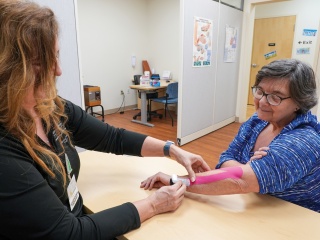
- Manual therapy: Your therapist may use manual techniques to reduce pain, improve movement and identify tender muscles and tissues. We often teach you manual techniques to practice at home.
- Therapeutic exercises: Some people have tight hip and trunk muscles along with overactive pelvic floor muscles. We may teach you exercises to help you relax these muscles and improve pelvic floor function.
Many people experience improvement after several weeks of outpatient pelvic floor therapy. Your exact timeline depends on multiple factors, including your symptoms and overall health. Eventually, the goal is to transition to at-home exercises and techniques to maintain your pelvic floor health.
Awards & Certifications
Academy of the American Physical Therapy Association
We are a member of the APTA for Pelvic Health whose mission is to advance global excellence in abdominal and pelvic health through evidence-based practice, innovative education, research and social responsibility.
Locations near you
Share your location to see nearby providers and availability
792 College Parkway
Fanny Campus, MOB, Suites 101 & 201
Colchester, VT 05446-3052
75 Beekman Street
Plattsburgh, NY 12901-1438
792 College Parkway
Fanny Allen, Medical Office Building, Suite 101
Colchester, VT 05446-3052
210 Cornelia Street
Suite 101
Plattsburgh, NY 12901-2318
1311 Barre Montpelier Road
Berlin, VT 05602
156 Main Street
Montpelier, VT 05602
87 Paine Mountain Drive
Northfield, VT 05663
187 Park Street
Malone, NY 12593