Magnetic Resonance Imaging (MRI)
Magnetic Resonance Imaging (MRI) at UVM Health
Magnetic resonance imaging (MRI) lets your provider see inside your body to identify a wide variety of possible medical problems, from diseases to injuries — all without exposure to X-rays. MRI uses a powerful magnet and radio frequency pulses to produce detailed images of your organs, soft tissues, bones and other internal structures for the accurate diagnosis and effective treatment of many conditions.
At University of Vermont Health, our American College of Radiology-accredited MRI program provides you with the highest quality imaging and care available.

Why Choose UVM Health?
Throughout our academic health system, we offer state-of-the-art magnetic resonance imaging capabilities, including:
- Leading-edge equipment: Our MRI program features the latest in technology, including a 3 Tesla (3T) Philips MRI scanner that produces higher quality images at faster speeds than most standard 1.5T MRI machines. We also operate a mobile MRI unit stationed inside a moveable trailer, allowing us to make our expert MRI services more accessible for patients across the region.
- Advanced MRI exams: We offer several MRI tests that study specific areas of the body, including breast MRI, cardiac MRI and neuroradiology procedures. UVM Health also features a dedicated functional MRI lab used to measure brain function in real time, which can aid with brain surgery planning or detection of neurological diseases like Alzheimer’s.
- Enhanced patient experience: For your comfort, some of our locations offer wide bore MRI scanners that have larger openings that make them less confining. Some types of MRI cannot be performed in wide bore MRI scanners.
- MRI for children: Golisano Children’s Hospital at UVM Health delivers expert MRI services in a child-friendly and family-centric environment designed to put you and your child at ease. Depending on patient needs, the hospital even offers some scanners that allow your child to watch entertaining movies or TV programs while undergoing their MRI procedure.
Conditions We Diagnose with Magnetic Resonance Imaging (MRI)
MR images provide different information than other imaging tests such as CAT or CT scans and ultrasounds. Sometimes, an MRI can show abnormalities not found by these and other imaging tests.
Your provider may order an MRI scan to diagnose a variety of health concerns, including:
- Sports injuries
- Heart diseases
- Tumors
- Spinal conditions
- Head and neck problems, including brain, ears and eyes
- Digestive organ conditions
- Pelvic conditions
What to Expect
Depending on the part of your body being imaged, you may be asked to not eat or drink for four to six hours prior to your exam. Because of the powerful magnet used in the procedure, for your safety you will need to remove any metallic objects such as jewelry, dentures or hearing aids before entering the scanning room.
The MRI unit is a large, cylinder-shaped tube surrounded by a circular magnet. You will lie on a motorized, moveable table that slides into the scanner. Your technologist will move the table to position the part of your body being imaged in the center of the magnet. Some examinations require the additional use of a coil — a piece of equipment that takes the images — to help improve image quality. The coil may surround the body part being imaged.
For certain types of MRI scans, some of our locations offer wide bore MRI scanners which feature a larger opening than traditional MRI scanners. These more accommodating systems are well suited for:
- Claustrophobic patients
- Pregnant patients
- Overweight or obese patients
The MRI machine makes loud thumping noises during the imaging process. You will be provided with ear protection to help reduce the noise and increase your overall comfort.
During the exam, you must lie still for approximately 30-45 minutes, depending on the type of MRI. Subtle movements can blur the MRI images, making it more difficult for the radiologist interpreting your test to provide an accurate diagnosis. To communicate with you, your technologist will talk to you throughout the examination using an intercom system. You can speak to your technologist as well if you have any questions or concerns.
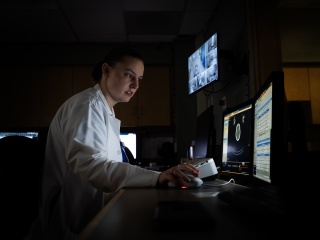
All UVM Health radiologists who interpret MRI exams have completed specific MRI fellowship training, ensuring your imaging test will always be read by a knowledgeable specialist.
View Your Radiology Images
MyChart is your personalized patient portal and keeps you connected to your imaging and radiology records — no matter where you are.

Awards & Certifications
American College of Radiology
Our MRI program meets the rigorous accreditation requirements of the American College of Radiology, ensuring excellence in everything we do, from performing safe operations to delivering outstanding patient care.
American Registry of Radiologic Technologists
UVM Medical Center MRI technologists hold credentials (or are eligible for them) from the American Registry of Radiologic Technologists (ARRT). This national credentialing body recognizes qualified imaging professionals who meet the highest standards of MR imaging practices in the care of patients.
Locations near you
Share your location to see nearby providers and availability
101 Adirondack Drive
Ticonderoga, NY 12883
192 Tilley Drive
South Burlington, VT 05403
111 Colchester Avenue
Main Campus, McClure, Level 1
Burlington, VT 05401
75 Beekman Street
2nd Floor
Plattsburgh, NY 12901
75 Park Street
Elizabethtown, NY 12932
118 Consumer Square
Plattsburgh, NY 12901
790 College Parkway
Fanny Allen Campus
Colchester, VT 05446-3013
111 Colchester Avenue
Main Campus, McClure, Level L
Burlington, VT 05401
133 Park Street
Malone, NY 12953-1241
130 Fisher Road
Berlin, VT 05602-9516