Computed Tomography (CT) Scan
CT Scans at UVM Health
Computed Tomography (CT) scans, also called CAT scans, use X-rays and advanced computer processing to create 3D pictures of cross-sections, or “slices,” of the inside of your body. CT scans capture detailed images to aid in the timely diagnosis and treatment of a variety of conditions.
Using a series of X-rays taken from many different angles, CT scans provide a comprehensive 360-degree view of almost every part of the body. Cross-sectional imaging allows us to painlessly detect bone fractures and abnormalities in your organs, tissues and blood vessels.

Why Choose UVM Health?
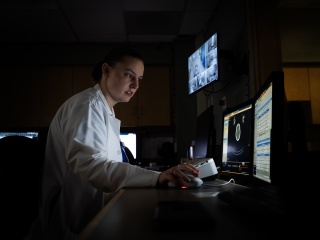
At University of Vermont Health, our comprehensive CT scanning service is available for both routine and urgent imaging needs in outpatient, inpatient and emergency department settings. Our expert radiology team is made up of certified technologists skilled in performing CT scanning procedures and knowledgeable radiologists who specialize in reading and interpreting CT exams.
Highlights of our CT scanning services include:
- State-of-the-art technology: The more slices, or images, a CT scanner can take, the greater the chances of uncovering the precise source of your medical condition. We use leading-edge CT equipment with capabilities ranging from 64-slice to 256-slice configurations to provide faster and improved imaging as well as lower-dose radiation exposure.
- Advanced cardiac imaging: Our comprehensive CT services feature sophisticated cardiac CT scans of your heart and blood vessels to diagnose a variety of conditions, such as coronary artery disease. Ultrafast CT scanning, which produces images of the beating heart and can reveal potentially harmful structural abnormalities and deposits in your coronary arteries, is also available at certain locations.
- Lung cancer screening and care: Our comprehensive lung care program includes sophisticated CT imaging for the detection and follow-up of many lung conditions, including lung cancer screening and follow-up.
- 24/7 emergency CT coverage: If a radiologist is not on-site to interpret a scan, we utilize a tele-radiology service for emergency CT scans. vRad is a U.S.-based service employing only ABR Board Certified radiologists.
Conditions We Diagnose with CT Scans
The detailed visualization of nearly every area of your body makes CT scans a valuable tool for quickly diagnosing disease or internal injuries from accidents, falls and other types of trauma. We routinely perform CT scans to detecting and guide treatment for a range of health issues, such as:
- Aneurysms
- Blood clots
- Bone fractures
- Cancer
- Heart disease
- Internal bleeding
- Tumors
What to Expect
Most CT scans don't require special preparation, but some do, depending on the part of your body being scanned.
Some exams may require the IV injection of a contrast agent to optimize the picture quality of vascular structures such as the arteries, liver, spleen, kidneys or bladder.
For CT scans of your abdomen or pelvis, you may need to drink a liquid preparation in advance of your appointment. For those and other CT scans, you may be asked to not eat or drink before the test and or undergo blood work. Be sure to follow any special instructions you receive from our radiology team.
Before the exam starts, you will need to remove all metal objects from your body, including jewelry, dentures, hearing aids and diabetic monitoring devices.
If you are pregnant, think you are pregnant or there’s a chance you could be pregnant, please notify the technologist before your exam.
During the CT scan, you will lie on a moveable table and be asked to hold still. The table will slide into the CT machine to find the right starting position. An X-ray tube (called the X-ray sensing unit) rotates within the CT machine and around your body. The table then slowly moves forward as the scanner takes pictures.
A computer analyzes and combines the x-rays to create 3D images with precise detail of the area of your body that was scanned. Your imaging results may be accessible via MyChart, your secure patient portal. Learn more about accessing your images
View Your Radiology Images
MyChart is your personalized patient portal and keeps you connected to your imaging and radiology records — no matter where you are.

Awards & Certifications
American Registry of Radiologic Technologists
At UVM Health, all of our state-licensed radiologic technologists have passed the rigorous requirements leading to American Registry of Radiologic Technologists (ARRT) certification.
Awarded by the world’s largest organization offering credentials in medical imaging, this globally recognized certification ensures that our staff is qualified to provide you with the highest standard of care. Many of our team members are trained in multiple radiologic specialties.
Locations near you
Share your location to see nearby providers and availability
101 Adirondack Drive
Ticonderoga, NY 12883
111 Colchester Avenue
Burlington, VT 05401
111 Colchester Avenue
Main Campus, McClure, Level 1
Burlington, VT 05401
75 Beekman Street
2nd Floor
Plattsburgh, NY 12901
75 Park Street
Elizabethtown, NY 12932
790 College Parkway
Fanny Allen Campus
Colchester, VT 05446-3013
111 Colchester Avenue
Main Campus, McClure, Level 1
Burlington, VT 05401-1473
133 Park Street
Malone, NY 12953-1241
130 Fisher Road
Berlin, VT 05602-9516
115 Porter Drive
Middlebury, VT 05753-8423