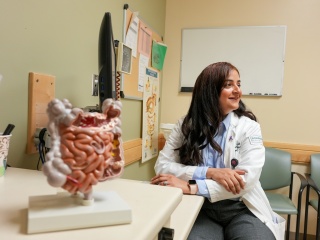
Gastroenterology & Hepatology
Advanced Care That Improves Your Quality of Life
Gastroenterology and hepatology specialists diagnose and treat conditions of the gastrointestinal tract (esophagus, stomach, small intestine and large intestine), pancreas, gallbladder and liver. Gastrointestinal (GI) conditions vary widely and can cause a range of symptoms that affect your quality of life.
At University of Vermont Health, you receive care from skilled, compassionate gastroenterologists. Our network of specialists gives you access to high-quality GI care, no matter where you live in Vermont or northern New York. Whether your condition is routine or complex, we provide comprehensive diagnostic testing and treatment. When possible, we offer digital health to bring convenient care to you.


Why Choose UVM Health?
We offer:
- Experienced professionals: Board-certified gastroenterologists across UVM Health have extensive experience diagnosing and treating GI disorders. If you need advanced care, you can access physicians specialized in complex GI conditions and endoscopic procedures not widely available throughout the region.
- Multidisciplinary team: Our gastroenterologists work with colorectal surgeons, radiologists, pathologists, pharmacists and nutritionists to deliver comprehensive care. We also partner with physicians in other specialty areas, including rheumatology, dermatology, pelvic medicine and oncology.
- Leading-edge research: As part of a health system anchored by an academic center, our physician-leaders participate in research and innovation to improve patient care. Your doctor may talk with you about participating in a clinical trial or research study.
Gastroenterology Services
Conditions We Treat
Our gastroenterology and hepatology specialists diagnose and treat a full range of conditions, including:
- Esophageal disorders: These disorders affect the tube that carries food from your mouth to your stomach, such as: Barrett's esophagus, eosinophilic esophagitis, esophageal motility disorders and gastroesophageal reflux disease (GERD).
- Gastrointestinal cancers: Cancer can affect any part of your gastrointestinal (GI) tract, including: Anal, bile duct, colorectal, colon, esophageal, gastroesophageal junction, liver, small intestine and stomach cancer.
- Inflammatory Bowel diseases: IBD, which includes ulcerative colitis and Crohn’s disease, is an autoimmune disorder.
- Celiac disease: Celiac disease is a problem some people have with foods that contain gluten which triggers an abnormal immune response.
- Liver diseases: These diseases can affect digestion, immune activity, blood clotting and can cause serious illness, including: Alcohol liver disease, autoimmune liver disease, cirrhosis, congenital liver diseases and metabolic dysfunction-associated steatotic liver disease.
- Pancreas, gallbladder & bile duct disorders: We offer advanced care to protect your health and relieve symptoms caused by pancreaticobiliary conditions, such as: Cholecystitis, pancreatic cysts, pancreatitis, sclerosis cholangitis and spinchter of oddi dysfunction.
- Stone diseases: Stones are hard formations, usually made of cholesterol, that can form in your gallbladder, pancreatic duct or bile ducts.
- Stomach disorders: Gastroparesis is a disorder in which the stomach takes too long to empty after eating resulting in bloating, heartburn and belly pain.
Treatments & Tests
At UVM Health, our gastroenterologists have extensive experience performing diagnostic tests and treatments. Our team of professionals works together to ensure your comfort and privacy.
Colonoscopy is the inspection of the entire large intestine (colon) using a long, flexible, lighted viewing scope, which is usually linked to a video monitor.
Colorectal cancer screening, such as colonoscopy or endoscopy, helps find cancer before symptoms develop, when it is usually easiest to treat.
Colorectal surgery treats colorectal cancer and other diseases of the anus, bowel and rectum, including the most complex colorectal conditions. Surgery restores colorectal function using leading-edge surgical techniques, including robotic surgery and minimally invasive procedures.
Endoscopy uses a thin tube equipped with a camera and tools to see inside your gastrointestinal tract, collect tissue samples and perform treatments.
Nutrition services provides clinical nutrition, or medical nutrition therapy, to help treat and manage a range of gastrointestinal conditions through nutrition counseling and education.
Patient Resources
- Getting Ready for Your Colonoscopy: UVM Medical Center patients should review important instructions for colonoscopy prep before your procedure. Learn more
Advancing Medicine & Quality of Care

Better care, advanced procedures and cutting-edge treatments for you and your loved ones.

Improving the quality of your care now and into the future by training the next generation of health care professionals.

Immediate access to new treatments before they are widely available.