Heart Failure
Heart Failure Care at UVM Health
Heart failure is a serious condition that happens when your heart can’t pump enough blood and oxygen to support the other organs in your body. As a result, your cells and tissues don’t get the oxygen-rich blood they need and can’t function as they should. You may feel weak, tired or dizzy, even during everyday activities.
More than 6 million adults in the United States have a diagnosis of heart failure. You can take steps to reduce your risk of developing heart failure. If you already have been diagnosed with heart failure, treatment and follow-up care can improve your quality of life.

Why Choose UVM Health?
At University of Vermont Health, we take a coordinated, team-based approach to caring for people with heart failure. Our network of providers gives you access to advanced heart specialists, so no matter where you live in Vermont or northern New York, you can get personalized care that helps you get back to doing the things you love.
We offer:
- Specialized experts: Our general cardiologists, advanced heart failure specialists, interventional cardiologists, cardiac electrophysiologists and cardiothoracic surgeons collaborate to make sure you get the very best care.
- Advanced treatment options: From consultations in the hospital to comprehensive cardiac rehabilitation, we provide a range of treatments to help you feel your best. When medications alone don’t manage heart failure, you have access to advanced devices, interventional procedures and surgeries.
- Care grounded in research: We participate in national clinical trials to establish new treatment options such as transcatheter aortic valve replacement (TAVR).
Who Is Most Likely to Develop Heart Failure?
Heart damage of any type weakens the heart muscle and can lead to heart failure. The most common causes of heart muscle damage include:
- Atherosclerosis or coronary artery disease
- Diabetes
- Heart valve disease
- High blood pressure
- Obesity
Some lifestyle factors also affect your risk of heart failure, including:
- A sedentary lifestyle
- Drinking alcohol excessively
- Eating a diet high in sodium, fat and cholesterol
- Smoking
- Illegal drug use
Types of Heart Failure
Heart failure does not mean that your heart has stopped beating. But it does mean that your heart can’t pump enough blood to meet your body’s needs. Heart failure can come on suddenly (acute) or develop over time and be long-lasting (chronic).
There are several types of heart failure, including:
Many people use the terms “heart failure” and “congestive heart failure” (CHF) interchangeably, but CHF is only one type of heart failure.
In congestive heart failure, blood flow out of your heart slows down. As a result, blood flow to your heart backs up and causes congestion, which can result in the buildup of fluid in the abdomen and legs. Congestive heart failure can be the result of left heart failure, right heart failure, valvular heart disease or a combination of these factors.
The lower left heart chamber (left ventricle) pumps blood out of the heart to the rest of your body.
There are two types of left-sided heart failure. Systolic heart failure occurs when your heart is not pumping well. Diastolic heart failure occurs when the heart is pumping normally, but stiff muscle walls prevent the heart from fully relaxing and filling with blood in between contractions.
The lower right heart chamber (right ventricle) sends blood to your lungs, where it receives oxygen.
Right-sided heart failure is when your right ventricle loses its ability to pump blood to your lungs as it should.
Heart valve disease occurs when one of the heart's valves is too narrow (stenotic) or leaky (regurgitant). This condition can contribute to the symptoms and progression of heart failure.
Symptoms of Heart Failure
When the heart muscle is weakened, its pumping action does not work as well as it should. As the body tries to make up for the reduced pumping action, it holds onto fluid to increase the volume of blood and the heart enlarges and beats faster. Over time, this causes symptoms to develop, such as:
- Shortness of breath when you exercise or lie down
- Need to sleep upright
- Frequent coughing or wheezing
- Swelling in the abdomen, legs, ankles or feet
- Rapid weight gain
- Chest pain
- Memory loss and feelings of confusion
- Fatigue
- Irregular or rapid heartbeats (palpitations)
- Loss of appetite or nausea
Wellness & Prevention
Evidence shows that proactive health care focused on preventing illness leads to better outcomes. We're here to help you live a healthier, happier life. We offer wellness and prevention services to empower you to take control of your health.

Diagnosing Heart Failure
Our cardiovascular specialists use a full range of cardiac imaging and stress testing tools to diagnose heart failure accurately and efficiently. Our wide-reaching network of locations means you receive expert diagnostic testing close to home, no matter where you live.
Heart failure evaluation and testing may include:
- Physical examination: Checks for risk factors such as high blood pressure
- Blood tests: Looks for chemical markers of congestive heart failure or other diseases that can lead to heart failure
- Imaging tests: Views your heart, lungs and blood vessels and look for fluid buildup, heart valve problems or detect if you’ve had a heart attack
- Electrocardiogram (EKG): Records your heart’s electrical activity and help identify heart damage that could've caused heart failure
- Echocardiogram: Creates a video image of your heart pumping blood and determine what type of heart failure you have
- Ejection fraction test: Measures how well your heart is pumping blood and determine the extent of heart failure to guide your treatment plan
- Stress tests: Show how your heart and blood vessels respond during exercise or in response to medications that stress the heart, helping to find out if blocked arteries are causing heart failure
- Coronary catheterization or angiogram: Identifies blocked or narrowed arteries using a long, thin tube (catheter), a special dye and imaging tools
Heart Failure Specialists
Most people receive heart failure treatment from a general cardiologist. If you need more advanced treatment, UVM Health has a full range of heart and vascular specialists, including:
These specialists focus on the most advanced therapies for people with congestive heart failure. These therapies may include cardiac catheterization to assess the heart function, implantable fluid monitors to more precisely manage fluids in the lungs, and cardiopulmonary stress testing to better define the heart's ability to keep up with blood supply during exertion.
Specialize in nonsurgical treatments such as angioplasty, stenting, and transcatheter valve therapies.
Provide treatments such as implanted pacemakers or defibrillators or correct heart rhythm problems.
Cardiothoracic surgeons have expertise in advanced open-heart procedures, such as coronary bypass and valvular heart surgery.
Our specialists take factors such as heart failure severity and your overall health into account when determining the treatment that’s right for you. We use a multispecialty approach that ensures you receive the most effective treatment for your symptoms.
ECMO is an advanced life-support treatment that temporarily takes over the work of your heart and lungs. Our team includes specialists in cardiac surgery, interventional cardiology, cardiovascular ICU, pulmonary critical care, ICU nursing, respiratory therapy, rehabilitation and perfusion.
At every step, from registration to recovery, my care team included me in every conversation and decision, which eased my fears.
Heart Failure Treatments
Heart failure treatment usually includes adjustments to your lifestyle. Lifestyle changes may improve your symptoms and prognosis. If you have mild-to-moderate heart failure, lifestyle changes may even relieve your symptoms entirely.
Your doctor may recommend:
- Achieving and maintaining a healthy weight
- Eating a heart-healthy diet that limits your intake of fats, cholesterol, salt and alcohol
- Exercising moderately most days of the week
- Quitting smoking
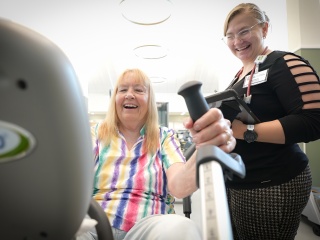
UVM Health's cardiac rehabilitation program offers individualized support and guidance for people who are making lifestyle changes to help with heart failure. Cardiac rehab can help speed up your recovery and reduce your chance of future heart problems.
There have been major advances in the medications used to treat heart failure over the past several years. Your provider may prescribe medications that target the underlying causes of heart failure, relieve symptoms and help heart function improve over time. In addition, diuretics (water pills) may be used to reduce swelling and fluid buildup.
You may need a procedure or surgery if an underlying condition, such as a blocked artery, is the cause of your heart failure. We offer several interventions to treat heart failure, including:
- Angioplasty and stenting: If blocked or narrowed arteries are causing heart failure, you may benefit from angioplasty and stenting. Your cardiologist inserts a catheter with a balloon into a blocked artery. They inflate the balloon to restore blood flow in the artery, then place a small mesh device (stent) to keep the artery open.
- Heart rhythm procedures: May treat advanced forms of heart failure by helping your heart keep beating as strongly as possible. These include:
- Implantable cardioverter-defibrillators (ICDs): Devices that monitor your heart rhythm. They can pace or shock your heart back to a typical rhythm if they detect irregularities. Your provider implants an ICD underneath your skin and attaches it to your heart with wires that sense your heart rhythm.
- Cardiac resynchronization therapy: Sends timed electrical impulses to both of your heart’s lower chambers. Your provider implants a pacemaker-type device with wires that connect to specific areas of your heart.
- Arrhythmia ablation: Treats heart rhythm problems such as atrial fibrillation, premature ventricular contractions and ventricular tachycardia. Your electrophysiologist uses catheters to induce small scars on the lining of your heart.
- Coronary artery bypass surgery: You may need bypass surgery if you have multiple blocked coronary arteries, the blood vessels that supply blood to your heart. Your provider uses blood vessels from other parts of your body to create new pathways for blood to flow.
- Implantable fluid monitors (CardioMEMS): This device senses the amount of fluid backed up in your lungs. Data is sent to your provider who can recommend adjustments to your diuretics so you can feel better.
- Left ventricular assist devices (LVADs): Implantable pumps that augment the pumping function of your heart. These are typically surgically placed at heart transplant centers. Your cardiologist can advise you as to whether this would be a good option for you and provide a referral.
Locations Near You
Share your location to see nearby providers and availability
62 Tilley Drive
Suite 101
South Burlington, VT 05403
118 Tilley Drive
Suite 102
South Burlington, VT 05403-4450
115 Porter Drive
Middlebury, VT 05753
75 Park Street
Elizabethtown, NY 12932
101 Adirondack Drive
Suite 1
Ticonderoga, NY 12883
78 Park Street
Elizabethtown, NY 12932
133 Park Street
Malone, NY 12953
130 Fisher Road
Berlin, VT 05602
210 Cornelia Street
Ste 104
Plattsburgh, NY 12901
62 Tilley Drive
Suite 101
South Burlington, VT 05403-4407