Diabetes Care at UVM Health
Diabetes occurs when your blood sugar (glucose) is too high. Your pancreas produces insulin, a hormone that helps glucose move from your bloodstream into your cells, where it’s converted into energy. If you, or your child, have diabetes, your body may not make enough insulin or use insulin properly.
This causes glucose to build up in your blood. Left untreated, diabetes can cause heart disease, kidney disease, organ and nerve damage, vision problems and other issues.

Why Choose UVM Health?
The endocrinology team at University of Vermont Health understands how diabetes can affect your life. We provide the latest treatments and comprehensive, compassionate care for all types of diabetes, including diabetes in children, at locations throughout Vermont and northern New York.
As one of the region’s leading diabetes programs, we offer:
- Skilled diabetes experts: You receive high-level care from fellowship-trained endocrinologists who specialize in diabetes. When appropriate, our team partners with your primary care physician and other specialists throughout UVM Health to provide comprehensive medical care.
- Diabetes education and support: Your care team includes nurses and dietitians who are also Certified Diabetes Care and Education Specialists (CDCES). These experts support your care and offer resources to help you understand and manage your condition.
- Range of diabetes services: We offer the latest treatments and devices, including on-site blood draws for A1C testing and other screenings at select locations, saving you a trip to a lab. This service provides immediate results, so our team can adjust treatments during your visit.
- Research-based care: We’re the only endocrinology team in the region that’s part of a health system anchored by an academic medical center. Our physicians lead research and clinical trials and train the next generation of endocrine disorder specialists.
Types of Diabetes
We diagnose and manage all types of diabetes, including:
- Type 1 diabetes: Your pancreas makes little (or no) insulin. Type 1 diabetes is an autoimmune disease that typically appears during childhood or young adulthood. But it’s possible to get a Type 1 diabetes diagnosis as an adult. Having a parent or sibling with the disease increases your risk.
- Type 2 diabetes: Your pancreas doesn’t make enough insulin, or your body can’t use insulin as it should. Type 2 diabetes is the most common type and affects people of all ages.
- Gestational diabetes: Gestational diabetes develops during pregnancy and usually goes away after childbirth. However, it increases your risk of Type 2 diabetes in the future. When needed, we partner with OB-GYNs to provide diabetes care during pregnancy.
- Latent autoimmune diabetes in adults (LADA): This slow-progressing form of Type 1 diabetes develops in adults who are 30 and older. Because this type occurs during adulthood, less-experienced clinicians may misdiagnose it as Type 2 diabetes.
- Maturity-onset diabetes of the young (MODY): An inherited gene change affects how your body uses insulin. This type typically appears before age 30.
- Type 3c diabetes: Damage to your pancreas from pancreatitis, cystic fibrosis, pancreatic cancer or pancreatic surgery affects the organ’s ability to make insulin.
Diabetes Symptoms
Signs of diabetes include:
- Blurred vision
- Extreme fatigue
- Frequent urination
- Increased thirst or hunger
- Slow-healing wounds or bruises
- Unexplained weight loss
Symptoms of Type 1 diabetes tend to develop quickly and are more severe. If you have Type 2 diabetes, symptoms may develop over time, or you may not experience symptoms at all.
Diabetes Risk Factors for Type 2 Diabetes
You are more likely to develop Type 2 diabetes if you:
- Are age 45 or older
- Are Black, Hispanic, Native American, Asian American or Pacific Islander
- Are overweight or obese
- Have a family history of Type 2 diabetes (parent or sibling)
- Have high blood pressure (hypertension), high cholesterol or polycystic ovarian syndrome (PCOS)
- Have a history of gestational diabetes or have given birth to a baby weighing more than 9 pounds
- Are not physically active
Supportive Care at Home
We provide support to families in Chittenden and Grand Isle counties caring for older adults and people with chronic conditions.

Diagnosing Diabetes
If your clinician thinks you may have diabetes, they will order blood tests to measure your glucose levels. Blood tests for diabetes include:
- A1C test: Measures your average glucose level over the course of two to three months. Our on-site A1C testing provides fast, accurate A1C readings.
- Fasting blood glucose test: Measures blood sugar after you’ve fasted (haven’t had anything except water) for at least 8 hours.
- Random blood glucose test: Measures blood sugar at any time, regardless of whether you’ve fasted.
Diabetes Treatment
Keeping blood sugar levels in a healthy range is key to preventing diabetes-related complications. Our comprehensive diabetes care approach centers on proven medical therapies, as well as ongoing education and support.
Depending on the type of diabetes you have, you may need to take insulin several times a day. Insulin therapies include:
- Insulin injections: You use a syringe or prefilled pen with a needle on the end to self-inject insulin into the fatty tissue under your skin.
- Insulin pumps: A small pump device placed under the skin on your upper arm or abdomen delivers insulin.
People who take insulin need to use a device to monitor their blood sugar levels. These devices include:
- Continuous glucose monitors (CGMs): A sensor placed under the skin on your upper arm or abdomen measures blood sugar 24 hours a day.
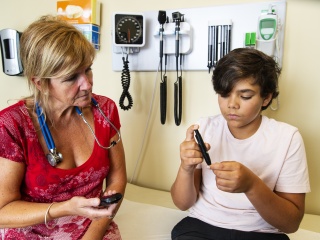
- Blood glucose meters: You prick your finger with a lancet (small needle) and place a drop of blood on a disposable test strip. The meter reads the test strip and displays your blood sugar levels.
Some CGMs work with insulin pumps, automatically sending insulin when blood sugar levels drop. With your consent, our team accesses data from your device to monitor your health. This technology can reduce in-person visits.
People with Type 2 diabetes may take diabetes medications as their only treatment or in addition to insulin therapies. These medications work in different ways to lower blood sugar.
- Oral medications: Lower the amount of glucose your liver produces or make it easier for your body to absorb and use insulin
- Non-insulin injectable medications: Help your pancreas make more insulin, which lowers your blood sugar
Our Certified Diabetes Care and Education Specialists (CDCES) help you confidently manage your condition. Our Diabetes Self-Management Education program is recognized by the American Diabetes Association (ADA).
Our diabetes education services include:
- Device assessments and training: We help you select a CGM or insulin pump based on your specific needs and comfort with technology. Our hands-on training ensures you’re successful at using your device. A member of our care team is available 24/7 to address any device issues.
- Digital health options: To streamline your access to diabetes care, we offer video visits for some medical appointments. You can also communicate with your providers and review your test results and other medical information through MyChart.
- Nutrition education and counseling: Many of our CDCESs are also registered dietitians who can help you make dietary changes to improve blood sugar.
- Support groups: We facilitate in-person and virtual support groups for people with diabetes and their loved ones.
Our Living Well With Diabetes class provides free in-person and online education sessions for newly diagnosed patients, as well as those who’ve had diabetes (any type) for years.
Our Certified Diabetes Care and Education Specialists conduct classes on:
- Lifestyle changes: How exercise and dietary changes affect blood sugar and diabetes
- Treatments: An overview of therapies, including insulin devices, glucose monitors and medications
Locations Near You
Share your location to see nearby providers and availability
62 Tilley Drive
Suite 202
South Burlington, VT 05403-4407
133 Park Street
Second Floor
Malone, NY 12953-1244
130 Fisher Road
MOB-A Suite 3-1
Berlin, VT 05602-9516
210 Cornelia Street
Suite 303
Plattsburgh, NY 12901-2318
111 Colchester Avenue
Burlington, VT 05401-1473