Pelvic Medicine & Reconstructive Surgery
Advanced Care and Compassionate Support
Incontinence and pelvic organ prolapse can limit your ability to lead an active lifestyle. These conditions may also be difficult to talk about and seek help for. At University of Vermont Health, we understand how these conditions impact your life. We’re here to help.
Our Pelvic Medicine and Reconstructive Surgery Clinic brings together a trusted team of professionals dedicated to helping you feel better. Our multidisciplinary specialists are experts at addressing complex pelvic conditions. Dedicated nurses and staff provide support and guidance and help you navigate care. Our strong commitment to diversity welcomes patients of all races, ethnicities, abilities, gender identities and sexual orientations.
Why Choose UVM Health?
We offer:
- Multispecialty care: Our clinic features skilled urogynecologists, urologists, colorectal surgeons and physical therapists who collaborate to provide the best possible care. Many of our physicians conduct research and train the next generation of experts.
- Clinical expertise: Our specialists have extensive experience treating common and complex pelvic conditions. We also offer treatment options when previous therapies have not been successful or for complications from prior surgery or radiation therapy.
- Welcoming environment: Every member of our team is dedicated to making you feel supported and safe. We spend time helping you understand your condition and choose the treatment that’s right for you.
- Convenience: For your convenience, we coordinate multiple appointments on the same day whenever possible. We also offer digital health visits to bring care to you.
Conditions We Treat
Our specialists treat a wide range of pelvic conditions, including:
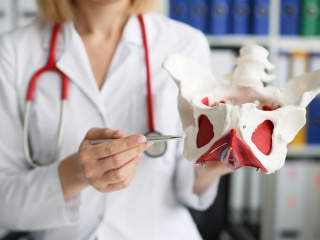
A network of muscles and tissues support the organs in your pelvic area, including your:
- Bladder
- Rectum
- Small intestine
- Urethra
- Uterus
- Vagina
These muscles and tissues can weaken due to childbirth, age and other causes. When they can no longer support the organs, pelvic organ prolapse occurs and one or more organs may sag and press into your vagina or protrude out of your vagina. In rectal prolapse, your rectum can protrude from your anus.
Pelvic organ prolapse can cause pelvic pain and problems urinating or defecating.
Urinary disorders are common in women. We provide specialized care for:
Urinary Incontinence
Urinary incontinence is a common condition that affects your ability to control your bladder. It includes:
- Stress incontinence occurs when you put pressure on your bladder, such as when you sneeze, cough or jog
- Urge incontinence is a type of urinary incontinence that creates a sudden urge to urinate, even if your bladder is not full. Overactive bladder is a type of urge incontinence.
Neurogenic Bladder
Your nervous system controls bladder function. Neurogenic bladder is a urinary condition that affects bladder control. It is caused by neurological conditions, such as:
- Multiple sclerosis
- Parkinson's disease
- Spinal cord injury
- Stroke
Recurrent Urinary Tract Infections
Urinary tract infections (UTIs) are bacterial infections that usually occur in the bladder or urethra. Most UTIs are easily treated. Your provider may refer you to our clinic if you have recurrent UTIs that do not respond to typical treatments.
Interstitial Cystitis
Interstitial cystitis, also known as bladder pain syndrome, is a chronic condition that causes bladder and pelvic pain and painful sex. You may also feel an urgent, frequent need to urinate.
Interstitial cystitis symptoms may go away for weeks or months, then return. These flares of symptoms may be associated with stress, foods, allergies and other health conditions.
Fecal incontinence is a lack of control over your bowel movements. Symptoms include leaking stool or not being able to make it to the bathroom in time. Fecal incontinence may be caused by:
- Lack of elasticity of your rectum, caused by inflammatory bowel disease or scarring from past surgery or radiation therapy
- Nerve or muscle damage from childbirth, past surgery, radiation therapy, frequent constipation or neurologic conditions
- Pelvic support problems, such as rectal prolapse (your rectum protrudes from your anus) or rectocele (your rectum bulges into your vagina)
Obstructive defecation is a type of constipation in which you are not able to empty your bowels. Straining, incomplete emptying and feeling blocked are common symptoms. Accidental bowel leakage can also occur.
Gynecologists in our clinic have focused expertise in treating vaginitis, an inflammation of the vagina or vulva caused by bacteria, yeast or other organisms. Symptoms, which typically include discharge, itching and pain, can be severe and recurring.
My doctor made me feel so comfortable discussing an uncomfortable health concern. I felt seen, heard and respected when she gave me clear information about next steps. I feel so much more hopeful now because of her care!
Diagnosing Pelvic Conditions
We understand the toll pelvic conditions can take on your health and well-being. At UVM Health, you can expect advanced care delivered with compassion. Our clinicians offer the latest diagnostic tools, treatments backed by medical research and care plans tailored to your individual needs.
Pelvic conditions are often interconnected and occur together. For example, pelvic organ prolapse can cause both urinary and fecal problems. Comprehensive testing helps us understand your complete condition.
Your initial consultation will start with a medical history and physical exam (which may include pelvic and rectal exams). Depending on your symptoms, we may recommend one or more tests, including:
- Anorectal manometry: This test uses a pressure-sensing tube with a deflated balloon attached to the end. Your clinician inserts this instrument into your rectum and inflates the balloon to stimulate your rectal muscles. The pressure sensors measure your muscle reflexes.
- Colonoscopy: Your clinician uses a thin, lighted tube with a camera to see the inside of your rectum and colon. If needed, a sample of tissue can be collected for laboratory analysis (biopsy).
- Cystoscopy: This test involves inserting a thin, lighted tube with a camera through your urethra into your bladder. Your clinician may collect a sample of tissue for laboratory analysis.
- Imaging tests: We use ultrasound, CT and MRI scans to view the urinary tract, reproductive organs, intestinal tract and rectum.
- Urodynamic testing: This series of tests measures bladder capacity, urine flow and how well your bladder empties urine. Our clinic is equipped with state-of-the-art urodynamic equipment to produce detailed measurements.
- Video urodynamics: In this test, we use X-rays to take a video of your bladder as it empties and fills. Our technicians may inject contrast or dye into your bladder through a thin tube (catheter) to obtain more detailed images.
Treatment for Pelvic Conditions
Our multispecialty team meets regularly to discuss complex cases and determine treatment options. Your clinician will explain your options and help you choose a treatment that meets your needs and preferences.
Treatments for pelvic conditions range widely depending on your condition and may include nonsurgical and surgical strategies.
Noninvasive or minimally invasive treatments are often effective and can help you avoid surgery. Examples include:
- Dietary changes to prevent or relieve symptoms. These changes may include consuming more foods with fiber to reduce constipation, eliminating foods that trigger interstitial cystitis or drinking more water to improve bladder health.
- Bladder or bowel training to improve your ability to hold urine in your bladder or have regular bowel movements.
- Pelvic floor physical therapy to strengthen your pelvic floor muscles and help you learn how to control urges to urinate or defecate.
- Pessaries, which are removable devices you insert into your vagina to provide support.
- Medications to fight infections, reduce inflammation and pain, soften stools, relieve constipation or relax overactive bladder muscles. Medications can also treat underlying causes of pelvic conditions, such as irritable bowel syndrome.
- Botox injections into the bladder wall or pelvic floor muscles to treat urinary incontinence and overactive bladder and to relieve pelvic pain.
- Bulking injections into the wall of your urethra or anus to plump up the tissue and prevent urine or stool leakage.
- Bladder instillations of medications to treat interstitial cystitis. Your clinician fills your bladder with medication using a catheter and lets it sit for a short period, then drains it.
- Sacral nerve stimulation, using a device that sends out electrical impulses to activate the sacral nerve, which controls urination and defecation. Your clinician implants the small device under your skin with wires that connect to your sacral nerve.
When surgery is your best treatment option, you are in skilled hands. Physicians in our Pelvic Medicine and Reconstructive Surgery Clinic are highly trained in the full range of surgical procedures for incontinence and pelvic support conditions. We can also:
- Repair complications from previous surgeries, including urethral sling repair and removal of mesh implants
- Perform surgery to correct problems resulting from surgical and radiation treatment for cancer
Surgeries range from minimally invasive to open procedures. Whenever possible, we offer the least invasive method to minimize pain and speed your recovery. Surgical approaches include:
- Transvaginal or transrectal surgery, which your clinician performs through your vagina or rectum
- Laparoscopic surgery, which uses a thin tube with a camera and small tools inserted through several small incisions
- Robotic surgery, a type of laparoscopic surgery in which your clinician robotically controls the instruments
- Open surgery, which uses a larger incision through your abdominal wall to reach your pelvic organs
The type of surgery you need depends on your condition. Your team will let you know what to expect with surgery and recovery and provide close follow-up care. We are with you at every step with reassurance and support.
Locations near you
Share your location to see nearby providers and availability
792 College Parkway
Fanny Allen, Medical Office Building, Suite 101
Colchester, VT 05446-3052