Arthritis & Joint Pain
Arthritis Care at UVM Health
Arthritis is inflammation in one or more joints. About one in four people in the U.S. has arthritis. For many, arthritis joint pain impacts both physical and mental health and limits daily activities.
At University of Vermont Health, we understand how arthritis can affect all areas of your life. Our compassionate providers take the time to understand your symptoms so they can make an accurate diagnosis.
We help you get the treatment you need to reduce joint pain and improve your quality of life.

Why Choose UVM Health?
We offer:
- Local expertise: Our network of primary care practices across Vermont and northern New York ensures you have access to skilled, patient-centered care, no matter where you live.
- Advanced care when needed: If you need specialty care, our rheumatologists are here for you with advanced diagnostics, leading-edge treatments and support. When possible, we offer digital health options to bring care to you.
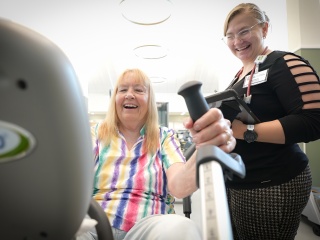
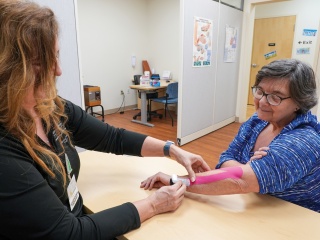
- Rehabilitation therapy: Physical and occupational therapy can help you move and function better. Our therapists create a personalized treatment program to meet your needs and goals.
Types of Arthritis and Joint Pain
Osteoarthritis is the most common type of arthritis. It occurs when the rubbery pad that cushions your joints (cartilage) breaks down over time, allowing your bones to rub together. Because this process is slow, osteoarthritis typically that worsens with age.
Inflammatory arthritis is the other main category of arthritis. In inflammatory arthritis, your immune system attacks healthy cells in your joints and other tissues and organs. Inflammatory arthritis can affect people of any age. Examples include:
Causes joint degeneration and may lead to a loss of function and deformity. Rheumatoid arthritis can affect multiple joints, such as the hands, wrists, knees and feet, and other tissues and organs.
Causes inflammation at the point where ligaments and tendons attach to bones (entheses). People with psoriatic arthritis may also have a scaly skin rash called psoriasis.
Causes inflammation, pain and stiffness in the joints of your spine and spine-pelvis (sacroiliac) joint. Ankylosing spondylitis can also affect other joints, such as your hips, knees and ankles.
Occurs in people with systemic lupus erythematosus, an autoimmune disease that causes widespread inflammation.
Results from the buildup of needle-like crystals in one joint — usually the big toe. These crystals cause pain, redness and swelling. In the late stages of gout, crystals can damage your joints and internal organs.
Usually occurs after a bacterial infection, such as chlamydia or salmonellosis. The main symptoms are joint pain, urinary problems and eye inflammation. Lyme arthritis is another type of reactive arthritis.
Includes several types of arthritis that occur in people who have autoimmune diseases of the gastrointestinal tract, including Crohn’s disease and ulcerative colitis.
Juvenile idiopathic arthritis (JIA), also known as juvenile chronic arthritis or juvenile rheumatoid arthritis, causes stiff, painful and inflamed joints. JIA includes six types of arthritis that occur in children.
Diagnosing Arthritis and Joint Pain
When you come to UVM Health, you have access to advanced tests and expert evaluations. Our providers ask about your medical history and symptoms and perform a thorough exam to understand your joint pain. Tests we use to diagnose arthritis include:
- Blood tests: Identify markers of inflammation and disease
- Joint fluid analysis: Looks for inflammation in the fluid between your joints
- Imaging tests: Using X-ray, ultrasound, CT or MRI scans, we to look at your bones, joints and internal organs
- Tissue biopsy: Collects a sample of tissue for laboratory analysis
Arthritis and Joint Pain Treatment
Arthritis is typically a chronic disease that requires long-term management and support. At UVM Health, primary care providers usually manage osteoarthritis. Rheumatologists treat forms of inflammatory arthritis.
Regardless of who manages your care, your provider gets to know you and your needs and preferences. They then develop a personalized treatment plan, which may include:
A healthy lifestyle can help improve arthritis symptoms. Your provider may recommend healthy lifestyle habits, such as:
- Exercising regularly
- Getting enough sleep
- Limiting alcohol use
- Maintaining a healthy weight
- Managing your stress
- Quitting smoking
Medications are a key part of arthritis treatment. Your provider may prescribe:
- Corticosteroids: Corticosteroids reduce inflammation and come in many forms, such as pills, creams you apply to your skin or joint injections.
- Disease-modifying antirheumatic drugs (DMARDs): DMARDs are effective treatments for inflammatory arthritis. DMARDs suppress your immune system to prevent attacks on healthy cells. They can reduce disease activity and help you achieve remission — a state of disease inactivity. DMARDs come in pills, injections or intravenous infusions.
- Pain medications: We use a range of medications to relieve pain, including nonsteroidal anti-inflammatory drugs (NSAIDs) and anti-seizure medications for chronic pain. If you have pain that does not respond to treatment, your provider may refer you to a pain management specialist.
Medication therapy for arthritis can be complex. Our rheumatologists work with pharmacists in the clinic to select the right medications and check for drug interactions with other drugs you are taking. Our pharmacists and nurses can help teach you about your medications and how to take them correctly.
Interventional Pain Management
When common pain relief methods such as pills, creams and physical therapy can't control your pain, interventional pain management may help. Our board-certified interventional pain management specialists use minimally invasive therapies to block the source of your pain and get you lasting relief.
Anchored by an academic medical center, our providers have access to the latest treatments for acute and chronic pain. We help you manage your pain so you can return to the activities you enjoy.
Learn more about Interventional Pain Management
Comprehensive Pain Program
The Comprehensive Pain Program at University of Vermont Medical Center can help you address your pain and find a greater sense of well-being. Our program is based on an integrative medicine model that combines a variety of therapies, such as acupuncture, Reiki and massage, in group and individual settings. Experts in specialized treatments come together to help you optimize your health and function.
Physical and occupational therapy can help improve your strength, range of motion and ability to perform daily activities.
If you have severe joint deterioration, surgery may be an option. Surgery can improve joint function, reduce pain and prevent further joint damage. Our orthopedic surgeons have extensive experience performing joint surgeries.
Wellness & Prevention
Evidence shows that proactive health care focused on preventing illness leads to better outcomes. We're here to help you live a healthier, happier life. We offer wellness and prevention services to empower you to take control of your health.

Patient Resources
- American College of Rheumatology: General information and advocacy about rheumatologic conditions.
- Arthritis Foundation: Research, advocacy and general information about arthritis.
Locations Near You
Share your location to see nearby providers and availability
75 Park Street
Elizabethtown, VT 12932
101 Adirondack Drive
Suite 1
Ticonderoga, NY 12883
187 Park Street
Suite 2
Malone, NY 12953-1233
1311 Barre Montpelier Road
Suite 400
Berlin, VT 05602
192 Tilley Drive
South Burlington, VT 05403-4440
1311 Barre Montpelier Road
Suite 400
Berlin, VT 05602
23 Pond Lane
Middlebury, VT 05753-2057
111 Colchester Avenue
Main Campus, East Pavilion, Level 5
Burlington, VT 05401-1473
130 Fisher Road
MOB-B Suite 2-3
Berlin, VT 05602-9516
76 McNeil Road
Suite 2
Waterbury Center, VT 05677-7162