Hip Injury
Hip Injury Care at UVM Health
Some hip injuries can happen suddenly, causing severe pain and stopping you in your tracks. Others develop over long periods of time, with progressively worsening symptoms. Whatever the root cause of your hip concern, our expert hip specialists can help.
At University of Vermont Health, your care team has specialized training in hip conditions and procedures. We deliver leading-edge therapies with skill and compassion, personalizing every treatment plan to your unique needs. When you choose our team, you gain access to some of the leading hip experts in Vermont and northern New York.
Why Choose UVM Health?
As one of the leading orthopedic programs in the region, we offer:
- Leading-edge techniques: Our hip specialists have the skills and expertise to offer a full range of treatments for hip injuries. From noninvasive injury management to advanced surgical options, we offer therapies to help you recover from an injury and get back to your usual activities.
- Thorough assessments: When you come to us for hip injury care, we ask you detailed questions about your symptoms, activity levels and past injuries to get to the root of the problem. These detailed assessments help us make an accurate diagnosis and formulate a personalized, effective treatment plan.
- Physician-researchers: As part of a health system anchored by an academic medical center, our physicians are active researchers involved in teaching and training to bring you the latest therapies.
Types of Hip Injuries
Our team diagnoses and treats the full range of injuries affecting the hip, including:
- Hip stress fractures: A stress fracture is an injury that develops slowly over time, usually due to repetitive force or overuse. These injuries often develop in young athletes who suddenly increase their activity levels or progress to more advanced sports.
- Hip tendon tears: Tendons are thick bands of tissue that connect muscles to bones. A tendon tear may affect your hamstring, the muscle running along the back of your thigh, or the large muscle running along the side of your hip. Tendon tears may occur as a result of a sudden traumatic injury, but they usually develop due to wear and tear over time.
- Hip impingement and labral tears: Hip impingement may occur when certain structures within your hip are pinched in specific positions. These structures include the cartilage and the labrum, which forms a suction seal around the hip. This impingement can be due to extra bone found on the ball or socket of the hip joint, or due to the alignment of the pelvis and hips. Many patients improve with conservative treatment and physical therapy, but some patients have persistent functionally limiting pain.
- Traumatic injuries: Trauma such as a car crash or skiing accident can lead to a hip fracture or other injury.
Diagnosing Hip Injuries
Our specialists provide thorough evaluations to uncover what’s causing your hip pain and help you find relief. We use whatever tools are necessary to diagnose hip injuries, including:
- Health history: Your provider will ask about your symptoms, including how long you’ve experienced pain, what worsens pain and what (if anything) relieves the pain. They'll find out more about your recent activities and whether you can point to an incident when pain started. Your provider will also ask about your family history, past injuries, activities and other health conditions.
- Physical exam: We thoroughly assess your hip, looking for pain, gait problems or tenderness. Depending on the injury, we may use hands-on tests that check your range of motion.
- Imaging: Imaging tests, like X-rays, allow us to look closely at your bones. Sometimes, conditions such as a stress fracture may not show up clearly on an X-ray. In these cases, we’ll also use MRI scans to get a detailed picture of your bones and soft tissues.
Hip Injury Treatment
We design personalized care plans to help you heal and relieve your pain. Your treatment plan will vary depending on you injury, but may include:
Some injuries, including stress fractures, typically require a strict period of no weight-bearing activity. You will need to use crutches for about four to six weeks until pain goes away. Some partial tendon tears may heal if you don’t put weight on the affected leg for a few weeks.
Pain relievers can reduce inflammation and discomfort while you heal. Many people benefit from over-the-counter pain medicines like acetaminophen and nonsteroidal anti-inflammatory drugs (NSAIDs).
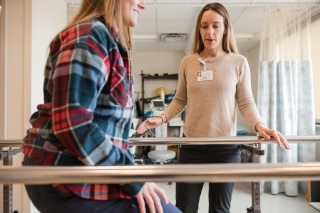
As your injury begins to heal, your doctor may recommend physical therapy to gradually increase your strength and range of motion. A physical therapist helps you safely regain function so you can return to your usual activities.
We may need to perform a tendon repair surgery for severe tendon tears. Some fractures may also require surgery to stabilize your hip bones with screws. We reserve this procedure for severe or very complex fractures.
Fall Prevention Resources
If you are concerned that you or a loved one may be at risk of a fall, explore our Fall Prevention Guide.

Locations Near You
Share your location to see nearby providers and availability
75 Park Street
Elizabethtown, VT 12932
101 Adirondack Drive
Suite 1
Ticonderoga, NY 12883
187 Park Street
Suite 2
Malone, NY 12953-1233
192 Tilley Drive
South Burlington, VT 05403-4440
1311 Barre Montpelier Road
Suite 400
Berlin, VT 05602
23 Pond Lane
Middlebury, VT 05753-2057
206 Cornelia Street
Suite 201
Plattsburgh, NY 12901-2779