Arrhythmia
Arrhythmia Care at UVM Health
An arrhythmia is an irregular heartbeat. It occurs when your heart’s electrical signals don’t work properly, causing a heartbeat that’s too fast, too slow or uneven. Arrhythmias often aren’t serious, but some can be severe and require evaluation and treatment by a skilled cardiologist.
At University of Vermont Health, our extensive team of cardiologists collaborates to bring you exceptional care for heart rhythm disorders.

Why Choose UVM Health?
The internationally recognized doctors in our Heart Rhythm Disorders Program provide comprehensive arrhythmia evaluations, accurate diagnosis and the latest treatment options. We support you every step of the way to help you live your healthiest life.
As one of the leading heart and vascular programs in the region, we offer:
- Expert physicians: As part of a health system anchored by an academic medical center, our physician-leaders are active researchers who train the next generation of experts.
- Advanced treatments: Whether you need cardioversion or a complex cardiac ablation, our highly trained heart and vascular team can help. Their involvement in clinical trials brings you the latest treatment options, sometimes before they’re widely available.
- Coordinated, convenient care: With our network of locations, you’re never far from expert heart and vascular care. If you need specialized treatment, we quickly coordinate referrals within UVM Health so you get the care you need, when and where you need it.
Types of Arrhythmia
Irregular heart rhythms can affect your heart’s upper two chambers (atria) or lower two chambers (ventricles). You’re more likely to develop an arrhythmia if you have underlying conditions such as heart disease, high blood pressure or obstructive sleep apnea. Some lifestyle choices, such as excessive alcohol use, can also increase your risk.
Tachycardia refers to a heart rate that’s faster than 100 beats per minute. A too-fast heartbeat can result from several types of arrhythmias, including:
- Atrial fibrillation: This arrhythmia occurs when the heart’s upper chambers contract irregularly, so the lower heart chambers don’t fill with blood as they should. Atrial fibrillation (AFib) can cause your heart to beat irregularly and rapidly.
- Atrial flutter: When damage or scar tissue blocks the electrical signal that tells your atria to beat, the upper heart chambers beat faster than the lower chambers. The atria may beat up to 350 beats per minute, resulting in atrial flutters.
- Sudden cardiac arrest: This serious condition occurs when the heart abruptly stops beating due to very rapid, irregular rhythms in your heart’s ventricles. Sudden cardiac arrest requires emergency medical care.
- Supraventricular tachycardia: This too-fast heartbeat starts just above the ventricles. It develops because of problems with the electrical signals that travel between the upper and lower heart chambers.
- Ventricular fibrillation: This arrhythmia is a medical emergency that occurs when the ventricles contract too quickly, and the heart is unable to pump blood as it should. Without treatment, ventricular fibrillation can be life-threatening.
- Ventricular tachycardia: This type of arrhythmia occurs when the lower heart chambers beat faster than the upper heart chambers. Over time, ventricular tachycardia can lead to ventricular fibrillation.
Bradycardia is a heartbeat below 60 beats per minute. Sometimes a slower heart rate isn’t a problem — many young or physically fit people have a naturally slow heart rate. But it can also point to problems with your heart’s electrical system. If you have a slow heart rate, your doctor can determine whether it’s normal for you or not.
Some arrhythmias cause the heart to beat out of sync, including:
- Premature contraction: When the electrical signal that starts the heartbeat happens too early, it leads to the sensation of a skipped heartbeat. Premature contractions are common, and you may have them along with another type of arrhythmia.
- Ventricular dyssynchrony: This arrhythmia occurs when the right and left heart ventricles don’t pump in the correct rhythm. Significant differences in your ventricles can cause your heart to beat inefficiently and may eventually lead to heart failure.
Symptoms of Arrhythmia
Many people with heart arrhythmias have mild symptoms or no symptoms at all. It’s common to feel as though your heart skips a beat every once in a while, but if you experience arrhythmia symptoms frequently, it could mean your heart isn’t pumping enough blood to your body. Call your health care provider if you experience symptoms such as:
- Chest pain
- Dizziness or lightheadedness
- Fainting or near-fainting spells
- Fatigue
- Fluttering sensations, heart palpitations or feeling like your heart has skipped a beat
- Shortness of breath
Diagnosing Arrhythmia
Our heart rhythm specialists use the latest cardiac imaging and stress testing tools to diagnose the root cause of arrhythmias. Our wide-reaching network of locations means you receive expert diagnostic testing no matter where you live.
Testing for heart arrhythmia may include:
- Echocardiogram: An ultrasound that evaluates your heart’s function and structure
- Electrophysiology (EP) study: A series of tests that use long, insulated electrical wires and electrical signals to assess your heart’s electrical activity
- Holter monitor: A small, wearable device with external wires and electrodes that records your heart’s rhythm over a period of 24 hours or longer
- Implantable cardiac event monitor: A small device placed beneath the chest that continually monitors your heart’s rhythm for up to three years
- Transtelephonic monitor (event recorder): A wearable device that allows you to record your heart rhythm when you feel symptoms of irregular heartbeats
- Stress test: A test that monitors your heart rhythm, blood pressure and breathing while you exercise or take a medicine that mirrors the effects of exercise
- Tilt-table test: Measures your heart rate and blood pressure while you lie on a table that moves your body from a laying position to an upright position
Arrhythmia Treatment
Cardiologists at UVM Health consider multiple factors, including the severity of your arrhythmia and your overall health, when creating a treatment plan. We work with you to find the treatment option that’s most effective for you.
Not all arrhythmias require treatment. For heart rhythm problems that don’t increase your risk of complications, your doctor may decide to monitor the arrhythmia. More serious arrhythmias may require medication or procedures.
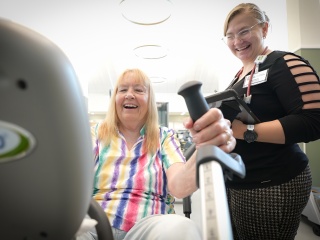
Your doctor may also recommend lifestyle changes that improve your overall heart health, such as exercise or eating a low-sodium diet. Our cardiac rehabilitation team can help you implement new habits that help protect your heart and support you along the way.
Your provider may prescribe medications to help your heart beat more regularly, including:
- Adenosine: Lowers your heart rate in emergency situations
- Antiarrhythmic medications: Control your heart rhythm
- Anticoagulants (blood thinners): Lower your risk of arrhythmia complications, such as blood clots
- Beta blockers: Helps relax your heart, lower your blood pressure and decrease your heart rate
- Calcium channel blockers: Controls your blood pressure and help your heart beat more slowly
- Digitalis (digoxin): Helps your heart beat with more strength and consistency
- Potassium channel blockers: Slows down the electrical signals that cause an irregular heartbeat
- Sodium channel blockers: Reduce your heart’s ability to send electrical signals and regulate your heart rhythm
Cardioversion uses an external shock to restore a normal heart rhythm. In emergency situations, cardioversion is called defibrillation, but you also may have a scheduled electrical cardioversion. During this procedure, your provider sends a few brief, low-energy shocks through electrodes placed on your chest.
A catheter ablation is a procedure to stop irregular electrical signals from traveling through your heart. During the procedure, your provider uses a flexible, insulated electrical wire threaded through a blood vessel and into your heart to deliver cold, heat or laser energy to the heart muscle. The energy creates a scar on your heart tissue that blocks faulty electrical signals.
Your doctor may recommend an implanted device to help your heart beat in a more typical rhythm. Implantable devices are typically placed under the skin and attached to the heart with small wires.
Our doctors have extensive skill and experience in helping people with arrhythmia using devices, including:
- Implantable cardioverter defibrillator (ICD): An ICD continually monitors your heart rhythm. If it detects an abnormal rhythm, it sends a small shock to your heart to restore a typical rhythm.
- Pacemakers: These devices send electrical pulses to keep your heart beating in a normal rhythm. Pacemakers can speed up a slow heart rate or slow down a rapid one.
- Biventricular resynchronization: Your provider implants a pacemaker that connects to both your ventricles. The device keeps your ventricles beating in proper rhythm.
- Physiologic pacing devices: These specialized devices connect to the fibers that carry electrical signals through your heart. The device sends electrical signals to these fibers to keep your heart beating in a normal rhythm.
If a pacemaker or ICD malfunctions or becomes infected, we may need to remove the wires (leads) that connect the device to your heart and replace them with new ones. Our surgeons and electrophysiologists are skilled at both minimally invasive and open-heart approaches for lead extraction.
If you have a family history of heart disease or arrhythmias, you may benefit from genetic screening. These blood tests look for genes associated with heart rhythm disorders. Based on your results, our providers offer guidance on lifestyle changes or other treatments to lower your risk of developing an arrhythmia.
We’re grateful for the expertise in adult cardiology, intensive care and children’s cardiology. They care for patients in a really human, compassionate way.
Wellness & Prevention
Evidence shows that proactive health care focused on preventing illness leads to better outcomes. We're here to help you live a healthier, happier life. We offer wellness and prevention services to empower you to take control of your health.

Locations Near You
Share your location to see nearby providers and availability
62 Tilley Drive
Suite 101
South Burlington, VT 05403
118 Tilley Drive
Suite 102
South Burlington, VT 05403-4450
115 Porter Drive
Middlebury, VT 05753
101 Adirondack Drive
Suite 1
Ticonderoga, NY 12883
75 Park Street
Elizabethtown, NY 12932
133 Park Street
Malone, NY 12953
78 Park Street
Elizabethtown, NY 12932
130 Fisher Road
Berlin, VT 05602
111 Colchester Avenue
Burlington, VT 05401-1473
210 Cornelia Street
Ste 104
Plattsburgh, NY 12901