Breastfeeding Support
Breastfeeding Support at UVM Health
Leading health organizations agree that breastmilk is the best source of nutrition for your baby. But breastfeeding isn’t always easy or possible. Many new parents need help getting started and continuing breastfeeding.
At University of Vermont Health, our teams are committed to providing the highest level of breastfeeding support. We provide personalized education, assistance and encouragement to help you meet your breastfeeding goals.

Why Choose UVM Health?
As leading pregnancy and childbirth experts in the region, we offer:
- Experienced professionals: Our obstetric teams include physicians, midwives, advanced practice professionals and nurses who provide breastfeeding support. Many have received specialized training to become certified lactation consultants and international board-certified lactation consultants (IBCLC).
- One-on-one support: We provide one-on-one care in the hospital to help you get a strong start breastfeeding. After you go home, we continue to support you. Digital health visits and home visits may be available, depending upon your location. We also offer a number of support groups and classes for breastfeeding.
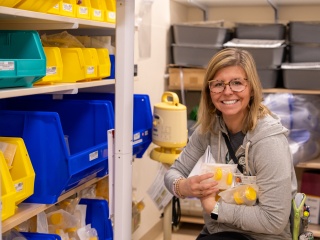
- Donor breast milk: Some UVM Health locations offer pasteurized milk from healthy human donors for newborns who need supplementation. This resource ensures your baby receives the nutrition they need and all the benefits of breast milk, without interruption.
Why Is Breastfeeding Important?
Experts recommend that babies receive breast milk exclusively during their first six months, when possible. Breastfeeding is also recommended as you introduce solid foods up to age one, and for as long as you and your baby wish.
Breast milk is tailored nutrition for your baby that changes to meet their nutritional needs. The antibodies in breast milk help your baby fight infections and prevent future illnesses.
Breastfed babies have lower risks of many health conditions, including:
- Asthma
- Ear infections
- Obesity
- Sudden infant death syndrome (SIDS)
- Type 1 diabetes
Breastfeeding is also beneficial for you. Parents who breastfeed have lower rates of breast and ovarian cancer, high blood pressure and type 2 diabetes.
Family Care at Home
We provide expert and compassionate at-home care and support services to pregnant people and new parents, as well as physical therapy and other supportive care for children and families in Chittenden and Grand Isle counties.

What to Expect
Our breastfeeding services start during pregnancy and continue after delivery, for as long as you need. They include:
Breastfeeding education is an important part of your prenatal care that helps you prepare and lets you know what to expect. Your obstetrician will talk to you about breastfeeding and breast pumps and provide information about breastfeeding classes.
Our lactation consultants also offer visits before delivery to talk about breastfeeding. This service is especially helpful if you’ve had problems breastfeeding in the past.
If you choose to breastfeed, we help you get started as soon as possible after delivery. Strategies we use include:
- Encouraging skin-to-skin contact immediately after delivery, which helps promote your milk supply
- Positioning your baby during breastfeeding so they can achieve a good latch
- Feeding or pumping eight to 12 times per day
Our lactation consultants can also help with specific challenges, such as breastfeeding:
- After a cesarean section (C-section)
- When your baby is in the NICU
- More than one baby
After you go home, we are still here to support you. We can connect you with breastfeeding support through with outpatient lactation support, such as your pediatrician, home health services, or local and national organizations.
We find that most breastfeeding concerns are temporary. But having a trusted expert at your side to see you through a particular challenge can make all the difference. Common breastfeeding issues include:
- Breast concerns, including pain, lumps, swelling and redness — with or without a fever
- Breast engorgement that lasts more than 24 hours
- Latching difficulties
- Painful or cracked nipples
- Slow infant weight gain
- Undersupply or oversupply of milk
Many parents want to continue breastfeeding after they return to work. Our lactation consultants can help you master pumping and storing milk. We can also help you establish a schedule that combines breastfeeding and bottle-feeding using breast milk.
Patient Resources
- University of Vermont Health Classes & Support Groups: Offers compassionate, expert guidance to help new and expectant parents feel confident and supported on their feeding journey
- Bright Future Lactation Resource Center: Information, handouts and articles about breastfeeding
- La Leche League: Helps parents, families and communities to breastfeed, chestfeed and human milk feed their babies through parent-to-parent support
- La Leche of New York: Helps people worldwide to breastfeed through support, encouragement, information and education
- La Leche of Vermont: A volunteer organization that provides breastfeeding information and support to those who want to breastfeed their infants
- New York Statewide Breastfeeding Coalition: The NYSBC is an organization made up of lactation consultants, health care providers, regional breastfeeding coalitions and the major statewide maternal and child health organizations
- Vermont Local Breastfeeding Resources: A collection of support group, online classes, resources and education
Locations near you
Share your location to see nearby providers and availability
353 Blair Park Road
Williston, VT 05495-7530
111 Colchester Avenue
McClure, Level 7
Burlington, VT 05401
115 Porter Drive
Middlebury, VT 05753
130 Fisher Road
2nd Floor
Berlin, VT 05602
75 Beekman Street
3 Main
Plattsburgh, NY 12901
111 Colchester Avenue
Main Campus, Main Pavilion, Level 4
Burlington, VT 05401-1473
206 Cornelia Street
Suite 105
Plattsburgh, NY 12901-2779
111 Colchester Avenue
Main Campus, East Pavilion, Level 4
Burlington, VT 05401
130 Fisher Road
MOB-A, Suite 1-4
Berlin, VT 05602-9000
130 Fisher Road
2nd Floor, Women & Childrens Unit
Berlin, VT 05602-9516