Adult Congenital Heart Disease
Adult Congenital Heart Disease Care at UVM Health
Adults with congenital heart disease were born with one or multiple heart defects. These are often complex conditions that have required surgery or other interventions through childhood and adulthood. Sometimes congenital heart disease is newly diagnosed as an adult.
These conditions are typically best managed by a team of specialists, interventional cardiologists and imaging specialists that can determine which treatment is right for you.

Why Choose UVM Health?
At University of Vermont Health, we take a coordinated, team-based approach to caring for adults with congenital heart disease. Our team is led by cardiologists with board certification in adult congenital heart disease, the only such team in the region. Our dedicated clinic includes a team of nurses, sonographers, radiologists, interventionalists and others with interest and experience with congenital heart disease.
As one of the leading heart and vascular programs in the region, we offer:
- Advanced treatment options: Our cardiologists offer long-term monitoring and management of congenital heart disease for all patients. For patients that require open-heart surgery or advanced percutaneous procedures, we work closely with our interventional cardiologists and cardiac surgeons, as well as those at other institutions, to provide the best possible care.
- Comprehensive care: The University of Vermont Center for Aortic Diseases is the only clinic of its kind in the region, bringing together a multidisciplinary team of vascular and cardiothoracic surgeons to diagnose and treat complex aortic disease.
- 24/7 rapid response: Our Extracorporeal Membrane Oxygenation activation system is an advanced life-support treatment we can mobilize within an hour for critically ill patients.
- Care grounded in the latest research: Our health system gives you access to leading-edge technology and advanced treatments, including promising new therapies through clinical trials when appropriate.
Types of Congenital Heart Disease
There are many types of congenital heart disease, including:
- Anomalous coronary arteries
- Anomalous pulmonary venous return
- Atrial septal defect (ASD)
- Atrioventricular septal defect
- Bicuspid aortic valve
- Coarctation of aorta
- Congenital valvular regurgitation
- Congenital valvular stenosis
- Ebstein anomaly
- Eisenmenger syndrome
- Interrupted aortic arch
- Single ventricle
- Tetralogy of Fallot
- Transposition of the great arteries
- Truncus arteriosus
- Ventricular Septal Defect (VSD)
- Patent Ductus Arteriosus (PDA)
- Patent Foramen Ovale (PFO)
Diagnosing Congenital Heart Disease
Congenital heart disease can be diagnosed at any time: at birth, as a child or even well into adulthood. When congenital heart disease is suspected by physical exam or through other routine testing, our board-certified adult congenital heart disease cardiologists use a full range of cardiac imaging and testing to accurately diagnose the condition.
Congenital heart disease diagnosis and testing may include:
- Physical examination: Checks your heart and lung function
- Echocardiogram: Creates a video image of your heart pumping blood and determine what type of heart defect you have
- Electrocardiogram (EKG): Records your heart’s electrical activity and identify any abnormal rhythms and stress to the heart
- Cardiac MRI: Evaluates the structure and function of the heart and other organs in the chest cavity, including blood vessels
- Cardiac catheterization (angiogram): Can be used to identify blocked or narrowed arteries, measure pressures in the heart or lungs, or determine the amount of abnormal blood flow in congenital heart disease
- Cardiopulmonary exercise testing (CPET): Evaluates heart, lung and muscle function while you exercise on a treadmill or stationary bike
- Nuclear stress testing: Our cardiologists and radiologists use leading-edge diagnostic technology to create clear, detailed and high-resolution images of your heart. We are the only specialists in Vermont offering positron emission tomography (PET) nuclear cardiac studies.
Congenital Heart Disease Testing & Treatment
Adults with congenital heart disease typically require lifelong follow-up care to monitor overall heart health and complications that can arise long after a diagnosis or treatment. Congenital heart disease treatment includes both non-surgical and surgical interventions, as needed.
Our board-certified congenital heart disease specialists often use genetic testing to look for any differences in DNA that may affect your health. They are also experts in connective tissue disorders and aortopathies that often benefit from genetic testing. This genetic screening provides valuable information about your — and possibly your children’s — chances of having certain genetic conditions. It may help you and your provider take steps for prevention and early detection.
Interventional cardiologists and cardiac surgeons at UVM Health provide the latest treatments and therapies to repair congenital heart defects and restore normal blood flow. Not all defects can be treated surgically, so your doctor will work closely with our non-invasive cardiology, imaging and cardiac surgery experts to recommend the best therapy for you.
Congenital heart defects are typically treated with one of two surgical approaches.
- Catheter-based treatments: This treatment uses thin, flexible tubes called catheters to repair a heart defect. An interventional cardiologist inserts a catheter into a blood vessel in the groin and guides it to the heart using X-ray and ultrasound. Catheter-based treatments are frequently used for things like closing atrial septal defects or replacing heart valves.
- Open-heart surgery: This treatment involves an experienced cardiac surgeon opening the chest cavity to gain access to the heart and working directly with the muscle and valves. We work closely with academic medical centers in Boston, New York and Maine to perform some surgeries.
Our adult congenital heart disease team provides comprehensive pre- and post-surgical care. Priot to any surgery or intervention imaging, further testing may be needed to ensure any procedure is safe and effective.
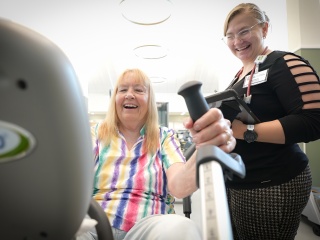
Regardless of where a surgery or procedure is done, UVM Health provides leading-edge post-procedure care including close follow up, imaging tests and a nationally recognized cardiac rehabilitation program, as needed.
We offer long-term disease management for patients. Monitoring consists of regular imaging tests and follow-up visits with your providers. For your convenience, many imaging tests can be done at UVM Health locations throughout Vermont and northern New York. We also offer digital health visits, both by video and by telephone, when medically appropriate.
Extracorporeal Membrane Oxygenation (ECMO) is an advanced life-support treatment that temporarily takes over the work of your heart and lungs. Using a specialized machine, ECMO oxygenates your blood and returns it to your body — giving your organs time to heal.
Our multidisciplinary team includes specialists in cardiac surgery, interventional cardiology, cardiovascular ICU, pulmonary critical care, ICU nursing, respiratory therapy, rehabilitation and perfusion.
Locations Near You
Share your location to see nearby providers and availability
62 Tilley Drive
Suite 101
South Burlington, VT 05403
118 Tilley Drive
Suite 102
South Burlington, VT 05403-4450
75 Park Street
Elizabethtown, NY 12932
62 Tilley Drive
Suite 101
South Burlington, VT 05403-4407
133 Park Street
2nd Floor
Malone, NY 12953-1244
130 Fisher Road
MOB-A Suite 2-2
Berlin, VT 05602-9000