Pulmonary (Lung) Nodules
Pulmonary (Lung) Nodule Care at UVM Health
Pulmonary lung nodules are small, round or oval spots that appear in the lungs. Most lung nodules are not cancer. They may be caused by past infections, inflammation or other benign or non-cancerous growths.
Why Choose UVM Health?
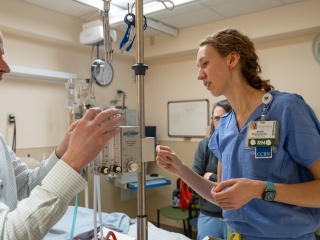
Pulmonary and critical care specialists at University of Vermont Health provide expert care for patients of all ages with lung and breathing problems. Our board-certified physicians provide high-quality care in both hospital and outpatient settings across Vermont and northern New York.
- Advanced technology: In collaboration with UVM Health radiologists, our pulmonologists and critical care physicians use advanced imaging technology to carefully evaluate lung nodules and other severe respiratory problems.
- Evidenced-based care: Our nationally recognized clinician-scientists conduct leading research on a wide range of pulmonary conditions. As a site for government and industry-sponsored studies, we offer patients access to promising clinical trials emerging therapies.
Symptoms of Pulmonary (Lung) Nodules
Most people with pulmonary lung nodules do not experience symptoms.
When symptoms occur, they are usually related to another underlying lung condition rather than the nodule itself. Possible symptoms include:
- Ongoing cough
- Shortness of breath
- Chest discomfort
- Fatigue
Diagnosing Pulmonary (Lung) Nodules
Your care team will start with a physical exam and a review of your medical history, including medications and recent illnesses.
Diagnostic testing may include:
- Chest X-ray
- Low-dose CT scan (often used for lung cancer screening)
- Diagnostic CT scan
Your clinician evaluates several features of the nodule, such as the size, shape, location and whether it changes over time. Based on these findings, recommendations may include:
- Watching the nodule over time with repeat CT scans
- Additional imaging, such as PET scans
- Biopsy or procedure to collect a tissue sample, in select cases
Pulmonary (Lung) Nodule Treatment
Treatment depends on the size, appearance and growth of the lung nodule.
Common approaches include:
- Active surveillance: Many nodules only need periodic imaging to monitor for changes.
- Treating underlying conditions: If a nodule is related to infection or inflammation.
- Minimally invasive procedures or surgery: Recommended when a nodule is suspicious for cancer or shows concerning growth.
If cancer is diagnosed, patients have access to a full range of advanced treatments, including surgery, radiation therapies and medical oncology care at our UVM Cancer Treatment Centers.
Locations Near You
Share your location to see nearby providers and availability
78 Park Street
Elizabethtown, NY 12932
111 Colchester Avenue
Main Campus, East Pavilion, Level 5
Burlington, VT 05401-1473
206 Cornelia Street
Suite 307
Plattsburgh, NY 12901-2779
32 Malletts Bay Avenue
Winooski, VT 05404-1959
130 Fisher Road
MOB C
Berlin, VT 05602-9516