
ECMO Program Offers Life-Saving Support for Heart and Lung Emergencies and Complex Cardiovascular Patient Care
UVM Medical Center’s Extracorporeal Membrane Oxygenation (ECMO) program expands options for life-saving care of critically-ill patients, as well as those with complex medical needs
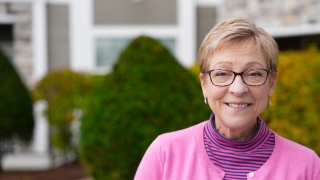
Burlington, Vt. – When Kathy Johnson of Williston learned earlier this year that she would need heart surgery to unblock her left coronary artery, she wasn’t surprised.
Johnson, a 65-year-old mother of two and now three-time grandmother, has dealt with a lifetime’s worth of serious medical issues, diagnoses and treatments with a take-on-all-comers attitude, starting at age 13, when she was diagnosed with Stage 4 Hodgkins Lymphoma.
“By my friends I’m known as a warrior, and I wear that title proudly,” said Johnson. “I think it’s different for everybody. But for me, I don’t want to just give up or sit in the corner and be sad. I chose to live as best I can, as positively as I can.”
Beating Hodgkins Lymphoma in 1973 through a combination of chemotherapy, surgery and radiation therapy was just the first step in what would become a complex medical journey that includes surviving breast cancer, coronary artery disease and numerous major heart and abdominal surgeries. This time, however, the challenge facing Johnson was not just enduring another high-risk, time-sensitive, life-saving heart procedure. It was finding a way to make the surgery possible at all.
“When I first met Kathy, I didn’t know what we would be able to do to help her. Her anatomy made operative intervention prohibitive,” said Monica McDonald, MD, a cardio-thoracic surgeon who ultimately performed Johnson’s latest heart procedure in partnership with interventional cardiologists Jan Denkmann, MD, and Harold Dauerman, MD. “That was devastating. She’s a young lady who wanted to enjoy her life. I then called Dr. Dauerman to see if there was some way we could figure out a plan to help her do that.”
Johnson’s arteries have calcified – a side effect of the relatively large doses of radiation she received five decades ago during her lymphoma treatment – which means they are stiffer and less able to expand and contract. This puts Johnson at higher risk for heart-related health issues while limiting the surgical techniques and life support systems that can be used during heart-related surgical procedures.
Ultimately, a team of surgeons and interventional cardiologists recommended a novel approach: Drs. McDonald, Denkmann and Dauerman would perform the procedure in the cardiac catheterization lab at UVM Health – University of Vermont Medical Center while using an advanced form of life support called Extracorporeal Membrane Oxygenation (ECMO).
ECMO is a form of temporary life support that acts as an artificial heart and lung for patients experiencing serious temporary cardiac and respiratory conditions. Blood is pumped outside of the body, where the machine removes carbon dioxide and then re-warms and sends oxygen-rich blood back to the body.
It was the first time the advanced life-support technology had been used in the hospital’s catheter lab.
“Kathy’s medical history is challenging and will help us pave the way forward and develop new heart team collaborations,” said Dr. Dauerman, director of interventional cardiology for University of Vermont Health. “Her case forced us to work as a team and come up with a creative solution. It really expands how the heart, anesthesia and perfusion teams use the latest technologies to treat our sickest patients.”
Keeping advanced, critical cardiopulmonary care close to home
Launched earlier this year, ECMO is a form of temporary life support that acts as an artificial heart and lung for patients experiencing serious temporary cardiac and respiratory conditions. Blood is pumped outside of the body, where the machine removes carbon dioxide and then re-warms and sends oxygen-rich blood back to the body.
The program includes both VV ECMO, which is life-support for patients experiencing respiratory failure, and VA ECMO, which is life-support for both cardiac and respiratory failure.
ECMO allows a patient’s heart and lungs to rest and heal while maintaining blood flow and lung function and can be used in the treatment of patients with conditions ranging from severe flu or pneumonia, heart attack, pulmonary embolism, asthma, trauma, harmful effects caused by swallowing toxic substances and more – as well as life support during surgical procedures and interventions.
The hospital’s ECMO team includes physicians from emergency care, critical care, and cardiology, as well as specialized nurses, perfusionists – who work with physicians to protect patients’ health during surgery and other medical procedures – respiratory therapists, and physical/occupational therapists.
Elizabeth Pocock, MD, a cardiothoracic surgeon and lead of the hospital’s ECMO program said the team’s multi-disciplinary approach reflects the system’s potential to be used to support patients with a wide variety of critical needs.
“This can help so many providers take care of their patients,” said Dr. Pocock. “And it has the potential to help patients recover from a serious traumatic event or life-threatening condition more quickly and help them avoid potential complications from long hospital stays or being bedridden for an extended period of time.”
University of Vermont Health – UVM Medical Center
111 Colchester Avenue
Burlington, VT 05401
###
About University of Vermont Medical Center
University of Vermont Health – UVM Medical Center is a 499-bed tertiary care regional referral center and Level I Trauma Center, providing advanced, specialized care to more than 1 million residents across Vermont and northern New York. Home to University of Vermont Cancer Center and University of Vermont Children’s Hospital, we serve as both a high-acuity referral hospital and a community hospital for approximately 150,000 residents in Chittenden and Grand Isle counties. As part of a rural academic health system, we are driving innovation in rural health care delivery, education and research in close partnership with The Robert Larner, M.D. College of Medicine and the College of Nursing and Health Sciences at the University of Vermont. Together, we are tackling health care’s toughest challenges while strengthening our communities — addressing critical needs that impact access, affordability and health outcomes.
About University of Vermont Health
University of Vermont Health is a rural academic health system with more than 100 years of service to small towns and cities across Vermont and northern New York. We are deeply committed to reimagining rural health in ways that will benefit our communities for generations to come and keep exceptional care close to home. Our system includes an academic medical center, two community hospitals, three critical access hospitals, a children’s hospital, a cancer center, a multispecialty medical group, 154 outpatient sites and care beyond the hospital through home health, hospice care, four skilled nursing facilities and other support services. Our care is informed by an essential partnership with University of Vermont’s The Robert Larner, M.D. College of Medicine and College of Nursing and Health Sciences. Together, as a health system serving a rural area, we are tackling health care’s biggest challenges — supporting the communities we serve and investing in our employees by addressing housing affordability, quality childcare and professional development needs. To learn more, visit us at www.uvmhealth.org