Positron Emission Tomography (PET) Scans
PET Scans at UVM Health
PET (positron emission tomography) is a nuclear medicine exam that safely uses radioactive drugs to produce 3D pictures of the inside of your body to identify problems caused by conditions such as cancer and heart disease when they are most treatable.
An important tool for determining the severity (staging) of a cancer diagnosis, PET scanning combined with CT scanning helps your provider find the exact location, size and shape of tumors to provide you with the best, most personalized care. Cardiac PET studies capture information essential to detecting heart abnormalities and are commonly used for nuclear stress tests to show blood flow in your heart at rest and during exercise.

Why Choose UVM Health?
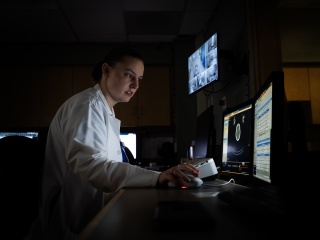
At University of Vermont Health, we use the latest PET machines and tracers to deliver accurate test results with faster scanning time and increase your comfort. Our experienced PET scanning team is made up of board-certified radiologists subspecializing in nuclear medicine and specially trained nuclear medicine technologists who skillfully perform diagnostic PET exams while keeping you as relaxed and comfortable as possible.
With the most comprehensive nuclear medicine program in the region, we offer:
- State-of-the-art technology: We use leading-edge digital scanning equipment that produces high resolution pictures, providing exceptional detail of tissues and body parts from your brain to your heart. Our certified nuclear medicine technologists expertly perform standard PET imaging tests as well as more sensitive PET/CT scanning exams that combine the benefits of these two imaging technologies in one single machine.
- Collaborative clinical care: Our nuclear medicine specialists partner with your cardiologist, oncologist or other medical team members to read and analyze your PET scan results ensuring you receive an accurate and careful diagnosis and treatment plan.
- Superior cancer staging: We use the latest tracers for PET/CT imaging, such as DOTATATE or PSMA, to better find cancer cells in your body. The more information we can provide about the stage of your disease, the better able you will be to make well-informed choices about next steps in your cancer treatment.
Conditions We Treat with PET Scans
PET scanning is an invaluable tool for identifying a variety of conditions, including:
- Cancer
- Heart disease (clogged arteries)
- Heart defects
- Inflammatory disorders
- Brain disorders (including tumors, Alzheimer’s disease and seizures)
PET scans provide key information that helps your provider make earlier diagnoses, leading to more effective treatment and better monitoring of your current therapies. This imaging method can also help you avoid more invasive exams or surgery.
What to Expect During a PET Scan
Be prepared to spend approximately two to three hours at your PET exam appointment.
In preparation for your PET scan, your technologist will inject a radioactive drug (tracer) through an IV into a vein in your hand or arm. You will rest comfortably in a reclining chair for 20 or more minutes to allow your body to absorb the tracer.
The PET scanner looks like a large cylinder-shaped tube, similar to a giant doughnut standing upright, with an opening in the center. You will need to lay flat on your back for 25 minutes on a moveable table that slides into the scanner. Some studies, such as those for melanoma (skin cancer), may take as long as 60 minutes.
If you are claustrophobic and need medication to help you relax, contact your primary care physician’s office. If you take any calming medications, you will need to have a responsible adult drive you home after your test.
The tracers used in PET scans expose you to low but safe amounts of radiation. Tell your provider if you have ever had an allergic reaction to tracer medications. Also inform the nuclear medicine team if you are pregnant or think you might be pregnant.
View Your Radiology Images
MyChart is your personalized patient portal and keeps you connected to your imaging and radiology records — no matter where you are.

Awards & Certifications
Nuclear Medicine Technologist Certification Board
UVM Health technologists who perform PET scans are certified by the Nuclear Medicine Technologist Certification Board, meaning they have met the rigorous standards of the specialty. Ongoing continuing medical education ensures our technologists are kept up to date on the latest nuclear medicine imaging techniques to provide you with the safest and highest level of care.
Locations near you
Share your location to see nearby providers and availability
111 Colchester Avenue
Main Campus, McClure, Level 1
Burlington, VT 05401
89 Plaza Boulevard
Plattsburgh, NY 12901
111 Colchester Avenue
Main Campus, McClure, Level 1
Burlington, VT 05401-1473
133 Park Street
Malone, NY 12953-1241
130 Fisher Road
Berlin, VT 05602-9516