Colorectal Cancer
Colorectal Cancer Care at UVM Cancer Center
Colorectal cancer is one of the most common cancers in the United States. It begins in the colon or rectum, and is highly treatable when found early.
Why Choose UVM Health?
As a leading gastroenterology program in the region, we offer:
- Expert, multidisciplinary team: Your care is delivered by specialists — including colon and rectal surgeons, medical and radiation oncologists, radiologists and pathologists — who work together to design a personalized treatment plan.
- Innovation: We participate in national cancer research networks and clinical trials that may offer you additional treatment options.
- Minimally invasive procedures: Robotic-assisted techniques allow surgeons to remove cancer through small incisions. This precision typically leads to a faster recovery with less pain and fewer complications.
- Patient-first philosophy: We tailor a treatment plan to your needs and goals. Supportive services include cancer rehabilitation, mental health counseling and integrative therapies such as yoga and acupuncture.
Colorectal Cancer Risk Factors
Most colorectal cancers occur in adults age 45 and older, but certain factors can increase risk:
- A diet high in red or processed meats
- Lack of physical activity
- Tobacco use
- Heavy alcohol use
- Obesity
- Personal or family history of colorectal cancer or polyps
- Inflammatory bowel disease (ulcerative colitis or Crohn’s disease)
- Certain inherited conditions, such as Lynch syndrome
Colorectal Cancer Symptoms
Colorectal cancer often develops slowly and may not cause symptoms at first. Commons symptoms include:
- Changes in bowel habits, such as diarrhea, constipation or narrowed stools
- Blood in the stool or rectal bleeding
- Stomach discomfort, including gas, cramps or pain
- Unexplained weight loss
- Fatigue or weakness
- A feeling that the bowel does not empty completely
These symptoms can be caused by conditions other than cancer, but it’s important to talk with your clinician if you notice any changes.
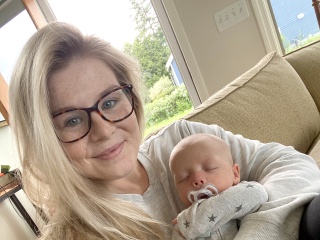
Sage's Story: Colorectal Cancer
31-year-old Sage Collins details her experience with colorectal cancer diagnosis and treatment at University of Vermont Cancer Center. "My care team was remarkable. They're so knowledgeable of my disease I felt like I didn't have to do any of the thinking."
Diagnosing Colorectal Cancer
Finding colorectal cancer early saves lives. Screening tests can detect and remove early cancers and precancerous polyps before they become cancer.
Diagnostic testing may include:
- Colonoscopy: Gold-standard test that allows doctors to view the colon and remove polyps during the exam
- Stool-based tests: Used to look for blood or abnormal DNA in your stool
- Imaging tests: CT colonography (virtual colonoscopy) may be used in some cases
- Biopsy: If a suspicious area is found, a small tissue sample is taken and examined under a microscope
Your care team will help determine which test is right for you based on your age, risk factors and symptoms.
Colorectal Cancer Treatment
Treatment depends on the type and stage of cancer and your overall health. Options include:
- Surgery: Often the first step for early-stage disease to remove cancerous tissue
- Chemotherapy: Helps stop or slow cancer growth, shrink tumors or ease symptoms
- Radiation therapy: Uses focused energy to destroy cancer cells and lower the chance of recurrence
- Targeted therapy: Also called precision medicine, uses biomarkers to destroy or slow the growth of cancer cells
- Immunotherapy: Helps your immune system better recognize and destroy cancer cells
- Supportive care: Includes nutrition counseling, symptom management, emotional support and coordination across UVM Health locations to help streamline
Clinical Trials
The UVM Cancer Center supports more than 100 active clinical trials focused on prevention, screening, treatment, supportive care and survivorship.

Locations Near You
Share your location to see nearby providers and availability
111 Colchester Avenue
Main Campus, East Pavilion, Level 3
Burlington, VT 05401-1473
75 Park Street
Elizabethtown, NY 12932
101 Adirondack Drive
Ticonderoga, NY 12883
111 Colchester Avenue
Main Campus, Main Pavillion, Level 2
Burlington, VT 05401
75 Beekman Street
Plattsburgh, NY 12901-1438
23 Fourth Street
Suite 1
Malone, NY 12953-1331
111 Colchester Avenue
Main Campus, Main Pavilion, Level 2
Burlington, VT 05401-1473
130 Fisher Road
Berlin, VT 05602-8132
23 Fourth Street
Suite 1 & 2
Malone, NY 12953-1331
130 Fisher Road, MOB-B
Suite 1-2
Berlin, VT 05602-9516