Shared PET Scanner Cuts Wait Times, Improves Access
A new regional approach to managing a shared mobile scanner is helping patients get faster answers.
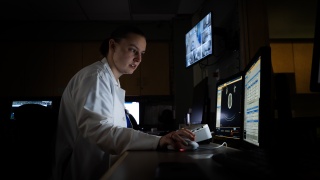
In rural communities, most hospitals do not have enough patient volume to support a full-time PET/CT scanner. Instead, they often rely on a mobile unit that travels between sites, bringing essential imaging services to communities that would not otherwise have access.
The challenge
But the shared model can make scheduling unpredictable. Weather, equipment issues, radioactive tracer availability and shifting patient volume can all disrupt access.
When access is impacted, delays have real consequences. Patients arrive early for morning appointments and others travel long distances only to face cancellations. Many depend on those scans to determine a diagnosis, show whether cancer has spread or treatment is working.
“If there is any exam that I absolutely do not want to cancel, it’s a PET exam,” says Kaela Bonesteel, director of radiology and CPS at UVM Health - Alice Hyde Medical Center. “Without it, patients can’t take the next steps.”
What changed
Radiology leaders across the region created a communication channel to coordinate use of the mobile scanner. If one hospital has a lighter schedule, another hospital with a backlog can use that time.
UVM Health - Champlain Valley Physicians Hospital also worked with Akumin, a provider of mobile imaging services, to add scan days and introduce a new digital PET/CT scanner shared across Alice Hyde Medical Center, UVM Health - Porter Medical Center and Adirondack Medical Center. That regional approach means patients outside UVM Health benefit from the same coordination.
If there is any exam that I absolutely do not want to cancel, it’s a PET exam. Without it, patients can’t take the next steps.
The impact
- Wait times at Champlain Valley Physicians Hospital were reduced from three to four weeks to about a week and a half.
- Additional scan days have been added for Alice Hyde, as needed.
- Up to 10 patients are now scanned per day at Alice Hyde.
- Fewer delays in cancer care throughout the region.
Why it matters
This approach shows how hospitals in a rural region can expand access by sharing equipment, staff support and information across sites.
Not every hospital can offer every service every day, but when teams stay connected, patients have more options and fewer delays.
“If we can keep patients closer to home, to their family, to the hospital that they know, that’s what matters most,” says Christa Magoon, the ultrasound and general diagnostics radiology manager at Champlain Valley Physicians Hospital. “We’re going to try everything that we can to make it easier for them.”