Rotator Cuff Injury
Rotator Cuff Injury Care at UVM Health
The rotator cuff is made up of the muscles and soft tissues that surround and stabilize the shoulder joint. An injury to your rotator cuff can cause dull, deep aches in your shoulder and interfere with your usual activities. You may experience arm weakness and pain that make it difficult to complete simple daily tasks, such as combing your hair.
Our shoulder experts offer specialized, effective treatment for rotator cuff injuries. At University of Vermont Health, we treat more patients with shoulder conditions than any other team in the region. You can trust our skilled, experienced team of orthopedic surgeons, sports medicine physicians and advanced practice professionals.

Why Choose UVM Health?
As one of the leading orthopedic programs in the region, we offer:
- Specialized expertise: Our sports medicine physicians and orthopedic surgeons have special training in rotator cuff injuries. We are experts in ultrasound-guided shoulder injections, which can effectively treat rotator cuff injuries.
- Patient-centered approach: We spend time with you to learn more about your concerns, personal goals and treatment preferences. Our care plans prioritize a nonsurgical approach, only turning to surgery when it’s the most effective choice.
- Research emphasis: As part of a health system anchored by an academic medical center, our physicians are active researchers, many of whom are training the next generation of experts. We are at the forefront of research into shoulder care.
Types of Rotator Cuff Injuries
Rotator cuff injuries are very common and more likely to occur as you age. They usually develop as the tissues in your rotator cuff wear down over time. Symptoms may worsen with certain activities, such as repetitive overhead movements or use beyond comfortable limits. Common types of rotator cuff injuries include:
- Bursitis: Inflammation in the small, fluid-filled sacs (bursae) that cushion the shoulder joint
- Tendinitis: Inflammation in the thick bands of tissue that attach muscles to bones (tendons)
- Rotator cuff tears: Tears in the tendons around the shoulder joint
Diagnosing Rotator Cuff Injuries
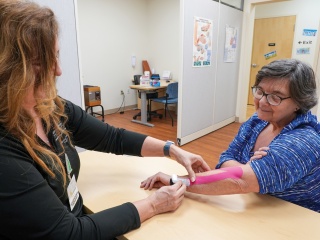
When diagnosing a rotator cuff injury, your provider will physically examine your shoulder. They may position your arm or shoulder a few different ways to look for signs of a rotator cuff tear. Then they’ll ask about your symptoms, including when they started, how they’ve progressed and what, if anything, relieves them.
They may also use imaging tests to get a closer look at your bones and soft tissues, including:
Rotator Cuff Treatment
We create personalized, effective care plans that prioritize your needs and preferences. Most people heal from rotator cuff injuries with nonsurgical treatment. Our specialists only recommend surgery when it’s the most effective option for you. Your treatment may include:
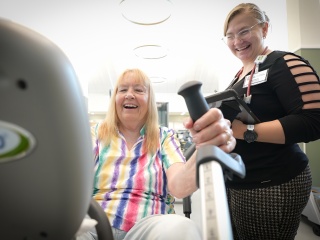
A physical therapist can teach you stretching and strengthening exercises. Physical therapy helps increase your shoulder mobility and strength.
Cortisone injections are an effective treatment for many people with rotator cuff injuries. Your provider uses ultrasound guidance to deliver cortisone directly to your shoulder joint. The injection helps relieve pain and inflammation and often speeds recovery.
If your symptoms don’t improve with nonsurgical treatments, your doctor may recommend shoulder arthroscopy. In this procedure, your surgeon uses small incisions and special surgical tools to repair damage in your soft tissues.
Your surgeon may also use arthroscopy to place a biodegradable spacer in your shoulder joint. The spacer helps relieve pain so you can participate in physical therapy as you heal.
Very rarely, people may need a shoulder replacement to treat severe damage in the rotator cuff. During a shoulder replacement, your surgeon removes the entire ball-and-socket joint of your shoulder and replaces it with artificial parts.
Locations Near You
Share your location to see nearby providers and availability
75 Park Street
Elizabethtown, VT 12932
101 Adirondack Drive
Suite 1
Ticonderoga, NY 12883
187 Park Street
Suite 2
Malone, NY 12953-1233
192 Tilley Drive
South Burlington, VT 05403-4440
1311 Barre Montpelier Road
Suite 400
Berlin, VT 05602
23 Pond Lane
Suite 100
Middlebury, VT 05753-2057
76 McNeil Road
Suite 2
Waterbury Center, VT 05677-7162
206 Cornelia Street
Suite 201
Plattsburgh, NY 12901-2779