Shoulder Arthroscopy
Shoulder Arthroscopy at UVM Health
Shoulder arthroscopy is a minimally invasive procedure that repairs damage in the shoulder joint. Your surgeon uses a long, thin tube with a camera (arthroscope) to access to your shoulder joint without making large incisions. You benefit from less pain and smaller incisions that lead to a faster recovery.
University of Vermont Health's fellowship-trained shoulder surgeons are among the most experienced specialists in Vermont and northern New York, performing hundreds of shoulder arthroscopies every year. Our team has the skill and experience to treat all shoulder concerns, from sports injuries to degenerative conditions.

Why Choose UVM Health?
As one of the leading orthopedic programs in the region, we offer:
- Advanced techniques: We are at the leading edge of shoulder treatment. As a UVM Health patient, you will receive advanced treatments, including arthroscopy, which require specialized skills and training.
- Patient-centered approach: We spend time with you to learn more about your concerns and preferences. Our treatment plans for shoulder conditions always prioritize a nonsurgical approach, and we only recommend surgery when it’s the most effective choice.
- Research emphasis: As part of a health system anchored by an academic medical center, our physicians are active researchers, many of whom are training the next generation of experts. We are at the forefront of research into shoulder care.
Conditions We Treat with Shoulder Arthroscopy
We use shoulder arthroscopy to treat a variety of conditions that cause shoulder pain. You may need a shoulder arthroscopy for:
- Dislocated shoulder: The ball and socket of your shoulder joint are forced out of their usual positions.
- Frozen shoulder: Inflammation in the tissues lining the shoulder joint causes progressive pain and immobility.
- Labral tears: The thick tissue that surrounds your shoulder socket (labrum) tears.
- Rotator cuff injuries: The muscles and tissues surrounding your shoulder become inflamed or injured.
- Shoulder fractures: One of the bones of your shoulder joint breaks.
- Tendonitis: The thick bands of tissue connecting muscle to bone (tendons) become inflamed.
What to Expect During Shoulder Arthroscopy
Before a shoulder arthroscopy, you will receive anesthesia to keep you comfortable and calm. You may have general anesthesia (where you remain asleep) or regional anesthesia (where you stay awake, but your shoulder is numbed).
During the arthroscopy, your surgeon:
- Makes a few small incisions around your shoulder joint
- Inserts the arthroscope through the incisions
- Uses video guidance to repair or remove damaged tissue
You can typically return home the same day as a shoulder arthroscopy.
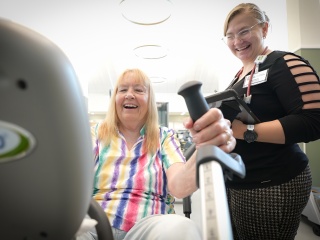
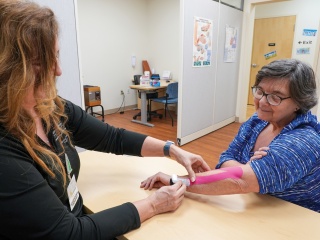
Your surgeon will discuss follow-up care and recovery with you before you go home. You may need to wear a sling or brace for a period of time. You may also benefit from physical therapy to strengthen your muscles and improve mobility during recovery.
Locations near you
Share your location to see nearby providers and availability
75 Park Street
Elizabethtown, VT 12932
187 Park Street
Suite 2
Malone, NY 12953-1233
192 Tilley Drive
South Burlington, VT 05403-4440
1311 Barre Montpelier Road
Suite 400
Berlin, VT 05602
76 McNeil Road
Suite 2
Waterbury Center, VT 05677-7162
206 Cornelia Street
Suite 201
Plattsburgh, NY 12901-2779