Meniscal Tear
Meniscal Tear Care at UVM Health
The menisci are C-shaped pieces of strong, protective tissue (cartilage) located on each side of the knee joint. They help cushion your knee and absorb shock. When you forcefully twist, pivot or rotate your knee, these pieces of cartilage can tear. In older adults, the meniscus can also tear as the cartilage wears out over time. Meniscal tears are common in athletes and people who enjoy outdoor activities like hiking and skiing.
At University of Vermont Health, leading sports medicine doctors, orthopedic surgeons and physical therapists — including physicians who volunteer with the U.S. Ski & Snowboard Team — bring you comprehensive, personalized treatments to help you heal from a meniscus tear.

Why Choose UVM Health?
Trust your care to some of the most experienced orthopedic experts in Vermont and northern New York. As one of the leading orthopedic programs in the region, we offer:
- Advanced imaging: Radiologists with fellowship training in musculoskeletal imaging use high-strength MRIs to evaluate meniscus injuries. This technique allows us to obtain higher-quality images, which are crucial for accurate diagnoses and effective treatment plans.
- Patient-centered approach: Your care team spends time with you to learn more about your concerns, goals and treatment preferences in order to create a personalized care plan. We always start with nonsurgical treatments and only recommend surgery when it’s the most effective option.
- Research emphasis: As part of a health system anchored by an academic medical center, our physicians are active researchers at the forefront of research into knee care to always bring you the most up-to-date treatments.
Symptoms of a Meniscal Tear
Meniscal tears frequently occur during sports and athletic activities, as a result of a quick pivot or tackle during a game. If you’re older and your knee cartilage has worn out, simply tweaking your knee as you stand up can tear the meniscus.
Some people feel a pop when they tear their meniscus. You can usually continue to bear weight, but over the next several days your knee will likely become more painful and swollen. You may also experience:
- Feeling that your knee is giving out
- Decrease in range of motion
- Locking or catching sensations in your knee
Diagnosing Meniscal Tears
To diagnose a meniscal tear, your specialist will physically examine your knee. They’ll ask about your symptoms, including when they started, how they’ve progressed and what, if anything, relieves them.
They may also use imaging to get a detailed look at your bones and soft tissues, including:
Meniscal Tear Treatment
Some meniscus tears heal with nonsurgical treatment, while others require surgery. Your care team creates a personalized treatment plan based on multiple factors, including the severity of your injury, your age and your activity level. Treatment may include:
Losing weight can reduce stress on your knee joint and help the tear heal. Our team may connect you with a weight loss coach who can help you lose weight safely and sustainably.
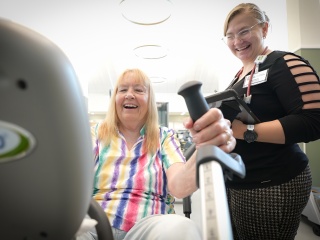
A physical therapist can teach you exercises that strengthen your knee and increase your range of motion. Physical therapy may be part of a nonsurgical treatment plan or may be used to increase stability and strength after meniscus surgery.
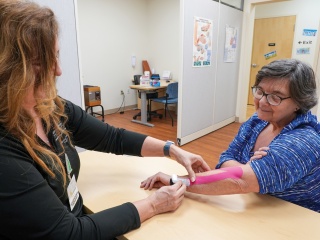
You may need to wear a knee brace or sleeve to increase stability. A brace can help you shift your weight and improve your knee alignment to improve symptoms while the tear heals. Your doctor may recommend wearing a brace along with other nonsurgical treatments such as weight loss, physical therapy or injections.
Our specialists provide several types of in-office injections. You may get a corticosteroid injection to reduce inflammation or a hyaluronic acid injection to relieve pain. Our sports medicine doctors also offer platelet-rich plasma (PRP) injections, concentrations of your own blood platelets that can help reduce inflammation and promote healing.
If nonsurgical treatment isn’t effective, you may be a candidate for meniscus surgery. Your surgeon may remove damaged tissue (meniscectomy) or repair your meniscus with stitches. In some cases, they may use a meniscus transplant to replace your meniscus with healthy donor cartilage.
Locations Near You
Share your location to see nearby providers and availability
75 Park Street
Elizabethtown, VT 12932
101 Adirondack Drive
Suite 1
Ticonderoga, NY 12883
187 Park Street
Suite 2
Malone, NY 12953-1233
192 Tilley Drive
South Burlington, VT 05403-4440
1311 Barre Montpelier Road
Suite 400
Berlin, VT 05602
23 Pond Lane
Middlebury, VT 05753-2057
76 McNeil Road
Suite 2
Waterbury Center, VT 05677-7162
206 Cornelia Street
Suite 201
Plattsburgh, NY 12901-2779