Pediatric Hematology & Oncology
Pediatric Hematology & Oncology at Golisano Children's Hospital
If your child has been diagnosed with cancer or a blood disorder, getting the right care is essential. You want the best treatment options from the best experts in the field, delivered with compassion.
We understand that a diagnosis affects the whole family. Pediatric patients are treated at Golisano Children’s Hospital at University of Vermont Health, where you’ll find caring staff and a warm, family-friendly environment.
Our pediatric hematology and oncology team offers exceptional care for all types of blood disorders and cancers that affect children during infancy, adolescence and young adulthood. Our specialists have deep expertise and access to the latest therapies backed by scientific research.

Why Choose Golisano Children's Hospital?
As one of the leading pediatric hematology and oncology programs in the region, we offer:
- Expert care: Your care team includes board-certified pediatric hematologist oncologists, pediatric oncology nurse practitioners and certified pediatric nurses. They provide the most up-to-date treatments, tailored for your child’s specific needs.
- Leading-edge treatments: As part of a health system anchored by an academic medical center, our physician-researchers lead and participate in clinical trials that give your child access to new therapies, sometimes years before they are widely available.
- Long-term follow-up: We monitor childhood cancer survivors for years to quickly identify and treat delayed side effects of treatment. We also educate your child on what to expect and help them navigate any obstacles that they encounter into adult life.
- Support services: Our caring team members have deep experience in and passion for providing comprehensive support for our young patients. You’ll find a wide range of wraparound services that cover everything from psychological support to help communicating with your child’s school.
Conditions We Treat
Types of cancer and blood disorders we evaluate and treat:
- Acute Lymphoblastic Leukemia (ALL)
- Acute Myeloid Leukemia (AML)
- Bleeding disorders
- Brain tumors
- Congenital and acquired cytopenias (anemia, neutropenia, thrombocytopenia)
- Disorders of hemostasis and thrombosis
- Hepatoblastoma/Hepatocellular carcinoma
- Histiocytic disorders (Langerhans Cell Histiocytosis)
- Other leukemias
- Lymphomas (Hodgkin and non-Hodgkin)
- Neuroblastoma (cancer that starts in nerve cells)
- Sickle cell disease
- Sarcomas (cancerous tumors involving the bones and soft tissues)
- Other solid tumors
- Thalassemia
- Wilms tumor
Diagnostic Services
We diagnose childhood cancers and blood disorders using several types of tests, including:
- Imaging studies: We use advanced technologies, such as PET-CT, MIBG and 3T MRI, to capture detailed images. 3T MRI scanners are faster and more powerful than standard MRIs. Our specialized pediatric radiologists interpret the results to provide the most accurate results.
- Lab testing: Diagnosis of a blood disorder or cancer is made using specialized laboratory testing. We may collect blood or a tissue sample (biopsy) for our pediatric pathologists — doctors who specialize in diagnosing pediatric disease — to look at the samples under a microscope and determine if a blood disorder or cancer is present. Additionally, we use genomic testing to find out if the tumor will respond to targeted therapy. This information helps us select the best treatment.
My advice to other families is to ask for help. Ask questions of the medical team, over and over, until you understand. Their patience is endless, and their compassion is sincere.
Child Life Program
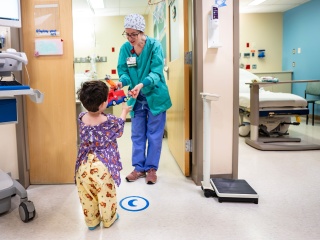
Medical care can be overwhelming for children. Our Child Life Specialists help your child cope with stress, prepare for procedures and understand their care. These highly trained specialists offer your family support as you navigate our health system.

Treatment
At Golisano Children’s Hospital, we treat your child and family like we would our own families. Your child receives an individual care plan designed to offer the most effective treatment based on their diagnosis.
We are a member of the prestigious Children’s Oncology Group, an international research organization affiliated with the National Cancer Institute, as well as the New England Sickle Cell Consortium. Our membership allows us to offer the most current treatments and clinical trials.
Pediatric oncology uses medications to treat cancer. Chemotherapy is a type of medical oncology that is frequently included as a part of pediatric cancer treatment.
Chemotherapy and other cancer treatments may cause low blood cell levels that require a blood transfusion. Our outpatient pediatric infusion clinic offers chemotherapy and blood transfusions. This family-centered clinic features a relaxing environment and is staffed by caring and supportive nurses who help make your child as comfortable as possible.
Our pediatric surgeons treat children of all ages and have expertise in the latest surgical techniques. For example, our neurosurgeons use advanced technologies to precisely remove brain tumors while limiting disruption to healthy tissue. The team also includes pediatric anesthesiologists who have expertise in safely keeping children comfortable during surgery.
Our Pediatric Advance Care Team physicians work with a range of subspecialists to support your family making complex medical decisions and provide symptom management to help your child and family have the best quality of life possible.
Childhood health conditions affect the whole family, so our support services are available for all of you. At any time, your child and other family members can find help and support from:
- Pediatric psychologists: Provide emotional support to families. They provide counseling to help children and their parents cope with the stress and uncertainty of a diagnosis and treatment.
- Social workers: Help you navigate the challenges of everyday life while dealing with childhood cancer or blood disorders. Their services include coordinating with schools to better serve your child. They can also provide referrals to resources for financial assistance, transportation and local housing.
- Child Life specialists: Work with your child and their siblings to cope with the changes that come with a diagnosis. They use play and other activities to explain what to expect from treatments in ways that are easy for children to understand. Child life specialists are educators, coaches, cheerleaders, friends and advocates.
Clinical trials are a routine part of care team discussions. Participation in a clinical trial is voluntary and can give your child access to new care methods years before they are widely available. If your child is eligible for a specific trial, your provider will explain the benefits and risks of participating and the next steps for enrollment.
Reaching the P.E.A.K (Patient Education And Knowledge) is a new transition program designed to assist patients and families in navigating the post-treatment phase with confidence and reduced stress. While finishing active treatment is a time of both joy and relief, it can also be met with anxiety. This program is designed to provide a platform for you to meet with the members of your health care team and ask questions to help ease the transition process. We provide two visits to aid in your transition:
First Visit
The first Transition to Survivorship visit will take place approximately two months prior to completing active treatment. You will meet with your child’s provider, nurse, Child Life specialist and social worker to discuss the transition process, verify primary care physician connection, and address educational, psychological, psycho-social or physical concerns. You will work together to develop a plan to address these concerns at the second visit.
Second Visit
The second visit will take place approximately one month prior to the end of active treatment and is designed to go into more detail surrounding your child's diagnosis and treatment summary. You will review any current issues and side effects, address short term expectations and receive guidance on returning to activities. You will also meet with your child's social worker and Child Life specialist to discuss adjusting to this new normal, address educational issues and be given resources about survivorship clinics, healthy living and preventative practices, as well as health links specific to the treatment your child received.
Locations near you
Share your location to see nearby providers and availability
111 Colchester Avenue
Burlington, VT 05401-1473