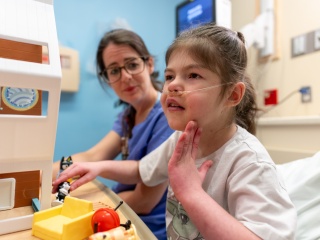
Into the Comfort Zone
Where patience meets pain prevention in pediatrics.
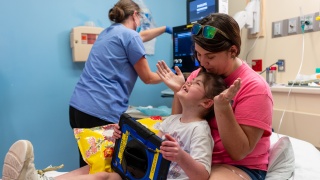
Alexa Valyou has faced more health care in her 8 years than most people do in a lifetime. Born with DiGeorge syndrome — a condition caused by the absence of her 22nd chromosome — she underwent her first heart procedure less than 24 hours after being born and her first open heart surgery when she was less than a month old. Since then, she’s had four more, along with 17 other heart procedures, two major surgeries on her pulmonary arteries, near fatal brain bleeds, emergency brain surgery and two strokes.
“She’s one of the most spirited and resilient people I’ve ever met,” says pediatric nurse Jess Putvain, who has known Alexa for most of her life through her work at University of Vermont Health - University of Vermont Medical Center. “She has been through a lot and has every reason to be wary of the hospital, which is why it’s so important to offer a calmer alternative that meets her on her level. It’s for kids like Alexa that we built the Comfort Zone.”
A Calmer, Kinder Approach to Care
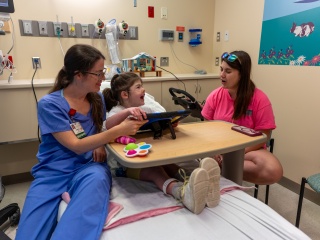
The Comfort Zone is a pre-procedural space designed to help children — and now, young adults with complex care needs — navigate medical care with less fear and more personalized support. Staffed by a child life specialist and pediatric nurses, the team is pioneering a trauma-informed approach that prioritizes trust, patience and care.
“These ladies have been with us for most of Alexa’s life — they’re amazing,” says Brittany Valyou, her mom. “It makes such a difference for Alexa to come in and see familiar faces — to slow down and get care the way it works for her. It really means a lot to us.”
A Better Way to Care for the Most Vulnerable
For many children, a single traumatic medical experience — especially involving needles — can leave lasting emotional and psychological scars. Research shows that up to 25% of adults with needle phobia avoid medical care entirely, often tracing their fear back to childhood. The Comfort Zone is working to change that. Their approach is rooted in trauma-informed care, patience and personalization.
“We don’t hold kids down or force them. We get to know them and work on their terms,” says Putvain. “Instead of rushing, we take time to understand each patient’s needs, fears and sensory sensitivities. It pays off in the long run.”
Tools That Build Trust
The team uses strategies like numbing cream, comfort positioning, distraction and even desensitization visits where children are gradually introduced to medical equipment in a non-threatening way.
“We start from scratch,” says child life specialist Jennifer Eddy. “We build rapport, find out what the child likes and incorporate that into the plan. It might take several visits, but it works.”
They also collaborate closely with families — often calling ahead to learn about past experiences and triggers — and send congratulatory cards after visits to recognize a child’s courage.
“Some parents come in saying: ‘This will never work,’ because all they’ve known is trauma,” says pediatric nurse Patti Haidar, who is helping to standardize this care model throughout University of Vermont - UVM Children’s Hospital. “But then they see what’s possible here.”
Expanding to Young Adults
Recognizing a gap in care for adults with complex care needs and developmental disabilities, the team launched a pilot program to support patients aged 18–26 who come to the hospital to have their blood drawn for tests. These young adults often struggle to transition out of pediatric care, especially with procedures like blood draws.
The pilot program offers the same thoughtful, individualized support to adults who need it. As medicine advances and more children with complex needs live into adulthood, the need for compassionate, specialized care will only grow. The Comfort Zone is leading the way — one positive experience at a time.