Parathyroid Disease
Parathyroid Disease Care at UVM Health
Parathyroid disease affects one or more of the four pea-sized parathyroid glands behind the thyroid gland in your neck. Your parathyroid glands make parathyroid hormone, which controls levels of calcium and phosphate in your blood. Depending on the type of parathyroid disease, your body may make too much or too little parathyroid hormone.
Mineral imbalances from parathyroid disease increase your risk of kidney stones, osteoporosis and other health issues.

Why Choose UVM Health?
Endocrinologists at University of Vermont Health offer advanced care for diseases that affect glands and hormones. We treat all types of parathyroid disease with skill and compassion.
As one of the only comprehensive endocrinology programs in the region, we offer:
- Team approach to care: Your care team includes board-certified, fellowship-trained endocrinologists who specialize in parathyroid disease. If you need surgery, we partner with ear, nose and throat (ENT) doctors (otolaryngologists) at UVM Health to manage your care.
- Latest diagnostic tests: We’re the only health system in the region using advanced four-dimensional CT scanners (4D CTs) to diagnose parathyroid disease and other endocrine disorders. This technology helps us accurately identify diseased glands.
- Research-based care: As the only endocrinology team in the region that’s part of a health system anchored by an academic medical center, our physicians lead research and clinical trials and train the next generation of endocrine disorder specialists.
Types of Parathyroid Disease
We offer a full range of treatments for all types of parathyroid disease, including:
Hyperparathyroidism is the most common parathyroid disorder. There are different types of hyperparathyroidism: primary, secondary and tertiary. All three types occur when a parathyroid gland becomes overactive and makes too much parathyroid hormone. People with chronic kidney disease are more likely to have secondary or tertiary hyperparathyroidism.
An excess of parathyroid hormone increases calcium levels in your blood, causing hypercalcemia. High calcium levels increase your risk of kidney stones, heart disease, high blood pressure (hypertension) and osteoporosis.
Hyperparathyroidism Symptoms
Hyperparathyroidism doesn’t always cause symptoms. When symptoms occur, you may experience:
- Abdominal pain and loss of appetite
- Confusion
- Constipation, or nausea and vomiting
- Depression or irritability
- Extreme fatigue, even after getting adequate sleep
- Increased thirst
- Joint pain or bone fractures
- Muscle weakness
Hyperparathyroidism Causes and Risk Factors
You are more likely to develop hyperparathyroidism if you:
- Are between the ages of 50 and 60
- Are female
- Have certain health conditions, including noncancerous (benign) parathyroid tumors, kidney failure and familial hypocalciuric hypercalcemia (a rare genetic disorder)
Hypoparathyroidism occurs when your parathyroid gland doesn’t make enough parathyroid hormone. As a result, you have low calcium levels (hypocalcemia) and high phosphate levels (hyperphosphatemia). These mineral imbalances may increase your risk for calcifications, kidney disease and other issues.
Hypoparathyroidism Symptoms
Hyperparathyroidism affects your skin, muscles and nerves. You may have:
- Brittle nails
- Dry, flaky skin
- Muscle cramps or spasms
- Tingling sensations in your lips, fingers or toes
Hypoparathyroidism Causes and Risk Factors
Causes and risk factors for hypoparathyroidism include:
- Autoimmune disease
- Neck or thyroid surgery that damages the parathyroid gland
Pseudohypoparathyroidism is a rare condition caused by an inherited gene change (mutation). Your body doesn’t respond to parathyroid hormones as it should, leading to low calcium and high phosphate levels in your blood.
Pseudohypoparathyroidism Symptoms
Pseudohypoparathyroidism causes symptoms during childhood, such as delayed puberty, seizures and growth disorders. Our pediatric endocrinologists diagnose and manage this condition in children.
Adults with pseudohypoparathyroidism receive expert care from our parathyroid specialists. In adults, the condition can cause:
- Cataracts
- Dental problems
- Irregular menstruation and infertility
- Muscle cramps or spasms
Some people develop a noncancerous (benign) growth called an adenoma on one or more parathyroid glands. These tumors are the primary cause of hyperparathyroidism and have similar symptoms.
Noncancerous Parathyroid Tumor Causes and Risk Factors
Females over 60 are most at risk for noncancerous parathyroid tumors. Other causes or risk factors include:
- Chronic kidney disease
- Gene changes and inherited disorders, such as multiple endocrine neoplasia (MEN) syndromes
- Lithium medications
- Radiation therapy to the head or neck
Parathyroid hyperplasia occurs when you have four enlarged parathyroid glands, but no tumor. The enlarged glands make too much parathyroid hormone and calcium, leading to the same symptoms as hyperparathyroidism.
Parathyroid Hyperplasia Causes and Risk Factors
Causes and risk factors for parathyroid hyperplasia include:
- Gene changes and inherited disorders, such as MEN syndromes and isolated familial hyperparathyroidism
- Lithium medications
Diagnosing Parathyroid Disease
We offer the latest diagnostic tools for parathyroid disease, including:
- Blood tests: Blood tests measure parathyroid hormone and calcium levels in blood, as well as magnesium, phosphate and vitamin D. They also can show how well your kidneys are working.
- Urine test: A 24-hour urine collection test looks for high levels of calcium in urine.
- Bone mineral density test: Bone density tests check for signs of bone loss and osteoporosis from abnormal calcium levels. We have the most advanced dual-energy X-ray absorptiometry (DXA) scanners in the state.
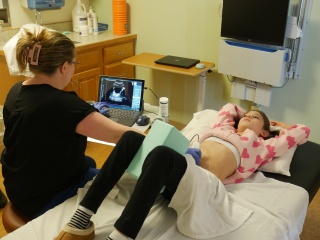
- Ultrasound: A neck ultrasound produces images of your parathyroid and thyroid glands. You may also get a kidney ultrasound to check for kidney stones.
- Sestamibi scan: This test uses a nuclear medicine camera to capture images of parathyroid glands as they absorb a safe, injectable radioactive substance.
- 4D CT scan: This test combines CT scan technology and X-rays to take 3D images of the parathyroid glands as they absorb a safe, injectable radioactive dye at specific intervals.
Parathyroid Disease Treatment
Our endocrinology team customizes a treatment plan based on your unique diagnosis and symptoms. We’re the only program in Vermont and northern New York offering a complete suite of nonsurgical and surgical treatments for parathyroid disease. We start with the least invasive treatment and only recommend surgery when it’s the most effective option for you.
People with few or no hyperparathyroidism symptoms may not need immediate treatment. Our endocrinologists will perform routine blood tests and other exams to actively monitor your health. You may need surgery if your symptoms worsen.
During active surveillance, you may get frequent tests to check:
- Blood calcium and parathyroid hormone levels
- Blood pressure
- Bone density
- Kidney function
Surgery to remove one or more overactive parathyroid glands or a noncancerous parathyroid tumor can cure hyperparathyroidism. This procedure is called a parathyroidectomy.
We partner with UVM Health ENTs for surgical treatment. Our ENTs are experts in minimally invasive parathyroidectomies, performing a high number of these procedures each year. Surgery takes place through tiny incisions to minimize scarring. Minimally invasive surgery also means you recover faster with less pain and risk of infection.
If you have parathyroid hyperplasia, our surgical team removes 3½ of the 4 affected parathyroid glands. You only need half of one parathyroid gland for normal hormone function. You won’t need parathyroid hormone replacement therapy after surgery.
We test the removed gland tissue for signs of cancer or other disease (a biopsy). Parathyroid cancer is extremely uncommon. But if you need treatment, we work with UVM Health cancer specialists to provide comprehensive care.
Your clinician may recommend medications for hyperparathyroidism if you can’t get — or don’t want — a parathyroidectomy.
Medications for hyperparathyroidism include:
- Bisphosphonates: These medications stop calcium loss from bones, reducing your risk of osteoporosis and fractures. You may take a daily pill or receive IV medication at one of our infusion centers.
- Calcimimetics: These drugs mimic calcium in blood, causing the parathyroid gland to release less hormone. They help people with chronic kidney disease who develop hyperparathyroidism. Our team may also prescribe calcimimetics for those with overactive glands who don’t have kidney disease.
Hypoparathyroidism treatments include:
- Supplements: You take daily calcium and vitamin D supplements.
- Dietary changes: Medical nutrition therapy experts can help you adopt a high-calcium, low-phosphorous diet.
- Hormone injections: If supplements don’t help, you may need parathyroid hormone injections.
For advanced cases of hypoparathyroidism, traditional treatments may not be effective. Our endocrinologists are experts at getting compassionate use approvals from the Food and Drug Administration (FDA) for medications still under review in clinical trials. Also called expanded access, compassionate use allows you to take an investigational (not-yet-approved) drug for a serious illness when there are no other options. You don’t have to enroll in a clinical trial.
Locations Near You
Share your location to see nearby providers and availability
62 Tilley Drive
Suite 202
South Burlington, VT 05403-4407
133 Park Street
Second Floor
Malone, NY 12953-1244
130 Fisher Road
MOB-A Suite 3-1
Berlin, VT 05602-9516
111 Colchester Avenue
Burlington, VT 05401-1473