Brain Tumors
Brain Tumor Care at UVM Cancer Center
Brain tumors develop from abnormal cells that start in or travel to the brain. They can be small or large, slow- or fast-growing, and malignant (cancerous) or benign (noncancerous). Any tumor type, depending on its location, can affect how you think, feel, communicate or see.
At University of Vermont Health, we deliver exceptional, multidisciplinary brain tumor care, offering the tests, therapies and support services you need in a supportive, caring environment.
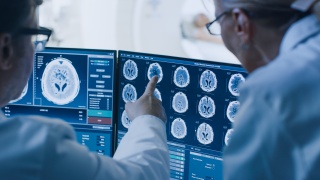
Why Choose UVM Health?
Our experts will develop a personalized treatment plan for you that may include enrollment in clinical trials only available at leading programs nationwide. As a leading cancer program in the region, we offer:
- Coordinated teams: Brain tumor specialists (neuro-oncologists) work alongside physician specialists, including neuroradiologists, neurosurgeons, medical oncologists, radiation oncologists, neuropathologists, palliative care physician and neurologists to closely to plan treatments, discuss results and adjust therapies as necessary. Your care team also includes nurses, nurse practitioners, rehabilitation specialists, social workers and allied health professionals.
- Leading-edge treatments: As a health system anchored by an academic medical center, our physician-researchers lead and participate in clinical trials of new cancer therapies, including genetically guided targeted therapies.
- Personalized care: We take time to get to know you as an individual to deliver therapies that are consistent with your wishes and goals for treatment. Nurse navigators are with you throughout treatment, coordinating appointments, answering questions and providing support.
- Long-term support: You receive lifelong survivorship care to help you stay healthy after treatment. Regular monitoring helps us promptly identify brain tumors that recur and changes in memory or brain function. We also provide ongoing care and support services for symptoms of treatment, such as epilepsy or mobility problems.
'With profound appreciation.'
Thomas Jackson suffered a massive seizure due to a brain tumor he didn’t even know was there. His road to recovery was difficult and he was so thankful to his care team at UVM Medical Center for helping him through the most difficult time in his life.
Types of Brain Tumors
Brain tumors can start in the brain (primary) or spread to the brain from cancers in other areas of the body (metastatic). Brain metastases are the most common brain tumors.
There are more than 100 types of primary brain tumors, including:
- Craniopharyngioma: A rare, slow-growing brain tumor that forms near the pituitary gland
- Glioma: A tumor that forms in the brain’s supportive tissue (glia). Examples of gliomas include oligodendrogliomas, astrocytomas and pilocytic astrocytomas.
- Glioblastoma: A malignant (cancerous) brain tumor that grows rapidly
- Ependymoma: A tumor that may grow in the brain or in the spinal cord in children or adults
- Medulloblastoma: A brain tumor that forms in the balance center in the back of the brain (cerebellum) and occurs most frequently in children
- Meningioma: A tumor that forms in the meninges, the membrane lining the brain and spinal cord. Most meningiomas are noncancerous.
- Pituitary adenoma: A tumor that starts in the pituitary gland and is not likely to spread to other areas of the body
- Schwannoma: A rare brain tumor that develops in the cells supporting the nervous system
Symptoms of Brain Tumors
Brain tumors often cause neurologic symptoms such as:
- Behavioral disturbances and personality changes
- Difficulty speaking or communicating
- Headache and nausea due to increased pressure in the brain
- Limb numbness or weakness
- Memory loss
- Seizures
- Sudden vision loss, crossed eyes or double vision
Clinical Trials
The UVM Cancer Center supports more than 100 active clinical trials focused on prevention, screening, treatment, supportive care and survivorship.

Diagnosing Brain Tumors
If you are experiencing neurologic symptoms, we quickly order testing so you can get answers as soon as possible. These efforts help us rule out other conditions, like stroke, and deliver timely care.
Brain tumor testing may include:
- Magnetic resonance imaging: An MRI uses a magnet and radio waves to create detailed images of the brain. MRIs with contrast dye pinpoint tumor size and location and help us plan treatments.
- Biopsy or resection: The surgeon may remove a small tissue sample, a larger section or the whole tumor, depending on its location. Specialists who diagnose brain conditions (neuropathologists) examine the tissue to determine the tumor type. These procedures typically involve at least one overnight stay in the hospital.
Brain Tumor Treatment
We offer a depth of experience in both standard therapies and advanced treatments that give you additional options for healing.
Your care plan may include one or more of the following treatments:
Our experienced neurosurgeons use sophisticated techniques to remove as much of the tumor as possible without damaging healthy brain tissue. We may perform awake craniotomy for brain tumors near language areas, which involves waking you up and conducting painless tests during surgery. For certain types of brain tumors, our surgeons may use a special solution (5-ALA or fluorescein) that makes tumor cells easier to see and remove.
We offer a broad range of chemotherapy drugs. For advanced, recurrent or metastatic cancer, you have access to the latest treatment options. You may receive targeted therapy, which attacks specific mutations, or immunotherapy, which trains your immune system to destroy cancer cells.
UVM Health offers the latest radiation therapy techniques to safely deliver strong doses of radiation in fewer treatment sessions for certain tumor types.
Stereotactic radiosurgery (SRS) is a highly precise form of radiation therapy used to treat malignant and benign brain tumors, as well as other abnormalities in the brain. SRS uses focused beams of high-dose radiation and is not a surgical procedure. SRS helps treat benign tumors that are in sensitive or hard-to-reach locations.
Palliative care helps relieve persistent symptoms of cancer and treatment. Our palliative care specialists deliver a range of interventions to help manage symptoms such as headaches, nausea, and depression, and improve your quality of life. They also get to know you and your family to understand your values and preferences. These efforts help us support you as you navigate important care decisions and plan for future medical needs.
Clinical trials are a routine part of care team discussions. Participation in a clinical trial is voluntary and can give you access to new care methods years before they are widely available. If you are eligible for a specific trial, your doctor will explain the benefits and risks of participating and the next steps for enrollment.
Brain tumors can have a lifetime risk of recurrence. They may also cause neurologic symptoms, such as changes in memory or brain function, years after treatment is complete. We are here for you long term with careful monitoring to detect early signs of these issues. At UVM Health, you’ll also find a range of support services to help manage symptoms of brain tumor treatment, such as epilepsy or mobility issues.
Locations Near You
Share your location to see nearby providers and availability
111 Colchester Avenue
Main Campus, East Pavilion, Level 3
Burlington, VT 05401-1473
75 Park Street
Elizabethtown, NY 12932
101 Adirondack Drive
Ticonderoga, NY 12883
111 Colchester Avenue
Main Campus, Main Pavillion, Level 2
Burlington, VT 05401
75 Beekman Street
Plattsburgh, NY 12901-1438
23 Fourth Street
Suite 1
Malone, NY 12953-1331
111 Colchester Avenue
Main Campus, Main Pavilion, Level 2
Burlington, VT 05401-1473
130 Fisher Road
Berlin, VT 05602-8132
111 Colchester Avenue
Main Campus, Main Pavilion, Level 2
Burlington, VT 05401-1473
111 Colchester Avenue
Main Campus, East Pavilion, Level 5
Burlington, VT 05401-1473