The New Curiosity About Glucose
Why some athletes turn to continuous monitoring.
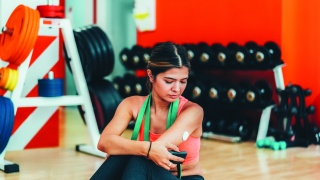
Continuous glucose monitors (CGMs) — small sensors that track blood sugar around the clock — were created for people with diabetes. But lately you’re just as likely to spot them on endurance athletes, fitness enthusiasts or people simply curious about how their body responds to different foods, stressors or workouts.
“CGMs give you a continuous picture of how your blood sugar responds to daily life,” says Ann Watts, a registered dietitian and certified diabetes educator at University of Vermont Health - Champlain Valley Physicians Hospital. “That kind of immediate feedback is powerful.”
For years, CGMs were used almost exclusively in diabetes care, replacing frequent finger sticks with real-time data and alerts. As technology has improved, interest has expanded well beyond that original purpose.
Why Athletes and Wellness Seekers Are Paying Attention
Researchers have documented a steady rise in CGM use among people without diabetes, particularly athletes and people exploring metabolic health. Early studies and media coverage point to a theme: People want to see how food, stress, sleep and movement affect them, minute by minute. For endurance athletes, that curiosity makes sense. Long hikes, ultra-distance runs and multi-day events place heavy demands on the body, and fueling mistakes can tank performance. CGMs can show when someone may be under-fueling, over-fueling or timing meals poorly during strenuous activity.
Still, Watts urges caution.
These devices were studied, calibrated and approved for people with diabetes. When you use them in people without diabetes, the data doesn’t always behave the same way. - Ann Watts, RD
What the Numbers Can (and Can’t) Tell You
One important limitation: CGMs tend to over-report low blood sugar in people without diabetes. That can lead to numbers that look alarming, even when the person is perfectly healthy.
“That’s something people don’t always realize,” Watts says. “The numbers can be interesting, but they’re not diagnostic, and they’re not meant to be the final word on health.”
Researchers studying CGMs in healthy adults agree. While CGMs can reveal patterns — like glucose rising after meals or dropping with exercise — there’s still no agreed-upon definition of what “ideal” glucose patterns look like in non-diabetic adults. And so far, there’s no strong evidence that wearing a CGM improves long-term health or athletic performance on its own.
A Growing Wellness Trend, With Caveats
Despite the uncertainty, interest keeps growing. Over-the-counter CGMs marketed toward wellness users are entering the market, promoted like other health trackers, similar to smartwatches that monitor heart rate, sleep or steps.
Watts sees a role for CGMs when approached thoughtfully.
“They can be a learning tool,” she says. “If someone uses the data alongside how they feel, how they recover, what they eat and what they’re doing physically, it can add another layer of awareness.”
But she emphasizes that CGMs shouldn’t drown out common-sense health cues: energy levels, hunger, fatigue or overall well-being.
“For people with diabetes, CGMs are life-changing and essential,” Watts says. “For everyone else, they’re just one piece of information. Helpful for some, unnecessary for others and not something to panic over.”