Pediatric Diabetes
Pediatric Diabetes Care at Golisano Children's Hospital
Diabetes is one of the most common chronic diseases in childhood. The vast majority of young people with diabetes have Type 1 Diabetes (previously known as juvenile-onset diabetes)
From evaluation and treatment to support services and education for families, the pediatric endocrinology team at Golisano Children’s Hospital at University of Vermont Health offers a child- and family-centered approach to meet your child’s health needs. We work to build a relationship of trust and support with your whole family as we provide expert, personalized care.
Why Choose Golisano Children's Hospital?
As the only dedicated Pediatric Endocrinology Clinic in the state of Vermont, we offer families from Vermont and northern New York:
- Pediatric endocrinology expertise: Your child receives care from board-certified, fellowship-trained endocrinologists who specialize in diabetes. These experts partner with your child’s primary care provider for seamless care.
- Family-centered approach: Whether your child needs short- or long-term treatments, we offer comprehensive support for your whole family. When teens are ready to transition to adult medical care, we help streamline the process.
- Convenient access to care: Our dedicated clinics bring together all the experts your child needs during one appointment. Your family also has 24/7 emergency access to a pediatric endocrinology specialist and the option of using digital health visits and MyChart.
Types of Diabetes
The pancreas makes little or no insulin, a hormone that regulates blood sugar (glucose). Type 1 diabetes was previously called juvenile-onset diabetes or insulin-dependent diabetes.
The pancreas still makes some insulin, but your child’s body is unable to respond to insulin as it should to regulate blood sugar. Eventually, the pancreas cannot make enough insulin to keep up. As a result, sugar levels in the blood can become dangerously high resulting in frequent urination, intense thirst, fatigue and blurred vision. In extreme cases, type 2 diabetes can also cause nausea or vomiting, and severe belly pain. Type 2 diabetes was previously known as adult-onset diabetes.
Pediatric Diabetes Treatment
We provide information and guidance about the best treatment options for your child, including:
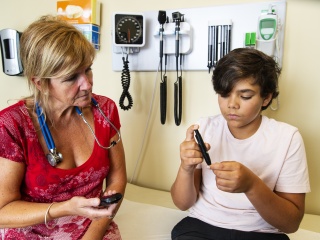
- Continuous glucose monitors (CGMs): A wearable medical device that continuously tracks your child's glucose (blood sugar) levels throughout the day and night.
- Insulin pump systems: A wearable medical device that delivers insulin to the body without requiring a separate injection for each dose.
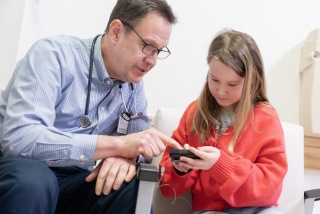
- Remote patient monitoring: With your permission, our team can access data from your child’s CGM and insulin pump so that we can provide guidance regarding necessary treatment adjustments remotely.
- Digital health: When appropriate, we can meet through a digital health appointment to minimize in-person visits.
Pediatric Diabetes Services
We offer comprehensive, compassionate care for all types of diabetes that affect children. Our clinic is recognized by the American Diabetes Association for its excellence as a Pediatric Diabetes Self-Management Education Program. This designation reflects our team’s expertise in helping children and families learn how to confidently manage diabetes.
Our child-friendly services and treatments include:
- Outpatient care for newly diagnosed patients: If a child with a new diagnosis of diabetes meets certain criteria, they can start treatment without the need for hospitalization. Our two-day intensive outpatient program provides hands-on educational sessions that help your family confidently manage diabetes at home, school and on the go.
- Diabetes education and support: Our Certified Diabetes Care and Education Specialists (CDCES) help children and caregivers understand and manage the disease.
- Pediatric Diabetes Clinic: Our dedicated Pediatric Diabetes Clinic makes it easy for your child to see multiple experts — including diabetes educators, registered dietitians, psychologists and social workers — during the same visit.
Patient Resources
The following resources can be used by patients, families, caregivers, school personnel and anyone else looking for information about type 1 diabetes.
Diabetes in Children
Hear about Brigs' experience with Type 1 Diabetes as we speak with his parents and his doctor, P.J. Zimakas, MD, of Golisano Children's Hospital.
Awards & Certifications
American Diabetes Association
Our clinic is recognized by the American Diabetes Association for its excellence as a Pediatric Diabetes Self-Management Education Program. This designation reflects our team’s expertise in helping children and families learn how to confidently manage diabetes.
Locations Near You
Share your location to see nearby providers and availability
111 Colchester Avenue
Burlington, VT 05401-1473