Bringing Eye Care Closer to Home
Protecting vision without the extra visit.
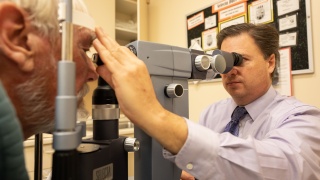
For people with diabetes, protecting vision is critical. Yet a routine eye exam can mean time off work, arranging transportation and traveling long distances.
Fortunately, for many patients of University of Vermont Health screening for diabetic eye disease can take place during regular primary care visits. Using in-office retinal imaging, clinicians can check eye health without dilation or a separate specialist appointment.
A Condition You May Not Notice
Diabetic retinopathy is the leading cause of vision loss among working-age adults. It often progresses with no early symptoms.
“People can have really severe damage with absolutely no symptoms,” says Christopher Brady, MD, an ophthalmologist at University of Vermont Health - UVM Medical Center. “That’s what makes screening so important.”
Nationwide, only around half of people with diabetes receive recommended eye exams. That gap puts many at risk for preventable vision loss.
With retinal imaging available in primary care, screening becomes simple. A quick photograph of the back of the eye is taken during a routine visit. Specialists review the image, and only patients who show signs of disease are referred for follow-up care.
“About 90% of people don’t need to take the next step,” Dr. Brady says. For them, the screening provides reassurance.
Less Time, Fewer Barriers
What once meant multiple appointments, travel and hours of eye dilation now takes just minutes. Screening is built into care patients are already receiving.
It’s one-stop. We can address their diabetes, screen for complications and connect them with additional support all in one visit.
This approach is especially helpful in rural communities, where access to specialists is limited and wait times can be long. Programs like this reduce unnecessary visits and free up specialists to focus on people who need specialty treatment.
At UVM Health - Elizabethtown Community Hospital, grant-funded retinal cameras are also being rolled out in community health centers from Crown Point to Wilmington, helping reduce travel and support earlier detection.
Catching Problems Earlier and Faster
For the smaller number of people who do show signs of disease, retinal imaging speeds up care. Instead of waiting for a primary eye care appointment and then referral to a subspecialist for further evaluation and treatment, patients can be directed quickly to the right level of care.
“If we see something concerning, we can help get them where they need to be,” Dr. Brady says.
Early detection can prevent or significantly limit vision loss. For some people, seeing evidence of eye damage also becomes a powerful motivator to better manage their diabetes.
Supporting Whole-Person Care
Early detection and intervention are a growing focus across UVM Health primary care practices.
That includes meeting people where they are — especially those facing challenges like transportation, food access or housing instability. By embedding screening into primary care visits, care teams can address multiple needs at once and connect patients with care managers, pharmacists and other support services without requiring additional visits.
When vision loss can be prevented with a quick screening, the goal is straightforward: making that screening easier to get.