How Darrell Got His Cancer Meds Back
Darrell Fields had survived cancer, but problems with his Medicaid coverage threatened his recovery.
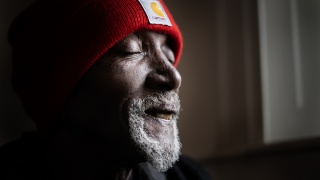
Darrell Fields didn’t know what to do.
One of his cancer medications cost $740. Even when he worked multiple restaurant jobs, he couldn’t afford that.
He tried calling Medicaid for help, but they said he didn't have the right paperwork. Fields didn’t know what the right paperwork was, or where to find it. Soon after, a letter arrived stating that his Medicaid coverage had lapsed, leaving him with no health insurance.
Fields cancelled his upcoming appointments at University of Vermont Cancer Center. To stretch what medication he had left, he took one pill a day instead of the prescribed two. Some medicines he stopped altogether. Making changes to medication dosages without medical guidance can be dangerous, sometimes even fatal.
Beating the Odds Once
Three years earlier, Fields had overcome pancreatic cancer thanks to a new oral chemotherapy treatment at UVM Cancer Center – something the doctor’s called ‘revolutionary.’ Fields called it a miracle.
As a young boy, he overheard men in his community talk about pancreatic cancer. For a Black man, he was told, it was a death sentence. When he first got the diagnosis, he was so overwhelmed that he thought about biking to the Winooski River Bridge and jumping. But his doctors offered hope.
He remembers clearly the moment he learned that his cancer was gone.
“My doctors were more excited than me,” he recalls.
But he also remembered their warnings: Even cancer-free, he needed regular screenings. If the cancer returned, catching it early was critical. Without insurance, that plan seemed impossible.
The Fix He Couldn’t Figure Out Alone
Fields’ Medicaid issue was simple, but he had no way of knowing that.
Maura Costello did.
Costello, a patient access supervisor at University of Vermont Health – UVM Medical Center, heard about Fields’ situation from UVM Cancer Center’s social work team. She connected him with a financial navigator, and together they called Vermont Health Connect, figured out the problem, and fixed it. Fields recalls that his Medicaid was reinstated within 15 minutes.
“When you're dealing with insurance or Medicaid, trying to navigate that can be really difficult on your own” Costello says. “But we're a team of people who deal with that all the time.”
Her team regularly works with Vermont Health Connect, the state’s administrators of Medicaid, and says they both share the goal of getting people covered. While some insurance problems are simple, others are not. Either way, UVM Health financial assistance teams do their best to find solutions for patients across Vermont and northern New York.
Health Assistance Program
Our Health Assistance Program (HAP) helps eligible low- and middle-income families get prescription medications at no cost, even if you have insurance.

Back to the Care He Needs
During a recent appointment, Fields beams as Robert Martell, MD, walks into the room. “That’s my doctor,” Fields says with obvious affection. Dr. Martell urges him to re-schedule the blood test he had cancelled a few months earlier for fear of the bill; he also orders refills on Fields’s prescriptions.
Later, at the outpatient pharmacy, Fields picks up a small bag of medicines that he had been forced to leave behind months earlier. “How about that?” he says softly, clutching the bag.
The co-pay: $0
Looking Ahead: Medicaid requirements and eligibility will change on January 1, 2027, and some re-enrollment rules have already been shifted. Not all insurance issues can be fixed, but for UVM Health patients in Vermont or northern New York who are struggling with coverage, help is available. Visit Financial Assistance for support.