Building Trust in Maternity Care
Local partners create culturally informed maternity care.
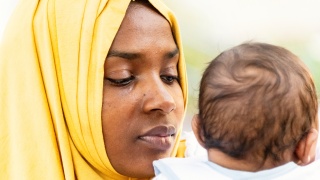
For many refugees and immigrants in Vermont, giving birth in a hospital means entering an unfamiliar system. Language and cultural differences can make the experience more stressful for patients during one of the most vulnerable moments of their lives.
When a group of women in Burlington were asked what would make the biggest difference in their care, their answer was simple. They wanted support from people who looked like them, spoke their language and understood their experiences. Without those connections, trust can be hard to build.
“We identify disparities in outcomes based on refugee or immigrant status,” says Carole McBride, PhD, assistant professor, OB-GYN at the Larner College of Medicine, “We also saw differences depending on who patients were and what language they spoke.”
Partnering With Communities to Understand Needs
Over the past few years, McBride and prenatal providers at University of Vermont - UVM Medical Center have partnered with local organizations, including the AALV, formerly known as the Associations of Africans Living in Vermont and the Janet S. Munt Family Room, to connect with these communities.
“We’ve conducted focus groups with Swahili, Somali, Maay Maay, Spanish, Lingala, French, Arabic and Nepali speakers,” says Martha Churchill, NP, CNM, lead midwife at UVM Medical Center. “The Somali population reached out to us directly. They are the largest immigrant population in Chittenden County, so I wrote a grant to pilot a program with Somali Bantu and Maay Maay-speaking community members. That was our first program, alongside our volunteer doula service.”
Training Community Doulas to Support Families
Grant funding made it possible to develop a doula training program for Somali and Maay Maay community members. Many participants already had extensive experience supporting families, including some who had worked as midwives in their home countries.
One new parent, who had recently given birth to her 12th child, says the support changed everything for her. “I usually worry about cooking and cleaning, but this time I did not have that worry,” she says. “I received some of the best care, and I wish I had this support with my other children. I wish I could go back and have this kind of care before.”
We encourage doulas to help patients advocate for themselves and ask for the information they need to understand their care.
Expanding Support Outside the Hospital
The team, along Marjorie Meyer, MD, obstetrician, also volunteers with local trauma support groups, leads activities and brings in speakers who share essential health information with community members.
Nurse Educator on Labor and Delivery Amelie Thurston, RN, says her priority is ensuring that every patient receives equitable, respectful and safe care.
“Knowing this population is at higher risk, we want to do everything we can to keep people safe.”