Congenital Heart Disease in Children
Congenital Heart Disease Care at UVM Children's Hospital
Congenital heart disease refers to a range of different heart defects present from birth. Some defects are mild and may not require treatment, while others can be life-threatening and require surgery during infancy.
Congenital heart disease is one of the most common birth defects, with approximately eight out of every 1,000 infants born with the condition. Over 90% of infants born with congenital heart defects live well into adulthood.
Why Choose UVM Children's Hospital?
At University of Vermont Children's Hospital, we take a coordinated, team-based approach to caring for children with congenital heart disease. Our network of heart and vascular providers gives your child access to advanced heart specialists, no matter where you live in Vermont or northern New York.
As one of the leading heart and vascular programs in the region, we offer:
- Specialized experts: Congenital heart disease is a complex condition that’s best managed by a team of specialists. Our pediatric congenital cardiologists, imaging specialists and nurses collaborate to determine which treatment is right for you.
- Collaborative care: We work closely with children’s specialists at Dartmouth Hitchcock Medical Center, Boston Children’s Hospital, New York-Presbyterian Hospital and Albany Medical Center. This collaboration allows us to offer our patients more extensive services and expertise, including specialized pediatric cardiac surgery, cardiac catheterization, cardiac intensive care and electrophysiology.
- Family-centered care: We believe patient- and family-centered care is a critical part of providing the best possible treatment. A focus on clear and empathetic communication helps ensure you are at the center of your child's care, understand your child’s treatment, get all your questions answered and know what to expect.
Prenatal Detection of Congenital Heart Disease
The majority of a baby’s heart development occurs during the first eight weeks of pregnancy, and most congenital heart defects occur during that time. These defects can affect any part of the heart, including blood vessels, heart chambers and heart valves.
There are several risk factors that can increase your baby’s risk of developing a congenital heart defect. These include:
- Genetics and family history
- Chromosomal abnormalities
- Infections such as rubella during pregnancy
- Taking certain medications during pregnancy
- Smoking or drinking alcohol during pregnancy
- Untreated diabetes during pregnancy
Types of Congenital Heart Disease
There are many types of congenital heart disease, and babies can be born with more than one type of congenital heart defect. The most common include:
An atrial septal defect (ASD) is a hole between the heart’s two upper chambers. ASDs are present from birth, although symptoms do not typically appear until adulthood. Smaller defects often do not require treatment, but larger defects can lead to arrhythmias, lung disease and exercise intolerance.
A ventricular septal defect (VSD) is a hole between the heart’s lower two chambers. VSDs are present from birth and may cause failure to thrive symptoms in the first few weeks of life. Not all VSDs require treatment, but larger defects can damage the heart and lungs and lead to serious conditions such as congestive heart failure.
The ductus arteriosus is a blood vessel that connects the aorta and the pulmonary artery in fetuses. After birth, this structure usually closes on its own. In some cases it does not close as it should, leading to a patent ductus arteriosus (PDA).
Not all PDAs require treatment, and a small number of people reach adulthood before this defect is discovered. However, larger defects can damage the blood vessels within the lungs.
Symptoms of Congenital Heart Disease
Symptoms of congenital heart disease can appear shortly after birth and vary based on age, as well as the type and severity of the condition. Common signs and symptoms include:
- Abnormal heart rhythm (arrhythmia)
- Blue-tinted skin, lips and fingernails (cyanosis)
- Fatigue
- Shortness of breath
- Swelling of body tissue or organs (edema)
Diagnosing Congenital Heart Disease
Congenital heart disease can be detected at various stages of life. Some defects may be diagnosed before a baby is born, with a type of ultrasound called a fetal echocardiogram, or shortly after birth.
A congenital heart defect may be initially identified by an abnormal heartbeat during a routine physical exam, a chest X-ray or an electrocardiogram. When congenital heart disease is suspected, cardiovascular specialists use a full range of cardiac imaging and testing to diagnose the condition accurately and efficiently. Our network of locations means your child will receive expert diagnostic testing no matter where you live across Vermont and northern New York.
Congenital heart disease diagnosis and testing may include:
- Physical examination: Checks your child's heart and lung function
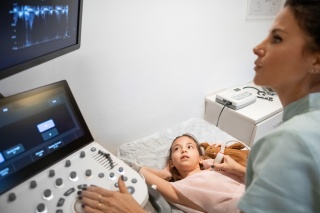
- Echocardiogram: Creates a video image of your child's heart pumping blood and determine what type of heart defect they may have
- Electrocardiogram (EKG): Records your child's heart’s electrical activity and identifies any abnormal rhythms and stress to the heart
- Computed tomography and magnetic resonance imaging (MRI): Evaluates the structure and function of the heart and other organs in the chest cavity, including blood vessels
- Cardiac catheterization (angiogram): Identifies blocked or narrowed arteries using a long, thin tube (catheter), a special dye and imaging tools
Congenital Heart Disease Treatment
Children with congenital heart disease require lifelong follow-up care. Having a congenital heart defect does not mean your child will experience long-term heart problems, but it does mean they are at a higher risk for certain complications.
Congenital heart defects may be treated during childhood or may not require treatment until your child has reached adulthood. Congenital heart disease treatment includes both non-surgical and surgical options.
For patients with mild congenital heart disease, specialists at UVM Children's Hospital will create a plan of care involving non-invasive approaches and therapies.
If your child's congenital heart defect is not causing symptoms, they may only need routine monitoring by a pediatric cardiologist. Your child's cardiologist may recommend periodic checkups, which can include:
- Pediatric Cardiovascular Fitness Program: Our team works to empower children with chronic conditions to build their physical fitness and participate in activities they love.
Your child's cardiologist may also prescribe medication to help your child manage a mild congenital heart defect. While medications cannot cure or correct congenital heart disease, they can be used to relieve some symptoms.
Interventional cardiologists and cardiac surgeons at collaborating centers may help provide the latest treatments and therapies to repair congenital heart defects and restore normal blood flow. Not all defects can be treated surgically, so your doctor will work closely with our non-invasive pediatric cardiology and imaging experts to recommend the best therapy for your child.
Congenital heart defects are typically treated with one of two surgical approaches.
- Catheter-based treatments: This treatment uses thin, flexible tubes called catheters to repair a heart defect. An interventional cardiologist inserts a catheter into a blood vessel in the groin and guides it to the heart using X-ray and ultrasound. This procedure is commonly used to close atrial septal defects.
- Open-heart surgery: This treatment involves an experienced cardiac surgeon opening the chest cavity to gain access to the heart and working directly with the muscle and valves.
Locations Near You
Share your location to see nearby providers and availability
111 Colchester Avenue
Burlington, VT 05401-1473