Understanding the Menopause Transition
Support and treatment options for changing hormones.

Menopause occurs when the ovaries stop producing estrogen, most commonly around age 51. But symptoms can begin in perimenopause, which begins much earlier — sometimes as early as a patient’s late 30s.
Due to increased life expectancy, many women will spend up to 40% of their lives postmenopausal. And while menopause is officially diagnosed after 12 months without a period, the menopause transition impacts many organ systems beyond the uterus, ovaries and reproduction.
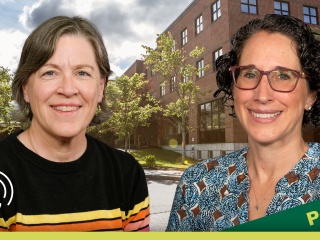
Colleen Horan, MD, a gynecologist and obstetrician at University of Vermont – Central Vermont Medical Center, has seen firsthand the challenges many patients face with hormonal shifts before and during menopause. She’s passionate about making sure every person she cares for feels seen, heard and supported through it all.
“Some patients feel relief at appointments just being heard and being educated on what’s going on with their bodies. They feel validated learning about what they are going through.”
“We know perimenopause symptoms can begin years before the actual start of menopause or your last period,” says Dr. Horan. “Sometimes people bypass menstrual irregularities because they have an IUD or hysterectomy.” In addition to the common symptoms associated with menopause, there are effects on cardiovascular and bone health that all women should be aware of.
Common symptoms during perimenopause and menopause:
- Irregular periods
- Hot flashes
- Insomnia
- Night sweats
- Mood changes, including irritability, rage, increased risk of depression
- Vaginal issues like dryness or tenderness, which can cause pain during sex
- Urinary symptoms such as frequency, urgency incontinence, or infections
- Weight gain and redistribution
Treatment That Meets Patients Where They Are
For some, menopause hormone replacement (MHT) can be an effective option. It involves taking a form of estrogen, or estrogen combined with progesterone, to alleviate symptoms caused by lower estrogen levels. It comes in several forms, including pills, patches, skin creams or vaginal inserts. Along with easing symptoms, MHT can reduce a patient’s risk for osteoporosis. Early treatment is the key to its effectiveness and for lowering some of the potential risks associated with hormone therapy.
“We need to listen to people’s individual stories and learn how we can help them,” says Dr. Horan. “If their symptoms are treatable with hormone therapy, then I look at their medical history to determine their risk. I also discuss all of this with the patient because ultimately, it’s their choice.”
A Patient's Perspective
Ellen McDermott, a runner who had always felt in tune with her body, first started noticing changes in her late 40s. She knew something was different, and it wasn’t stress or diet. She thought it might be perimenopause but wasn’t sure and felt frustrated. She says a conversation with her physician made all the difference. She says her doctor listened to everything she was feeling and walked her through what perimenopause looks like.
“What reassured me most was learning that lots of women go through the same symptoms and that there are real ways to manage them,” McDermott says. “A low-dose hormone therapy and a few tweaks to my sleep routine made a big difference.”
Horan says even for those who are uninterested in hormonal medication, or for whom the risks outweigh the benefits, alternative treatments exist. These range from lifestyle changes and cognitive behavioral therapy to non-hormonal medications. Evidence-based treatments are always evolving. For example, the FDA recently approved two non-hormonal medications that reduce hot flashes by blocking receptors in the brain’s thermoregulatory center.
“It’s important to continue visits with your doctor or practitioner, because there could be very effective treatments that weren’t available a few years ago that have become available recently, such as non-hormonal treatment options,” says Dr. Horan.
McDermott agrees that open communication with your care team is key. “In follow-ups, my doctor asked detailed questions and adjusted the plan with me,” she says. “It felt like having a partner in the process who understood me and what I was experiencing. I left those appointments feeling so much more grounded.”
The name used for the patient quoted in this article is a pseudonym to protect their identity and privacy.