Patient Gives to the Cancer Therapy Program That Restored Her Life
A grateful donor's bequest supports UVM Cancer Center's CAR T-cell therapy program for multiple myeloma and other blood cancers.
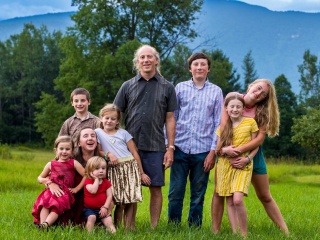
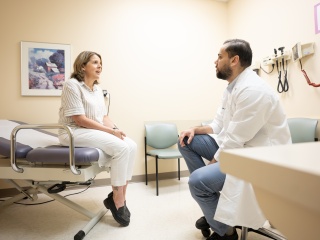
Rachel and Mark Stewart relocated from rural New York, near the Canadian border, to Chittenden County, Vermont, to live near major medical centers. Ready access to world-class academic cancer care felt paramount: Rachel faced a diagnosis of multiple myeloma, a blood cancer in which white blood cells grow out of control, crowd out healthy cells and threaten the bones, kidneys, blood and the immune system.
Multiple myeloma is usually not curable, but CAR T-Cell therapy, a novel cancer treatment brought to UVM Cancer Center only three years ago—held the promise of controlling the disease and prolonging Rachel’s life.
When UVM Cancer Center launched its CAR T program in 2023, it was the only institution in Vermont and northern New York to offer the treatment. Previously, patients had to travel to Boston, New York or Dartmouth or, if their circumstances precluded such travel, they lost access to a treatment that might save their lives.
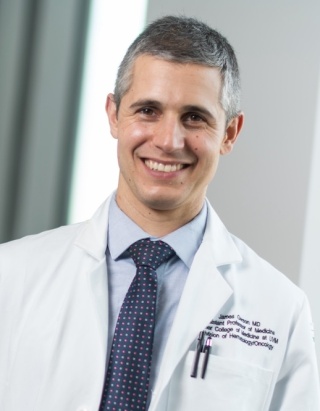
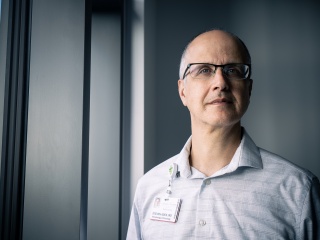
James Gerson, MD, brought CAR T-cell therapy to UVM from University of Pennsylvania, where he had worked directly with the research team who created it. “CAR T-cell therapy is an innovative therapy for certain types of blood cancers that engineers a patient’s own infection-fighting white blood cells (T cells) to target and kill cancer cells,” says Dr. Gerson, UVM Health director of CAR T Services; UVM Cancer Center director of the Cellular Therapy Program; and UVM Larner College of Medicine associate professor in the Division of Hematology and Oncology.
First, T cells are removed from the patient’s blood. Next, in the lab, the cells are modified by adding a receptor gene – a “chimeric antigen receptor” or CAR – that can recognize a protein on the cancer cell, latch to it and kill the cell. Finally, these adapted cells are multiplied and infused back into the patient.
“The several steps involved in treatment often trigger upheaval in patients’ lives since multiple episodes of care are required over the course of three to six months,” says Dr. Gerson. “Many patients move temporarily to the area where they’re being treated, but not all patients have that option. Bringing CAR T-cell therapy to our region is an important milestone in UVM Cancer Center’s rural health care mission because CAR T ultimately acts as a living, breathing treatment that resides in them for years. Of the patients we have treated since we launched the program, 55% are from rural geographies and many remain cancer free today.”
For Rachel Stewart, CAR T-cell therapy—and the supportive care of her hematologists and oncologists—had such a transformative impact that she and her husband, Mark, decided to make a generous bequest to support the evolution of CAR T. “Mark and I are extremely grateful for the compassionate care teams and the brilliant research by the physicians, notably: Dr. Sprague and Dr. Gerson at UVM Cancer Center,” says Stewart. “In particular, CAR T-cell therapy has given hope to me and other patients with multiple myeloma. Our financial bequest is our way of supporting cancer research and its future discoveries.”
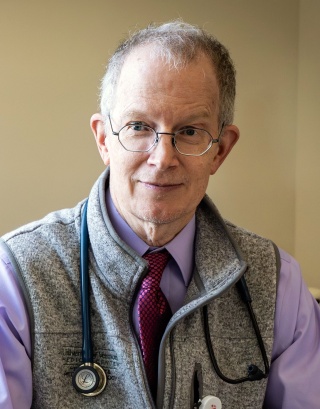
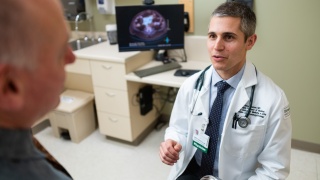
“This generous gift will propel forward our ability to provide leading researchers with dedicated time to advance our knowledge and application of novel therapies – the type of work and discovery that gives us hope for better treatments and increasingly promising outcomes in the future,” explained Julian Sprague, MD, UVM Cancer Center medical director, Hematology and Oncology; UVM Health fellowship director, Hematology and Oncology; and UVM Larner College of Medicine associate professor in the Division of Hematology and Oncology. “It will also allow us to explore and implement the best possible programs for supporting our blood cancer patients and their families through their treatment."
Cancer science is changing rapidly, and philanthropy is helping to drive progression. To explore how your gift can shape the future of cancer care, contact Lindsay Longe, Lindsay.Longe@uvmhealth.org, or 802-598-3422.