Angioplasty
Angioplasty at UVM Health
Angioplasty, or percutaneous coronary intervention (PCI), is a minimally invasive procedure that opens narrowed or blocked blood vessels to allow blood to flow through more easily. Angioplasty is a common treatment for coronary artery disease and can also be used as an emergency treatment following a heart attack.
At University of Vermont Health, our interventional cardiologists have deep experience in minimally invasive, catheter-based heart procedures such as angioplasty.
Why Choose UVM Health?
As one of the leading heart and vascular programs in the region, we offer:
- Excellent outcomes: Our interventional cardiology team tracks all patient outcomes in national databases, and our results consistently meet and even exceed national benchmarks.
- Advanced treatments: Cardiologists at UVM Health stay at the leading edge of catheter-based cardiac care, continually implementing the latest techniques. As part of a health system anchored by an academic medical center, our physician-leaders are also active researchers.
- Patient-centered care: Our team gets to know you and your priorities to find the care that’s right for you, whether it’s surgery or another treatment option.
- 24/7 rapid response: Our Extracorporeal Membrane Oxygenation (ECMO) activation system can mobilize within an hour for critically ill patients.
Conditions We Treat with Angioplasty
Angioplasty is used to treat coronary artery disease, which occurs when fatty deposits (plaque) build up in the coronary arteries, the blood vessels that supply oxygen-rich blood to the heart. Plaque buildup causes the blood vessels to narrow or become blocked (stenosis), reducing the amount of blood that reaches the heart.
Angioplasty can also be used in emergency situations, such as a heart attack, to quickly open a blocked blood vessel and reduce the amount of damage to the heart.
Wellness & Prevention
Evidence shows that proactive health care focused on preventing illness leads to better outcomes. We're here to help you live a healthier, happier life. We offer wellness and prevention services to empower you to take control of your health.

What to Expect During Angioplasty
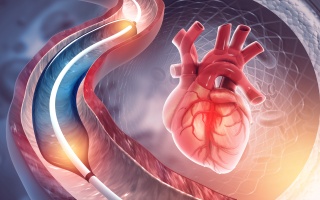
During an angioplasty, a thin, flexible tube (catheter) is inserted through an artery in the wrist, groin or arm. Using X-ray imaging, your cardiologist guides the catheter to the affected artery. Once the catheter has reached the artery, a small balloon is inflated. The pressure from the inflated balloon presses fat and calcium deposits (plaque) against the walls of the artery to improve blood flow.
After the plaque has been compressed, a small, expandable metal scaffold called a stent may be inserted into the artery to hold it open. The artery is less likely to narrow again (restenosis) after an angioplasty when a stent is used.
Because this is a minimally invasive procedure, you may be able to go home following the procedure. Occasionally, a hospital stay is required.
Locations near you
Share your location to see nearby providers and availability
118 Tilley Drive
Suite 102
South Burlington, VT 05403-4450
62 Tilley Drive
Suite 101
South Burlington, VT 05403-4407
214 Cornelia Street
Suite 203
Plattsburgh, NY 12901-2332
214 Cornelia Street
Suite 204
Plattsburgh, NY 12901-2332