THRIVE is the Accountable Community for Health (ACH) for Washington and northern Orange counties, Vermont.
Who We Are
THRIVE is a multi-sector collaborative, working to improve the health and well-being of the entire population in our defined geographic area.
We work to improve health outcomes at a population (not individual) level and contain cost by identifying and addressing social drivers of health through data, informed prioritization and coordination of efforts across partners.
We are health care, public health, social services, municipalities, nonprofits, community members and other local partners.
- Mission: Convenes, connects, and amplifies to improve population health in Central Vermont.
- Vision: A thriving, healthy community.
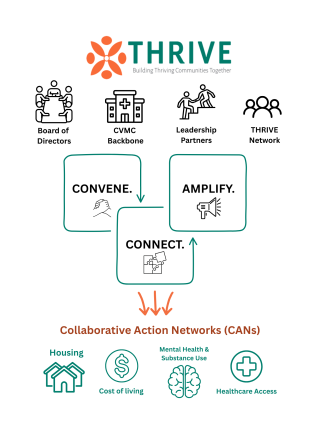
- Structure: THRIVE is led by a Board of Directors with Central Vermont Medical Center serving as the backbone organization — providing legal, financial and operational expertise.
- Purpose: THRIVE exists to convene multi-sector partners who collaborate to improve health outcomes and contain costs by identifying and addressing social drivers of health.
Community Health
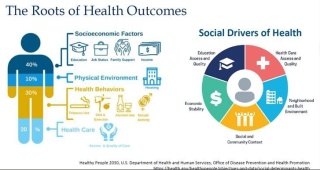
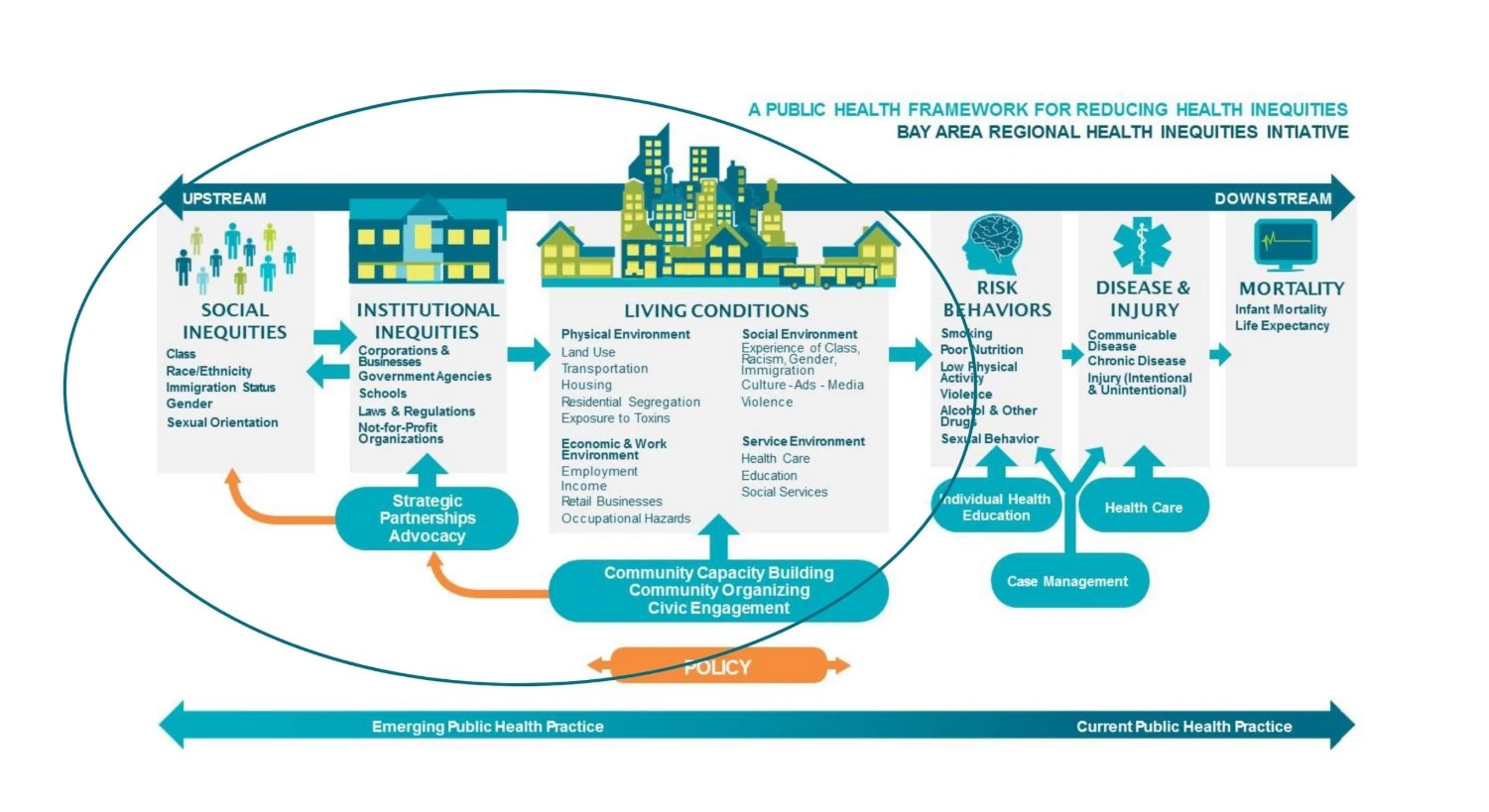
THRIVE operates as a unified network, focused on advancing upstream prevention strategies. Partners represent key Social Drivers of Health domains including housing, food access, transportation, health care access and economic stability, and serve as bi-directional ambassadors between their organizations and the communities they serve.
Our Team
- Joan Marie Misek, THRIVE Chair, Vermont Department of Health, District Director - Barre Office of Health
- Tawnya Kristen, THRIVE Vice-Chair, Green Mountain United Way, Executive Director
- Marc Kosak, THRIVE Ex Officio, UVM Health Central Vermont Medical Center (Central Vermont Medical Center), President & Chief Operations Officer
- Chris Meehan, Vermont Foodbank, Chief Community Impact Officer
- Sandy Rousse, Central Vermont Home Health and Hospice, Executive Director
- Claire Kendall, Family Center of Washington County, Executive Director
- Eva Zaret, UVM Health Central Vermont Medical Center (Central Vermont Medical Center), Central Vermont Prevention Coalition (CVPC), Program Manager
- Matt McDonough, UVM Health, Vice President of Operations, UVMH Medical Group; Family Medicine, GIM, Geriatrics, Palliative Care, Dental & Urgent Care
- Indra Acharya, Self-Employed; Harvard University Graduate School of Education; Vermont Climate Action Office, Consultant, Leadership, Strategy & Policy
- Diane Jones, Cornerstone Caregiving, Operations Director
- Chelsea Bardot Lewis, Vermont Businesses for Social Responsibility (VBSR), Executive Director
THRIVE Backbone Team
- Connie Gavin, the Blueprint Program Manager for the Barre Health Services Area and UVM Health’s Population Health Services Organization, supports the work of THRIVE. For more information about THRIVE, e-mail Constance.Gavin@UVMHealth.org.
- Kim Patnaude, THRIVE Treasurer, Central Vermont Medical Center, Chief Financial Officer
- Eleanor Standish, THRIVE Secretary, Central Vermont Medical Center, Executive Assistant
- Capstone Community Action
- Central Vermont Home Health and Hospice
- Central Vermont Medical Center
- Central Vermont Prevention Coalition
- Central Vermont Regional Planning Commission
- Downstreet Housing
- Family Center of Washington County
- Green Mountain United Way
- Good Samaritan Haven
- People’s Health and Wellness
- Blueprint for Health
- Vermont Agency of Human Services - Field Services
- Vermont Department of Health - local office - Barre
- Vermont Food Bank
- Washington County Mental Health Services
What We Do
To fulfill our mission, THRIVE convenes, connects and amplifies. THRIVE leverages a population health approach to address social drivers of health.
- Convenes leaders from the multi sector network to foster unity and drive collective action. Through monthly gatherings, THRIVE facilitates Community Health Improvement Plan progress, share organizational updates and identify emerging needs.
- Connects local, regional and statewide partners through using a Community Preparedness and Response model designed to streamline communication and quickly mobilize when community needs or opportunities arise — supporting coordinated, timely action across the network.
- Amplifies the work of partner organizations by elevating key community health initiatives and driving faster, more coordinated progress by facilitating Collaborative Action Networks.
Our work is guided by the:
2026 Collaborative Action Networks (CANs)
CANs have a defined purpose and structure.
Purpose:
- Work groups focused on driving action and measurable progress on key objectives identified in the Community Health Improvement Plan (CHIP).
Structure:
- Chair/Co Chairs: Leadership and facilitation skills, scheduling, agendas, making discussion actionable and putting next steps into writing.
- Data + Evaluation Lead: Ensure CAN is focused and within scope, support development of measurable 3- year population level goals, leverage existing Community Health Needs Assessment (CHNA) and publicly available data sources, develop tracking system.
- Advisors: 3-5 partners driven to move work forward, seeking varied skills and experience.
| Period | Action Steps | Owner(s) |
|---|---|---|
| Form CANs March – May 2026 |
| THRIVE Leadership |
| Workplan Jun – Aug 2026 |
| Data + Evaluation Lead (measures); Chair (workplan, updates); Advisors (input, assistance) |
| Execute & Iterate Sept – Dec 2026 |
| Chair (execution); Advisors (implementation); Data Eval. Lead (reporting) |
| 2025-2028 CHIP | This CHIP goes to 2028, this first phase will inform our ongoing approach. |
| CAN | CHIP Objective | CAN Partners | Leaders |
|---|---|---|---|
| Health Care | Increase the number of residents connected to primary care. | Dismas House, People’s Health and Wellness, Capstone Community Action GMUW, Tri Valley Transit, WCMHS, UVMH- CVMC, VDH, Blueprint | Co-Chairs: Michelle Martelle (UVMH), Jeremiah Eckhaus, MD (CVMC) Data Lead: Suzanne Lowden (CVMC) |
| Mental Health & Substance Use | Increase access to community programs that strengthen social connections, build resilience, and foster a sense of belonging. | GMUW, Good Samaritan Haven, Cornerstone Caregiving, Rainbow Bridge, Generations VT, WCMHS, Tri Valley Transit, VDH, Blueprint, UVMH-CVMC, CVPC | Chair: Brielle Sedergren (VDH) Data Lead: Suzanne Lowden (CVMC) |
| Rising Cost of Living | CAN in development | ||
| Housing | |||
Connie Gavin, the Blueprint Program Manager for the Barre Health Services Area and UVM Health’s Population Health Services Organization, supports the work of THRIVE. For more information about THRIVE CANs e-mail Constance.Gavin@UVMHealth.org.
Highlights
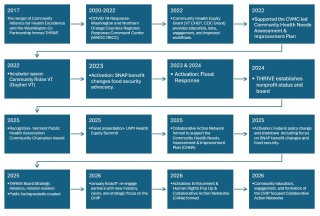
Demonstrated successes of THRIVE's cross sector collaboration of identifying and mobilizing response to community needs include.
FAQs
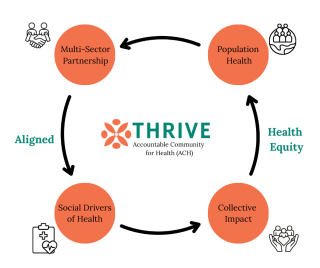
An accountable community for health is a structured, multi-sectoral alliance of healthcare, public health and other organizations that plan and implement strategies to improve population health and health equity for all residents in a geographic area.
An ACH includes 9 core elements:
- Mission
- Multi- Sectoral partnership
- Backbone “integrator organization”
- Governance
- Data
- Strategy and Implementation
- Community Member Engagement
- Communications
- Sustainable Funding
An ACH takes into account the multiple factors involved in an individual’s and population’s health.
Reference: Accountable Communities for Health | Blueprint for Health
Collective impact is a network of community members, organizations and institutions who advance equity by learning together, aligning and integrating their actions to achieve population and systems level change.
By bringing partners together to unite around shared challenges, analyze community health data and coordinate efforts, THRIVE serves as a champion for Collective Impact.
Reference: What Is Collective Impact - Collective Impact Forum
SDOH are non-medical factors that affect health outcomes. They include the conditions in which people are born, grow, work, live and age. SDOH also includes the broader forces and systems that shape everyday life conditions.
These forces and systems encompass economic policies, development agendas, social norms, social policies, racism, climate change and political structures.
THRIVE’s network is comprised of partner organizations working across the social drivers of health domains: housing, food access, transportation, health care access and economic stability. By convening partners, strengthening connections and coordinating shared efforts to address the social factors that shape community health, THRIVE helps activate and amplify community‑driven solutions that improve health and well‑being for everyone in the region.
Reference: Social Determinants of Health | Public Health Gateway | CDC