


At the University of Vermont we encourage pediatric resident scholarship in three key areas: Advocacy, Research, and Quality Improvement.
Advocacy
Recent advocacy projects that have become recipients of the American Academy of Pediatrics CATCH grants include:
- “Secure Firearm Storage in Vermont,” Kelly Blanchet, PGY-3 2024
- “Talking Gender in Primary Care,” Ben Kim, PGY-3, 2023
- “The Male Mental Health Phenotype,” Nick Bonenfant, PGY-3, 2020
- “Establishing a School Based Health Clinic: Winooski, VT,” Anna Zuckerman, PGY-3, 2018

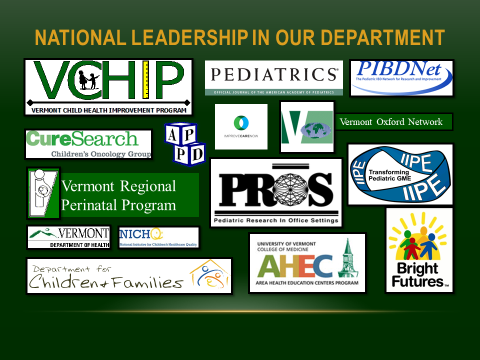
It is said that child advocacy is “in the DNA of pediatricians,” and at the University of Vermont we instill in our residents this key value. Our residents have dedicated time in Advocacy in their first and second years, as well as support through the scholarly half-day. During the first year of training our residents meet with state leaders in our department of health, the Vermont Child Health Improvement Program (VCHIP), and the American Academy of Pediatrics Vermont Chapter. During this month our residents are instructed in the basics of health advocacy—how to testify to the legislature, give an “elevator speech,” write op-eds, and more. They then take an inspired idea and create a longitudinal advocacy project aimed at improving the health and welfare of the children in our community.
Our residents are active members of the AAP Section of Pediatric Trainees (SOPT), and we encourage resident participation in the annual AAP Legislative Advocacy Conference. Current advocacy initiatives promoted by our residents include: improving safe gun storage, improving continuity of care for children in foster care, pediatric ATV accident review, the formation of a School-Based Health Clinic at Winooski Elementary School, and participation in T4CIP (Trainees for Child Injury Prevention) campaigns.
Northern New England Advocacy Conference (NNEAC)
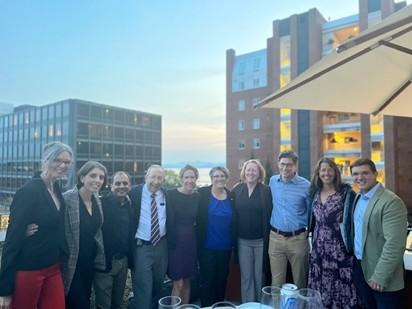
This unique alliance was established in 2018 between pediatric residencies in Maine, Dartmouth, and Vermont, together with our respective American Academy of Pediatrics state chapters. NNEAC brings together residencies, communities, and legislators to share projects, learn from keynote faculty, and support community initiatives. Special guests at this year’s conference focused on the importance of the Medical Home-School connection and the effects of parental incarceration on children and families.


Scholarly Half-Day
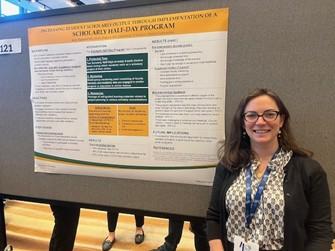
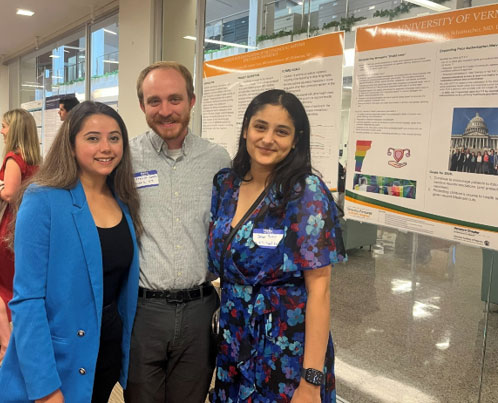
To encourage self-propelled scholarly activity, we provide two scholarly half days during each elective block (avoiding clinical experiences) for residents to focus on one of seven (7) areas of concentration: Advocacy/Legislation, Rural Health, Global Health, Med Ed, Inclusivity & Belonging, Clinical/Translational Research, and QI/Safety. During the first half of intern year, we provide shared resources and curriculum in these concentrations for residents to explore. In the second half of first year, an area of concentration is chosen. The goal is for each intern to map out a pathway to a scholarly deliverable (conference, poster, legislative action, etc.) that will be presented by the completion of residency. Every year, we have residents present posters at regional and national conferences (AAP, PHM, PAS, and subspecialty conferences). Posters line our administrative hallway to showcase the scholarly work residents complete during their time in our program.
Quality Improvement
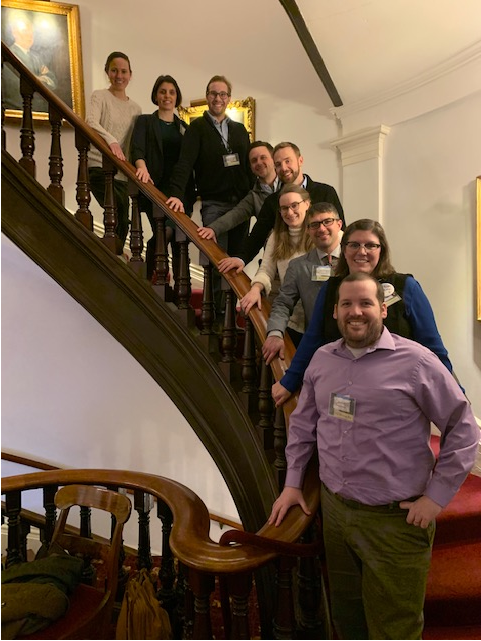
Our residents are also required to be involved in a longitudinal quality improvement initiative as part of their training. This is embedded in a population health curriculum, and the projects are organic and germane to Golisano Children’s Hospital at University of Vermont Health, aligning with institutional initiatives and goals. Residents work on these projects with interdisciplinary teams, allowing for team-based learning and collaborative relationship-building. Many of these projects evolve into scholarly work presented locally and regionally. Here are a few examples:
- "Talking Gender in Primary Care"
- "Bringing Mental Health to School"
- "Adaptive Clothing for Pediatric Inpatients"
- "Keeping Children Safe from Edibles: Lock Boxes"
- "The Mind Body Buddy Program"
- "Rectal Temperature Use with Febrile Infants in Emergency Department"
- "Improving Breastfeeding Success: Reducing Unnecessary Formula Supplementation in the Newborn Nursery"
- "Creation of Resident Panels to Improve Continuity in Resident Primary Care Clinic"
- "Creation and Implementation of an Asthma Pathway for ED and Inpatient Ward and Asthma Action Plan for Outpatient Clinic"
- "Reduction of Chest X-Ray in Bronchiolitis Patients"
- "Updating Pediatric Morning Report: Increasing Observed Quality and Perceived Educational Value among Faculty and Residents"
- "Food Insecurities Screening on Inpatient Ward"
- "Effectiveness of Healers Reflection as Part of Resident Wellness Curriculum"
- "Continuity Clinic Improvement of Continuity and Population Health Metrics"