Skin Cancer Reconstruction
Skin Cancer Reconstruction at UVM Cancer Center
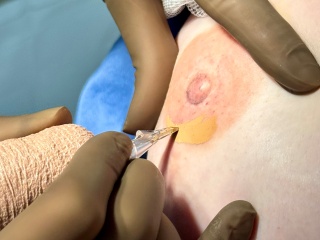
Surgery is the most common treatment for skin cancer and in some instances, may be the only treatment you need. To minimize scarring, a plastic surgeon may be part of your surgical care team.
At University of Vermont Health, you have access to highly trained plastic surgeons who use precise tools and techniques to protect your skin’s appearance. Your plastic surgeon works closely with your other providers to give you the best possible outcome.
As a leading plastic surgery program in the region, we offer:
- Advanced expertise: Our plastic surgeons have extensive experience in skin cancer surgery and reconstruction. As academic leaders, they are among the first to adopt the latest advances in care.
- Convenience: We offer services at locations in Vermont and northern New York. We also offer digital health options for some follow-up visits.
Conditions We Treat
We treat all types of skin cancer, including:
- Basal cell carcinoma
- Melanoma
- Merkel cell carcinoma
- Squamous cell carcinoma
What to Expect
Navigating cancer care can be overwhelming. We take time to listen to your concerns and answer your questions. As your partner in care, we offer guidance and support to assist you through the skin cancer reconstruction process.
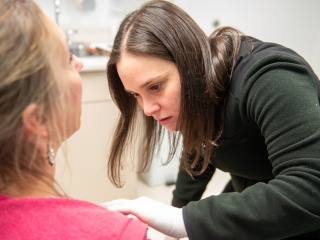
A consultation is the starting point for skin cancer reconstruction. We meet with you to review your condition, discuss options and answer any questions you have. We then develop a plan for reconstruction based on the cancer type, stage and location — and your personal preferences.
Patients typically come to us through a referral from a dermatologist or other specialist.
Our plastic surgeons are experienced in both routine skin cancer removal and complex surgeries that involve a multidisciplinary team.
We surgically remove skin cancer by removing thin layers of skin to minimize damage to surrounding tissue. The surgeon immediately sends it to a pathologist, who freezes it for analysis. They continue this process until the cancer is entirely removed.
When needed, we use reconstructive techniques to repair the skin after surgery, including:
- Skin grafts: A skin graft is a section of skin taken from another part of your body and secured over the surgical wound with tiny stitches. Over time, blood vessels grow into the new tissue to support it.
- Skin flaps: A flap is similar to a graft, but the tissue is connected to a blood supply to promote healing. Your surgeon may reposition a flap from a nearby area with its blood vessels intact or transplant it from another area where scars are not visible and the tissue is more easily spared. When transplanting a flap, your surgeon uses microsurgery to attach the blood vessels in the flap to those in the new location.
We perform minor skin reconstruction surgery in our clinic using a local anesthetic to numb the area. More extensive reconstruction surgeries are done in an operating room under general anesthesia.
After surgery, you may have redness, soreness and fluid drainage at the incision site. Our team gives you instructions for caring for the wound and tells you when you can resume usual activities. We also track your recovery with routine follow-up visits. If needed, we may coordinate a referral for home health care to help you recover.
It may take a year or longer for your incision lines to fade. Your surgeon will do their best to minimize scarring, but it’s common to have some permanent differences in your skin.
As you recover, it’s important to avoid sun exposure, which can cause scars to become raised or dark in color. Protecting your skin from the sun allows for maximum healing and reduces your risk of another skin cancer.
Home-Based Health Care
We provide care in the comfort of your home to support you in your recovery, help you maintain your independence and improve your quality of life. Services are available in Chittenden and Grand Isle counties.

Patient Resources
Locations near you
Share your location to see nearby providers and availability
214 Cornelia Street
Suite 103
Plattsburgh, NY 12901-2332
354 Mountain View Drive
Suite 103
Colchester, VT 05446-5923