What If Brain Cancer Didn’t Mean Radiation Right Away?
A new trial is helping patients live better, not just longer.
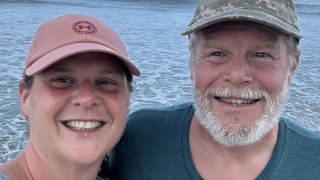
When Mike Spaeder learned his lung cancer had spread to his brain, the news felt crushing.
“You hear that, and you think it’s the end,” he says. “You think your life is about to shrink down to doctors’ visits and side effects.”
For decades, that fear was justified. Chris Anker, MD, radiation oncologist at University of Vermont Health – UVM Cancer Center, says many patients with cancer in the brain were told they needed radiation right away. The standard was whole‑brain radiation therapy, which treated the entire brain but often caused problems with memory, focus and energy. As patients lived longer, the long‑term toll of this approach became clearer.
How Precision Radiation Improved Quality of Life
Over time, advances in imaging and radiation technology allowed a major shift. Instead of treating the entire brain, many patients today can receive a highly focused form of radiation that targets only the tumors.
According to Dr. Anker, this evolution from broad, whole‑brain treatment to pinpointed therapy has changed the landscape of care and improved quality of life for patients. Still, even with these more precise techniques, there remains a real, though much smaller, chance of radiation‑related brain injury. Living longer can come with a cost to how patients feel and function.
“We’re trying to improve on that,” Dr. Anker says. “The goal of living longer should go hand in hand with preserving doing what you look forward to every day.”
A Clinical Trial Exploring New Options for Brain Tumors
Rather than starting radiation right away, Spaeder joined a clinical trial at UVM Cancer Center led by Dr. Anker. The study tracks how newer cancer medicines – designed to cross the blood-brain barrier better than traditional chemotherapy – are working. If the drugs are effective, patients may be able to delay, or even avoid, treatments that could harm their quality of life. Radiation remains an option if needed, but only to brain tumors not responding to the new drugs.
“We owe it to patients to protect their minds, their memories and what they enjoy in life,” Dr. Anker says. “While there have been dramatic advances in the safety of radiation to the brain, side effects are lowest if radiation isn’t given at all. Also, by avoiding trips to the hospital for radiation, patients save money and have more time for themselves. Sometimes doing less is actually doing what’s best.”
Living Well, Living Longer
So far, Spaeder hasn’t needed radiation, and his days still look like his life. He goes to the gym regularly and spends hours outside doing yard work. He says he hasn’t lost any motor skills. Just as important, he feels like himself.
“I smile, I joke, I laugh, I carry on,” Spaeder says. “I’m not having any ill effects. Everything has been really good.” That has allowed him to do things he loves and make plans he once feared might be off the table. This summer, he’s heading to Toronto with his son to see Rush in concert. He and his wife, Kate, also have a trip planned to Hawaii.
“That’s always been on my bucket list,” he says.
Why Research is Changing Expectations for Patients
Dr. Anker says moments like these underscore why the research matters.
“Patients who once might have been expected to live months are now living years,” he says. “Many are living those years well, staying active and engaged.”
I don’t want to spend whatever time I have left feeling foggy or worn down,. - Mike Spaeder
“I want to live my life.” For his wife, the impact is deeply personal. She talks about milestones ahead, including their daughter’s college graduation and graduate school plans, with their son not far behind.
“We’re living like we’re all going to be there.”
She says the care at UVM Cancer Center made them feel informed, heard and involved at every step.
“We are part of every decision,” she says. “The team listens. They explain things in a way we can understand. We aren’t just along for the ride. We are in the driver’s seat.”
Dr. Anker sees this work as a promise to patients.
If we can help someone live longer and protect what makes life meaningful, then we’re truly doing our job.