Alcohol Use Disorder Is Widespread and Treatable
Clinicians urge earlier screening and support.

Alcohol is deeply woven into American culture, celebrated at milestones, sporting events and social gatherings. Yet behind that normalization lies one of the most widespread and misunderstood public health challenges of our time: Alcohol Use Disorder, or AUD (commonly called “alcoholism”). In Vermont and across the region, clinicians, public health leaders and recovery professionals say alcohol’s prevalence and the risks that accompany it demand renewed attention.
Alcohol use disorder affects people across age groups and income levels, affecting people in both rural and urban communities. Vermont consistently reports some of the highest rates of alcohol consumption in the nation. Beyond binge drinking or unhealthy use patterns, alcohol use contributes to serious health consequences including liver disease, increased cancer risk, injuries and premature death. Even so, alcohol often receives less attention than opioids or other substances because it is legal, socially accepted and aggressively marketed.
“Alcohol gets lost in the shuffle,” says Peter Jackson, MD, medical director of University of Vermont Health Addiction Treatment Center. “It’s normalized in a way that can make alcohol use disorder more difficult to recognize and harder for people to seek help without shame.”
Understanding Alcohol Use Disorder as a Health Condition
Clinicians and recovery professionals emphasize that alcohol use disorder is not a moral failure or a lack of willpower. It is a medical condition shaped by biology, mental health and social factors. While some people can consume alcohol without harm, others develop a disrupted relationship with it that meets diagnostic criteria for mild, moderate or severe AUD.
Alcohol is also uniquely dangerous among commonly used substances. Withdrawal from heavy or prolonged alcohol use can trigger seizures or hallucinations and, in severe cases, can be life-threatening without medical oversight.
“Alcohol withdrawal is one of the most dangerous types of withdrawal we see,” Dr. Jackson says. “People shouldn’t try to stop heavy drinking on their own without medical support.”
This risk underscores the importance of screening and early intervention. Honest conversations between patients and clinicians can identify risky use patterns before they escalate. Experts say the goal is not only crisis care, but prevention, offering support long before someone requires hospitalization.
How to Reduce or Quit
Changing your relationship with substances is the first step to regaining control of your health. Change doesn’t have to happen all at once — small, steady steps can make a meaningful difference.

Primary Care and Community-Based Treatment
In recent years, University of Vermont Health - Central Vermont Medical Center and community partners have reshaped how alcohol use disorder is identified and treated, particularly in primary care settings.
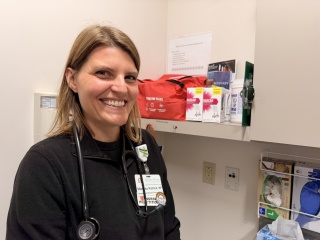
Marissa Patrick, a primary care nurse practitioner and clinical lead for the Central Vermont Prevention Coalition (CVPC), helped develop a treatment pathway that gives clinicians clear guidance from screening through follow-up care.
Nearly everyone is screened for alcohol use in primary care. But for a long time, providers didn’t always know what to do next. Now we have a clear, patient-centered approach. - Marissa Patrick, NP
That approach may include brief counseling during office visits, medications that reduce cravings or support reduced use or abstinence, and referrals to additional services when needed. Importantly, treatment does not require abstinence as the only goal. Patients may choose to cut back or drink more safely while others decide to stop entirely. Those goals are set collaboratively and revisited over time.
Eva Zaret, a public health specialist and manager of the coalition, emphasizes that people don’t need a formal diagnosis of alcohol use disorder to seek help.
“You can be curious about your drinking and talk to your provider,” she says. “Those conversations should happen earlier, before someone is really suffering.”
The Role of Recovery Coaches
Medical care is only one piece of long-term recovery. Peer recovery specialists and coaches play a critical role in helping people navigate treatment, rebuild trust and stay engaged in support.
Mallory Richardson, a certified recovery coach at Turning Point of Central Vermont who is embedded in the emergency department at CVMC, highlights the power of lived experience.
“As a peer, I’ve been through addiction myself,” Richardson says. “That shared understanding helps people feel less alone and more willing to trust the process.”
Recovery coaches assist with goal setting, navigate treatment options and provide support during vulnerable transitions, such as leaving the hospital or starting outpatient care. Richardson also points to the need for stable housing and ongoing support, noting that treatment stays alone are often not enough.
Moving Forward with Compassion and Awareness
Across University of Vermont Health, experts agree that alcohol use disorder is widespread, treatable and too often overlooked. Treating it as the major public health issue it is may be one of the most meaningful steps communities can take to improve overall health and wellbeing.
Doing so requires more than clinical tools. It calls for honest public conversations, accessible treatment across healthcare settings and a shift away from judgment.
“There is support out there,” Richardson says. “People genuinely care and recovery is possible at any stage.”
Alcohol Use Definitions
Helpful guidance from the National Institute on Alcohol Abuse and Alcoholism. Learn more
- Binge Drinking: Consuming five or more drinks for men and 4 or more for women, in about two hours.
- Heavy Drinking: Four or more drinks on any day or eight or more per week, for women; five or more drinks on any day or 15 or more per week for men.
- Moderate Drinking: Having 1 drink or less per day for women and two drinks or less per day for men.
- Beer: one 12-ounce serving at 5% alcohol
- Wine: one 5-ounce serving at 12% alcohol
- Spirits: a 1.5-ounce serving at 40% alcohol