A Journey Back from Addiction
Dedicated caregivers help Vermonters reclaim their lives.
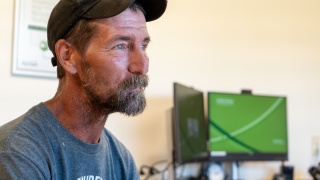
About 15 years ago, a kitchen grease spill burned Aaron Blair’s foot so severely that he needed skin grafts. The traumatic injury marked the start of a long struggle with opioids.
Before he knew it, Blair was taking 15 Percocet a day, along with oxycontin and other heavy-duty painkillers.
“Life got pretty messy, but I managed to get myself sober, first by buying Suboxone on the street,” Blair says, referring to the medication that helps him manage withdrawal symptoms and cravings. “It wasn’t until I ended up in the hospital that I met people like Alice and Peggy, who have helped me do it in a better way. They’re basically my sponsors in recovery.”
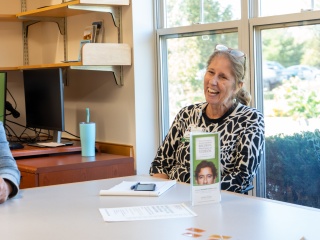
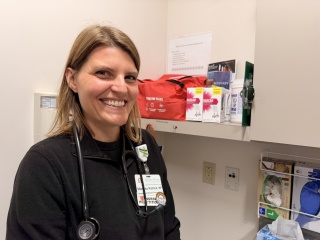
Alice Spirito, RN, and Peggy Weaver, LADC, are part of a small team from University of Vermont Health – UVM Medical Center’s outpatient psychiatry group. Alice is a nurse specializing in addiction and recovery care; Peggy is a licensed alcohol and drug counselor. Together, they work with people prescribed medications for opioid use disorder (MOUD), like buprenorphine, to support recovery from opioid use. In partnership with primary care providers statewide, they offer wrap-around mental health and counseling services during regular check-ins at primary care offices.
They’ve been with me through so much — through the loss of my mom, bad times at work, my recent heart attack and even helping me figure out problems with my health insurance. They really go above and beyond — I don’t know what I’d do without them.
A Key Resource in Recovery
Nearly 10,000 Vermonters receive MOUD through the state’s hub-and-spoke model. Many, like Blair, start out at an opioid treatment hub for intensive, daily care. Once stable, they transition to a primary care office, community health center or outpatient clinic for ongoing maintenance care.
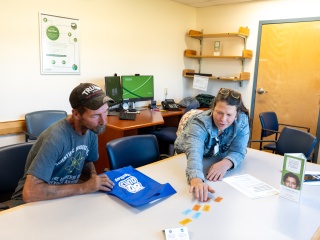
That's where Spirito and Weaver step in, serving as a vital link between patients, primary care providers and other resources. Through regular calls and in-person meetings, they troubleshoot medication issues, teach coping skills and address everyday challenges that could trigger a relapse.
“A big part of what we do is just being present — to listen to the good and the bad that’s going on in someone’s life and supporting them to work through it safely,” says Spirito, who has worked in addiction recovery for more than 20 years. “Maybe they’ve lost their job or their house, or maybe their loved one is using opioids in the home — whatever the case may be, we’re here to help them get their MOUD safely and develop the tools they need to support their long-term recovery.”
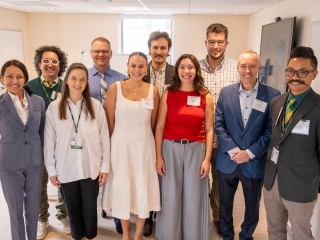
Including Spirito and Weaver, UVM Medical Center has four MOUD care teams supporting hundreds of people in recovery across Chittenden County. They work with patients at UVM Health primary care and family medicine practices as well as independent clinics like Evergreen Family Health and Thomas Chittenden Health Center in Williston.
The Human Toll
The opioid epidemic has claimed more than 1,600 lives in Vermont over the last decade, a figure that understates the scale of substance use and suffering in the state. More Vermonters receive treatment for opioids than all other substances combined. For some, long-term recovery means a lifetime commitment to MOUD.
Others, like Blair, hope to one day transition away from medication, instead relying on coping skills and resilience honed in recovery with support from caregivers like Spirito and Weaver.
“Until that day comes, I’m so happy I have them in my corner,” says Blair. “It’s reassuring to know that day or night, they show up for me when it really matters.”