In Vitro Fertilization (IVF)
IVF at UVM Health
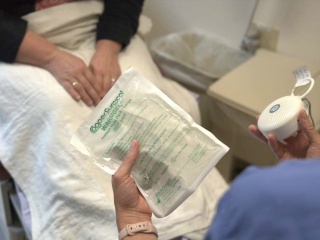
In vitro fertilization (IVF) is an advanced fertility treatment that helps people achieve pregnancy. It involves fertilizing eggs with sperm in a laboratory, then transferring one or more of the fertilized eggs (embryos) into the uterus. Pregnancy occurs when the embryo attaches to your uterine lining.
At University of Vermont Health's Center for Reproductive Medicine, you’ll find state-of-the-art facilities and expert care. Our compassionate teams have extensive training in all aspects of fertility treatment, including IVF. They understand the physical and emotional challenges you may face and will guide you through your fertility journey.
Why Choose UVM Health?
As a leading IVF program in the region, we offer:
- Experience: You receive care from reproductive endocrinologists, clinical laboratory embryologists, andrologists and nurses who specialize in IVF.
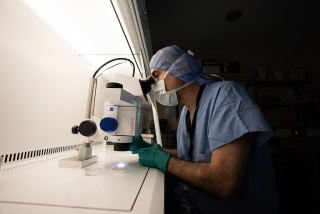
- State-of-the-art facility: IVF requires a well-regulated environment for the handling and storage of eggs, sperm and embryos. Our embryology laboratory features monitored air filtration systems, incubators and cryo units, and sophisticated microscopes equipped with micromanipulation and laser tools.
- High-quality care: Our center maintains memberships in and certifications through leading national organizations. These efforts demonstrate our dedication to the highest standards for training, experience, IVF practices and reporting.
- Inclusive services: Our embryology team recognizes diversity in all its forms. Our commitment to exceptional IVF treatment extends to couples and single people of all races, ethnicities, abilities, gender identities and sexual orientations.
Is IVF Right for You?
There are many reasons you may choose IVF, the most common of which is infertility. Infertility may be a result of many factors, including:
- Low egg count
- Blocked or damaged fallopian tubes that prevent eggs from reaching your uterus
- Endometriosis
- Ovulation disorders, such as polycystic ovarian syndrome (PCOS)
- Sperm problems
- Uterine fibroids
Infertility may also have no identifiable cause (unexplained fertility).
IVF may also be used for:
- People using an egg donor and/or gestational carrier (surrogate) to build their family
- Families with an inherited genetic condition that they want to avoid passing on
- Same-sex couples wanting to do reciprocal IVF (one partner donates an egg and the other partner carries the embryo after fertilization with sperm)
Throughout all visits, I've felt listened to and have felt comfortable asking all questions. IVF can be an overwhelming process and this care team has been phenomenal.
IVF Process
If you are considering IVF or are having fertility problems, your first step is a fertility consultation with a reproductive endocrinologist. This visit includes a discussion about your medical history and reproductive goals. We may also perform a physical and pelvic exam and order diagnostic tests at this time. Working with you, we use this information to develop a personalized treatment plan.
Before you choose IVF, our team helps you understand the process, so you know what to expect.
The five main steps in IVF include:
In a typical menstrual cycle, hormones stimulate your ovaries to release one egg a month. In IVF, you receive:
- Conditioning medications to prepare your ovaries
- Hormone injections to encourage your ovaries to produce as many eggs as possible
The hormone injection phase lasts about eight to 12 days, until the eggs are ripe. During this time, you will have blood and ultrasound tests every one to three days to monitor the developing eggs. The entire preparation and stimulation phase can take up to six weeks.
Your clinician removes the eggs from the ovaries using a thin needle guided by a transvaginal ultrasound. You will receive medication to mildly sedate you during the procedure. Our team places the eggs in a dish and transfers the dish to an incubator.
In the lab, we fertilize your eggs with sperm from your partner or a donor. Our experienced embryologists monitor the fertilized eggs over the next three to five days to make sure healthy embryos develop.
In some cases, we may inject the sperm directly into the egg to assist fertilization. This technique, called intracytoplasmic sperm injection (ICSI), is performed with a sophisticated microscope using special tools.
When the embryos are ready in 3 to 6 days, you will return to our office. We gently place one or more embryos into your uterus through a thin tube inserted through your vagina and cervix. This procedure feels similar to a Pap test and does not require anesthesia.
If there are extra embryos, we can freeze them for future IVF cycles. Before we transfer a previously frozen embryo, you will receive medications to prepare your uterus.
You will return to the office or a lab two weeks after embryo transfer for a pregnancy test. These two weeks can be an emotional time. If needed, we can recommend resources to help support you while you wait.
Risks of IVF
Overall, IVF is safe but does involve some risk. Your clinician will discuss risks with you during your consultation. They include:
- Multiple pregnancy: If we transfer more than one embryo, a multiple pregnancy can occur. Twins are most common, but triplets or more are possible. We use guidelines from the American Society for Reproductive Medicine to recommend the number of embryos to transfer.
- Ovarian hyperstimulation syndrome (OHSS): OHSS is a rare complication caused by the developing eggs in combination with high estrogen. We monitor you closely to prevent OHSS.
- Complications from egg retrieval: Complications are rare, but can include bleeding, injury to internal organs or infection. We take every possible precaution to prevent complications.
Awards & Certifications
American Institute of Ultrasound Medicine (AIUM) Accreditation
We are the only center in Vermont accredited by the AIUM for reproductive endocrinology and infertility. This accreditation means our sonographers and physicians have extensive training and ongoing evaluation of their imaging by an independent authority.
American Society of Reproductive Medicine (ASRM) Nursing Center of Excellence
Our designation as an ASRM Nursing Center of Excellence recognizes the expertise of our nursing team in providing high quality reproductive endocrinology and infertility care.
College of American Pathologists (CAP)-Certified Reproductive Laboratory
CAP certification demonstrates our commitment to meeting evidence-based laboratory guidelines and providing accurate testing and results.
Society for Assisted Reproductive Technology (SART) membership
SART membership shows we meet national standards for reporting, experience, infertility care and IVF.
Locations near you
Share your location to see nearby providers and availability
111 Colchester Avenue
Main Campus, Main Pavilion, Level 4
Burlington, VT 05401-1473