CPR Saved His Grandmother's Life
No pulse, no breathing, Ryan Long, 14, had to act fast.
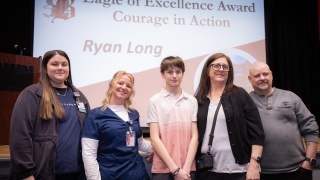
Michelle Hunt wasn’t feeling right.
She’d just come home from work, rushed to the bathroom and threw up. She told her grandson, Ryan Long, 14, that she didn’t feel well and went to her bedroom to rest.
Within minutes, a family friend called him, concerned about garbled texts from his grandmother. Her daughter called for the same reason. Long went to check on his grandmother.
She had passed out.
They were alone. He tried to wake her, but she did not respond. Unbeknownst to him, Michelle Hunt was suffering from a massive heart attack.
While her daughter called 911, Long FaceTimed his grandfather, Charles Hunt, who was at work near University of Vermont Health – Champlain Valley Physicians Hospital. Long told him his grandmother was unconscious, and that they’d called 911. Charles Hunt was closer to the hospital than home and rushed to the emergency department.
By the time he reached the waiting room, Long was hysterical, screaming “Papa! Papa!” over FaceTime. Kaylee Miller and Linda Dumbuya, Champlain Valley Physicians Hospital emergency department nurses, heard him from the triage area.
“Charles handed us the phone immediately,” Miller says. “I remember seeing the face of a panicked child.”
The nurses began coaching Long right away, asking him to check for a pulse. He couldn’t find one. They asked if his grandmother was breathing.
“He just said ‘She’s dead! She’s dead!” Miller recalls.
They told Long to start CPR, explaining exactly what to do.
“Ryan, you’re doing a really good job. Ryan, I need you to keep pressing on her chest. You can do this, Ryan. Ryan, they’re going to be there soon. You’re doing a really good job,” Dumbuya recalls telling him.
Even for trained professionals, CPR is exhausting after a minute or two. For a 14-year-old boy, it was even more demanding. After a few minutes, he began to tire.
“We knew if he stopped...,” Miller says, shaking her head slowly.
Charles Hunt watched everything unfold on FaceTime.
“I was afraid that Ryan was going to be there, and she wasn’t going to make it,” he says.
Ryan, you’re doing a really good job. Ryan, I need you to keep pressing on her chest. You can do this, Ryan.
New York State Police Troopers Joshua Mockus and Nathan Decote were patrolling nearby when a second 911 call with more details made it clear a life was in danger. They rushed in and found Long frantically performing chest compressions. The officers took over CPR.
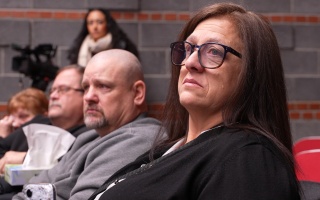
Minutes later, first responders arrived, used a defibrillator, continued CPR, and administered medications to stabilize Michelle Hunt for transport to Champlain Valley Physicians Hospital’s emergency department.
A few days later, she woke up in a hospital bed. She had no memory of what had happened and, miraculously, walked out of the hospital in less than two weeks.
“When I heard what Ryan had done, I was... wow,” she says. “The doctors said because he started CPR early, it kept oxygen to my brain.” In all, Long performed CPR for more than seven minutes, buying critical time and giving first responders a chance to save her life.
In all, Long performed CPR for more than seven minutes, buying critical time and giving first responders a chance to save her life.
When I heard what Ryan had done, I was... wow. The doctors said because he started CPR early, it kept oxygen to my brain.
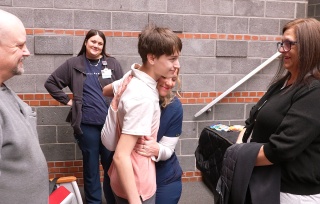
Beekmantown Middle School later awarded Long the inaugural Eagle of Excellence Award. Champlain Valley Physicians Hospital also declared him a Health Care Hero. As part of the ceremony, hospital staff brought CPR simulators to school to teach kids how to do it. Immediate CPR can double or triple the chances of survival, according to the America Heart Association. More than 90% of heart attacks happen outside of a health care setting. “If more people knew how to do CPR, it would save a lot of lives,” Miller says.
To learn more about CPR, visit the American Heart Association.