Spinal Cord Rehabilitation
Spinal Cord Rehabilitation at UVM Health
Your spinal cord is the pathway through which messages travel between your brain and the rest of your body. Any injury to the spinal cord can disrupt these messages, leading to impaired movement or sensation.
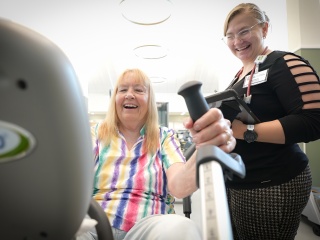
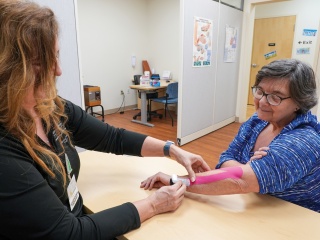
Usually, people with spinal cord injuries start rehabilitation in the hospital. But your recovery continues after you transition home. At University of Vermont Health, we offer specialized rehabilitation to help you maximize your function and achieve higher levels of independence after a spinal cord injury.

Why Choose UVM Health?
As one of the leading rehabilitation programs in the region, we offer:
- Care close to home: We offer rehabilitation services in multiple locations throughout Vermont and northern New York. No matter where you live, you have easy access to expert care.
- Specialized skills: Our physical and occupational therapists have specialized training in spinal cord injuries. We commit to high-quality treatment, continually bringing you effective techniques and tools.
- Access to the latest treatments: Our affiliation with an academic medical center means you have access to new and emerging technologies and treatments. We collaborate with researchers to improve our clinical skills and promote best practices.
Conditions We Treat
Spinal cord injuries often occur because of physical trauma, such as a motor vehicle accident, fall, or sports injury, or complications from surgery. They can also occur due to a degenerative disorder or condition, such as osteomyelitis.
Symptoms can vary widely depending on where the injury occurs along your spinal column. You may experience:
- Bowel and bladder difficulties
- Decreased joint mobility
- Impaired circulation
- Loss of sensation
- Muscle paralysis or weakness
- Muscle spasticity
What to Expect
We aim to start spinal cord therapy as soon as possible to maximize your function. Our goal is to help you:
- Improve physical function and mobility
- Increase safety and independence
- Overcome social and psychological barriers that impede your transition to daily life
- Use adaptive equipment and technology that empowers you to return to work and your community
After an initial hospitalization or rehabilitation stay, spinal cord rehabilitation often involves home health services. A physical or occupational therapist and nurse visit you at home to help with your rehabilitation. Once you are able to leave your home more easily, you may transition to an outpatient therapy clinic for continued physical and occupational therapy services. Your providers will create a personalized treatment plan to help you achieve your short- and long-term goals. Therapy may include:
- Learning adaptive movements so you can participate in your daily activities, such as getting in and out of a car or rolling over in bed
- Preventing and treating complications such as difficulty controlling your bowel or bladder
- Determining the most appropriate mobility options, including braces, a walker, crutches or a manual or power wheelchair
- Working on accomplishing specific tasks, such as preparing a meal or getting dressed
Your care may also include referrals to specialized programs and other resources, such as:
- Driver rehabilitation: To assess your driving abilities and determine necessary adaptations to enable you to return to driving safely
- Support groups: To connect with counselors and meet patients and families in similar situations
- Wheelchair assessments: To help you find the right wheelchair and medical equipment for your physical and social needs
Spinal Cord Injury (SCI) Resources
If you or a family member are recovering from a spinal cord injury, please explore the resources below.
- UVM Medical Center SCI Manual: UVM Medical Center's Spinal Cord Injury Binder explains how best to care for yourself, or receive care, after SCI.
- Facing Disability Facebook Group: A private Facebook group for people with spinal cord injuries and their families.
- Paralyzed Veterans of America: Free downloadable books about access to federal health programs, working with managed care and living with a spinal cord injury.
- Consumer Guides: Free guides focused on recovery expectations by spinal cord injury level as well as particular topics of interest to people with SCI.
- VIDEO: Anatomy and Types of Spinal Cord Injuries
- Understanding Spinal Cord Injury Part 1: Details about anatomy, spine and spinal cord.
- Understanding Spinal Cord Injury Part 2: General information about recovery and rehabilitation.
Skin Care
Respiratory Health
Bladder Care
- VIDEO: How to Self-Catheterize: For the Female Patient
- VIDEO: How to Self-Catheterize: For the Male Patient
Bowel Care
- VIDEO: Bowel Management After Spinal Cord Injury
- Fact Sheets: Bowel Function After Spinal Cord Injury
Sexuality
- Sexuality and Disability: This site is dedicated to women with disabilities with a focus on body awareness, sexuality, relationships and childbearing.
- VIDEO: Sex After Spinal Cord Injury: Explores many aspects of sexuality after SCI.
- Dr. Mitchell Tepper: Dr. Tepper is a certified sexuality therapist living with SCI and addresses many concerns about sexuality for a variety of abilities and conditions.
Mental Health and Spinal Cord Injury
- Depression and Spinal Cord Injury: This tip sheet about adjustment after SCI. It may be helpful to discuss your individual needs with your treatment team to learn what resources are available.
Pain Management
- Pain After Spinal Cord Injury: Fact sheets and a podcast.
Spasticity
- Spasticity and Spinal Cord Injury: A helpful fact sheet about spasticity and what to expect.
Mobility and Transfers
- Basic
- Safe Transfer Technique: A slideshow that covers all basic paraplegic mobility techniques.
- QuadFitness: Videos about bed mobility, mat scooting, supine, long sit, mat progression and transfers for quadriplegic injuries.
- Clinical Kinesiology – Quadriplegia: Video series for therapists wishing to learn more about how to help teach mobility skills for all levels of quadriplegia and can sometimes be useful for patients to watch, too.
- Advanced
- VIDEO: Wheelchair Skills – Car Transfers
- VIDEO: Wheelchair Skills – Floor Transfers
- How to Transfer from Floor to Chair
- VIDEO: Paralyzed Living: YouTube channel for paraplegic day-to-day mobility in home and community.
- VIDEO: Rachelle Friedman Chapman YouTube Channel: Rachel Friedman is a person with C5-6 quadriplegia who has many videos of her day-to-day life including driving.
Wheelchair Skills
- Basic Wheelchair Skills
- VIDEO: Wheelchair Skills – Wheelchair Pushing - Design: A basic video about propulsion technique.
- Wheelchair Skills: SCI Empowerment Project: The University of Washington has a series of videos for all mobility (including areas already covered above) that demonstrate basic and advanced techniques.
- Advanced Wheelchair Skills (Wheelies, Curbs): We recommend that these skills be learned and taught in the following order, with these videos as a resource. It's best that you learn these skills with an experienced therapist (do not try these at home):
- Real World People Using Wheelies in the Community
- Caregiver Techniques
Sports
Locally we have several organizations that provide access to sports via instruction, equipment loan/rental and access to scholarships and grants to help people to participate.
- VermontAdaptive.org: Includes alpine skiing, snowboarding and other winter sports; kayaking, canoeing, stand-up paddle boarding, sailing, cycling, hiking, rock climbing, tennis, horseback riding and environmental programs for all abilities.
- DisabledAthletics.org: Promotes and provides opportunities for people with physical disabilities to pursue a variety of recreational sports and competitive athletics.
- KellyBrushFoundation.org: Empowers those with paralysis to lead engaged and fulfilling lives through sport and recreation.
- Accesstr.com: Provides adaptive recreation equipment (only) for those with physical disabilities.
Wheelchair Maintenance
Learn how to maintain your wheelchair, along with advice about when to call your vendor.
- VIDEO: Home Adaptations and Modifications After Spinal Cord Injury: This 44-minute video demonstrates many of the options for home modification.
- VIDEO: Wheelchair Accessible Home: This 14-minute video shows one person's choices in new construction for a wheelchair accessible home.
- Vermont Center for Independent Living (VCIL): The Vermont Center for Independent Living has a Home Access Program that can provide funding (up to certain income limits) and assistance in finding someone to build a ramp or modify a bathroom.
- SmartHome.com: This website has a large variety of home automation and accessibility devices to consider. While not designed for people with SCI many have found useful devices and information.
- Housing and Home Modifications: A compilation of many resources on housing that are available nationwide.
- Driver Rehabilitation at UVM Health: Decide which equipment you'll need to return to driving.
- Vermont Agency of Transportation
- VIDEO: Paralyzed Living: This YouTube channel demonstrates all aspects of living with SCI, including accessing the community by driving and air travel.
- VIDEO: Magee Rehab Airline Travel Video: A detailed airport and air travel video including managing a power wheelchair in security and at the gate.
- Wheel Chair Travel: This travel blog explores most aspects of travel by air and train in the US, Europe and beyond.
Locations near you
Share your location to see nearby providers and availability
78 Park Street
Elizabethtown, NY 12932
39 Farrell Road
Willsboro, NY 12996
101 Adirondack Drive
Suite 1
Ticonderoga, NY 12883
790 College Parkway
Rehab 2
Colchester, VT 05446-3007
790 College Parkway
Colchester, VT 05446-3007
75 Beekman Street
Plattsburgh, NY 12901-1438
192 Tilley Drive
South Burlington, VT 05403-4440
1311 Barre Montpelier Road
Suite 400
Berlin, VT 05602
111 Colchester Avenue
Main Campus, Shepardson North, Level 2
Burlington, VT 05401
210 Cornelia Street
Suite 101
Plattsburgh, NY 12901-2318