Injectables & Dermal Fillers
Injectables & Dermal Fillers at UVM Health
As you age, your face begins to change: Your skin sags, fine lines and wrinkles appear, and you lose facial volume. Injectable medications (such as Botox) and dermal fillers (such as Juvéderm and Restylane) can help smooth wrinkles and plump your skin, creating a more youthful appearance.
Why Choose UVM Health?
At University of Vermont Health, our experienced plastic surgeons are dedicated to helping you reverse or slow the signs of aging — without surgery. As your partner in care, we provide a personalized approach, helping you determine the best treatment options for your unique needs.
As a leading plastic surgery program in the region, we offer:
- Advanced expertise: Our surgeons are highly skilled in creating beautiful, natural results with injectables and dermal fillers. As part of a health system anchored by an academic medical center, they are among the first to adopt new methods.
- Support and guidance: At UVM Health, you receive care in a friendly, supportive environment. Our team encourages you to ask questions and is by your side at every step.
- Comfort and convenience: Your comfort, safety and privacy are top priorities for our team. With offices in Vermont and northern New York, we make it easy to access care.
What Are Injectables and Dermal Fillers?
Our experts answer common questions about cosmetic services available at UVM Health.
Injectables use a neurotoxin called botulinum toxin to block nerve signals to your facial muscles. The muscles relax, smoothing wrinkles caused by repeated facial movements. The effects of injectables last about three months.
We typically use injectables:
- Around the eyes to smooth crow’s feet
- In the forehead to lessen the appearance of horizontal lines and vertical frown lines between your eyebrows
For people with early signs of aging, injectables are often an effective option and can even prevent deeper wrinkles. Our surgeons aim to leave a small amount of muscle function, rather than completely freezing the muscles, to allow for natural facial expressions.
Dermal fillers are substances injected under the skin to fill in wrinkles and plump up areas of the face. We use two main types of fillers:
- Hyaluronic acid: This filler has a relatively thin texture and can be used to soften lines on the face or reduce the appearance of facial scars. Hyaluronic acid injections last about six months.
- Poly-L-lactic acid: This gel-like substance stimulates the production of collagen (a protein that supports and strengthens your skin) in the lips, cheeks and chin. Because poly-L-lactic acid doesn’t add volume directly, the results take a few months to fully appear. Poly-L-lactic acid injections typically last one to two years.
What to Expect
Every team member works to support you through your cosmetic surgery journey. From your consultation to surgery and follow-up care, we are by your side with guidance and reassurance.
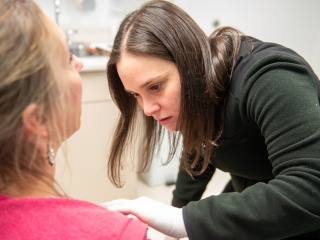
Your first appointment is a one-hour consultation with a plastic surgeon. This visit helps us get to know you, understand your goals and evaluate your face and skin tone. It also helps us set clear expectations for results.
Injectables and dermal fillers are given in the office. Appointments usually take between 15 minutes and one hour.
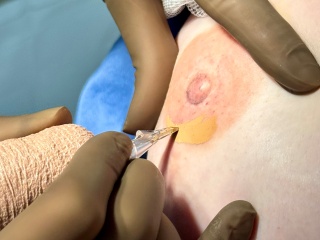
Your provider cleans your skin with an antibacterial cleanser before your injection. Depending on the location and type of injection, they may also numb the injection site with an anesthetic ointment or injection.
Your provider reviews the immediate results with you in a mirror and may add more botulinum toxin or filler as needed.
You can resume normal activities right after your injection. Side effects, if any, are typically mild and may include soreness, swelling or bruising at the injection site. Botulinum toxin injections can also cause a temporary headache.
An ice pack wrapped in a towel applied for a few minutes at a time can help alleviate any discomfort.
After botulinum toxin injections, you should avoid lying down for three to four hours and avoid rubbing the injected areas for 12 hours to prevent the toxin from moving to other parts of your face. You should avoid alcohol on your Botox day, as well as NSAIDs like aspirin, ibuprofen and naproxen sodium.
Because injectables and dermal fillers wear off over time, you will need ongoing injections to maintain their effects.
Locations near you
Share your location to see nearby providers and availability
214 Cornelia Street
Suite 103
Plattsburgh, NY 12901-2332
354 Mountain View Drive
Suite 103
Colchester, VT 05446-5923