Restoring More Than Skin
Healing through 3D nipple tattooing.
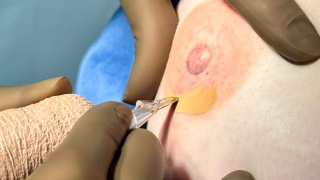
Breast reconstruction frequently involves multiple surgeries and ongoing visits with different teams of providers — a process that can take both a physical and emotional toll.
For many women, the physical recovery from breast surgery is only part of the story. Long after breast cancer treatment and reconstruction ends, the absence of a “normal appearing” breast can leave lasting emotional and psychological scars that affect how patients see themselves and whether healing truly feels complete.
At University of Vermont Health, patients have access to a little-known service that can help restore both appearance and confidence: 3D nipple-areola tattooing.
How 3D Tattooing Works
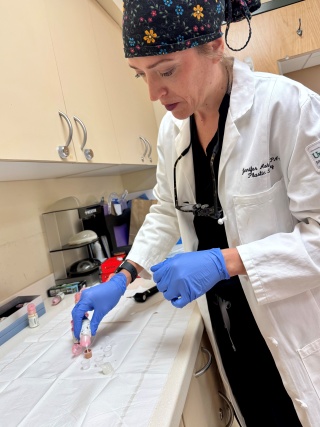
3D nipple-areola tattooing is a specialized medical procedure that uses advanced shading techniques, color blending and precise placement to recreate the appearance of natural nipple and areola. Each tattoo is tailored to the patient’s skin tone, surgical history and anatomy.
The goal is not just cosmetic realism. For many patients, the procedure can offer a sense of closure; it often represents a visual and emotional final step in a long recovery process.
“It’s something I hear again and again,” says Jenn Ashline, PA-C, a physician assistant in plastic surgery at UVM Health who provides the service. “Patients tell me they just want to feel ‘normal’ again.”
Where Medicine Meets Art
Ashline has worked in plastic surgery for nearly a decade and is currently the only licensed medical provider in Vermont offering 3D nipple-areola tattooing. Her position within the reconstructive team allows her to bring both clinical expertise and artistic precision to the process.
Unlike traditional tattooing, medical tattooing takes place in a clinical setting and is designed specifically for patients who have undergone breast surgery. Many have already gone through multiple procedures to rebuild breast shape and symmetry.
Without the nipple-areolar complex, she says, reconstructed breasts can still feel incomplete.
When someone looks in the mirror, that detail makes a difference. It helps complete the picture.
A Personalized Process
No two tattoos are the same. Ashline develops a custom color palette for every patient and applies pigment in layers to create depth, highlights and shadow that mimic the natural contours of the skin. Scar tissue, skin thickness and previous surgeries all influence the approach.
Some patients need only one session. Others return for follow-up visits depending on how their skin heals and how the pigment settles. The aim is not perfect symmetry, but a natural appearance that feels right to the patient.
Why a Medical Setting Matters
Having the procedure performed by a licensed medical provider offers added reassurance. Because Ashline is trained in reconstructive surgery, she can assess scar tissue, healing and potential complications before proceeding.
“It’s a sterile medical procedure,” she says. “That’s important when you’re working with skin that has already been through surgery and healing.”
Care, Closer to Home
For patients in Vermont and Northern New York, local access can make a significant difference. In the past, some traveled long distances to find specialized tattoo artists who could perform similar work, a burden layered onto an already complex recovery. Insurance coverage is often available as well. Federal law requires coverage of breast reconstruction after mastectomy, including procedures needed to restore the breast’s appearance, and many insurers recognize nipple-areola tattooing as part of that care.
The tattooing process also offers patients a way to close an emotionally complex chapter in their lives. She has watched patients stand in front of the mirror after the procedure and cry with relief. Others return for follow-up visits and say they are happy exactly as they are — and finally feel at ease in their own bodies.
“I get a lot out of this work, too,” she says. “At the end of a difficult journey, being able to give someone something that helps them feel whole again is incredibly meaningful.”