Breast Reduction
Breast Reduction at UVM Health
Large, heavy breasts can cause chronic back pain, skin irritation, and difficulty with daily activities and exercise. Breast reduction surgery (reduction mammaplasty) can alleviate these challenges and improve your quality of life. Patients often say that having this surgery changed their lives.
At University of Vermont Health, our skilled plastic surgeons are here to help you look and feel your best. Our team provides exceptional care in a safe and welcoming environment. We take time to understand your goals for surgery and tailor our approach to give you the outcome you’re looking for.
Why Choose UVM Health?
As a leading plastic surgery program in the region, we offer:
- Surgical expertise: You receive care from skilled plastic surgeons dedicated to giving you beautiful, natural results. Many are academic leaders, training the next generation of physicians in the latest surgical techniques.
- Combined procedures: You may combine breast reduction with another surgery, such as a tummy tuck (abdominoplasty) or body sculpting.
- Personalized care: Our entire team is focused on meeting your needs and ensuring your satisfaction. From your first visit, we strive to make you feel supported and confident in your decision to pursue breast reduction surgery.
- Comfort and convenience: Your comfort, safety and privacy are top priorities for our team. With offices in Vermont and northern New York and digital health options for some types of visits, we make it easy to access care.
Types of Breast Reduction
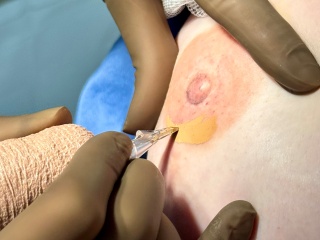
Breast reduction involves removing fat, skin and tissue from the breasts, repositioning the nipple and areola (the pigmented area around the nipple) and reshaping the breast. The result is a breast size that’s proportional to your body.
Our surgeons use different incision patterns when performing breast reductions:
- Lollipop breast reduction (vertical pattern): Uses a circular incision around the areola plus a vertical incision from the bottom of the areola to the breast crease
- Anchor breast reduction (Wise pattern): Uses a lollipop incision plus a crescent-shaped incision along the breast crease
We also use different techniques to maintain the blood and nerve supply from an area of your breast (pedicle) to the nipple and areola. The most common pedicle techniques are:
- Inferior pedicle: Uses blood vessels and nerves from the bottom of the breast
- Superior pedicle: Uses blood vessels and nerves from the top of the breast
Other techniques we may use to give you the best possible results include:
- Areola reduction: Reduces the size of the areola
- Auto-augmentation: Moves tissue from the lower breast to reshape the upper breast, giving it a more rounded shape
- Free nipple graft: Removes the areolas and repositions them higher on the breast. This procedure is usually only necessary for people with very large breasts.
Breast Reduction Consultations
The first step in breast reduction surgery is a comprehensive consultation. In this visit, our experienced surgeons review your options and help you decide which surgery is right for you. We also provide guidance to help you meet the procedure's insurance coverage requirements.
When determining your breast reduction options, our surgeons consider your current breast size and shape and your desired breast size. We also help you make informed decisions about nipple sensation, since numbness is a risk in some breast reduction techniques.
What to Expect
We perform breast reduction surgery in an operating room using general anesthesia. You are asleep during the procedure. You can typically go home the same day. Before you leave the hospital, we provide:
- Instructions on how to care for the surgical incisions
- Medication prescriptions to help manage pain
- Supplies, such as dressings and support garments
Your follow-up care includes a series of office visits to monitor your healing. The most common side effects in the first days after surgery are soreness and swelling. You can typically resume light activity in two weeks and full activity in six weeks.
Throughout your breast reduction journey, we are your partner in care. Should any problems arise, you can turn to us for expert guidance and support.
While scars at incision sites are typical, our skilled surgeons use special techniques to minimize their appearance. Scars may look red at first, but they will fade over time — often becoming barely noticeable. Your care team will provide instructions on how to care for your incisions to minimize scarring.
Patient Resources
Locations near you
Share your location to see nearby providers and availability
214 Cornelia Street
Suite 103
Plattsburgh, NY 12901-2332
354 Mountain View Drive
Suite 103
Colchester, VT 05446-5923