Finding Strength Together
How a Vermont support group is helping long COVID survivors reclaim their lives.
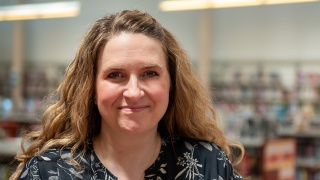
When Jen Whyman first began experiencing the debilitating symptoms of Long COVID, she felt like she was shouting into the void.
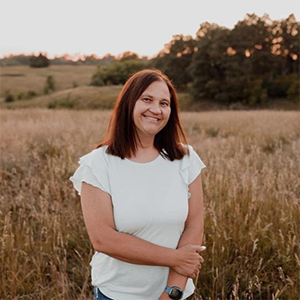
“Nobody believed anything I was saying about how I was feeling,” says the Nebraska-based teacher, who contracted COVID-19 early in the pandemic. “Everyone kept saying it was anxiety or stress. I felt really alone.”
That changed when her speech therapist found the virtual Long COVID Recovery Support Groups hosted by University of Vermont Medical Center. Through the groups, she found not only validation but also practical help managing her Long COVID symptoms.
“It’s been nice to have someone through the dark times, but also through the triumphs,” Wyman says. “Today, I’m preparing to walk a half marathon, something I wouldn’t have thought possible a couple of years ago without the support of this group.”
Origins In the Pandemic
UVM Medical Center’s Long COVID support groups began in October 2020, a collaboration between three clinicians on the front lines of the pandemic: David Kaminsky, MD, and Katherine Menson, DO – both critical care physicians and pulmonologists – and Suzanne Lawrence, a physical therapist and clinical research educator. The support groups have since grown into a lifeline for hundreds of people.
Although the majority of COVID patients recover within two to three weeks, a significant number of people continue to experience persistent symptoms and health issues long after their initial recovery. This chronic condition, also known as Long COVID, is still being studied. People with Long COVID often experience dozens of overlapping symptoms, from persistent fatigue and neurological issues to muscle weakness, joint pain and depression, among many others.
With over 250 participants from across the country and abroad, the virtual support groups offer both emotional support and medical insight backed by academic research, providing the latest clinical findings and symptom management strategies. One group – facilitated by Gretchen Kitsos, a licensed clinical social worker – is dedicated solely to Vermonters. The other is hosted by Dr. Menson, Dr. Kaminsky and Julia O’Shea, pulmonary rehab lead at UVM Medical Center, and the group welcomes people from as far away as Denmark and California.
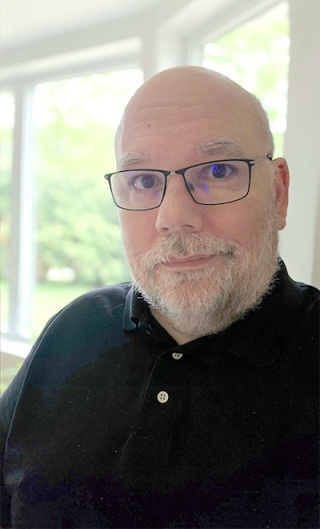
For Joseph Grabowski of Woodsville, New Hampshire, the groups were a revelation. “Hearing other people’s stories was also my story – it was incredibly validating,” Grabowski says.
Grabowski, who works in Vermont supporting individuals with intellectual disabilities, was hit hard by COVID in late 2019, before reliable tests were available. Now, Grabowski balances his work as a training and communication specialist with his Long COVID symptoms.
“Most people have moved on from COVID, and I don’t think they realize just how many of us are still struggling with this,” says Grabowski. “We can be very present in the world, but with Long COVID, we’re operating in low battery mode all the time - I can’t predict when I’m going to crash.”
Grabowski says the support group has improved his quality of life. “There’s great camaraderie. Not feeling so alone makes a huge difference.”
Helping People Feel Seen, Heard and Supported
Julie St. Martin, a Vermont teacher, was among the first wave of Long COVID patients. She got sick in March 2020, just as schools were closing. “Despite being sick, I was still teaching online,” she recalls. “I can look back at those videos now and see myself gasping for breath between sentences. At the time, we’d been told that unless we needed to be hospitalized, we’d be fine in a couple weeks."
For months, doctors dismissed her post-COVID symptoms as depression. “I couldn’t make it up stairs, and they told me I was just depressed,” says St. Martin, who initially sought help at Mount Sinai in New York, where her symptoms were finally acknowledged. “The relief I felt at that validation was huge.”
St. Martin joined UVM Medical Center’s Long COVID support group early on and has remained a steady presence. “It’s reassuring every time—you’re not the only one with these symptoms that seem so crazy,” she says. “It also feels good when you feel like you’re helping someone else, especially newcomers to the group.”
Kristine Buck, the program coordinator, sees that sense of connection as vital. “This group was created to offer a space where people could feel seen, heard and supported,” Buck says, who also serves as the hospital’s program and resource coordinator for patient and family advocacy.
“We’ve watched people go from feeling isolated and dismissed to finding community and hope.”
St. Martin agrees. “The doctors who facilitate the group are so patient and compassionate. There are people in our group who still haven’t found a primary care doctor who believes them. That’s heartbreaking.”
While the group doesn’t offer a cure, it offers something very powerful: understanding. “We talk about treatments - what works for one person might not work for another,” St. Martin says. “But we share, we listen and we support each other.”
As the world moves on from COVID, Julie, Joseph and Jen are still navigating its aftermath. “Five years is a long time,” St. Martin says. “But this group reminds me I’m not alone. And that means everything.”
Struggling with Long COVID?
Our support groups are open to all patients, family members and caregivers experiencing the impact of Long COVID. To learn more or register please contact: COVID19RecoverySupport@UVMHealth.org.