5 Ways to Make E-bikes Safe
What parents and riders should know before hitting the road
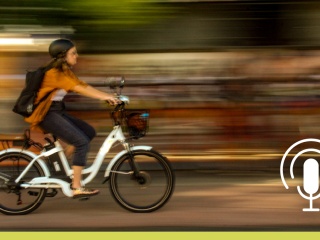
E-bikes are growing in popularity, offering a convenient way to get around and enjoy the outdoors. But emergency departments around the country are also seeing a risk in e-bike related injuries, many of them more severe than injuries from traditional pedal bicycles.
“Especially for adults, e-bikes can be a great form of transportation,” says Rebecca Bell, MD, MPH—a pediatric critical care physician with University of Vermont Health and professor of pediatrics at Larner College of Medicine. "We want people to be able to use them safely, but we're concerned with the number of injuries we're seeing,”
Because e-bikes can travel at higher speeds and are heavier than traditional pedal bicycles, riders may have more difficulty balancing, maneuvering and stopping. “The injuries are more severe, including more severe head injuries, abdominal injuries and orthopedic injuries.”
Parents should understand that not all e-bikes are the same. Some products marketed as e-bikes more closely resemble electric motorcycles, capable of higher speeds and requiring a different level of skill and supervision. “The term e-bike is often used as a catch-all phrase,” says Stephanie Busch, MPH, the injury prevention programs coordinator for University of Vermont Health. "People don't necessarily realize what they're getting their kids.” Despite how these devices may be advertised by deceptive online retailers, these “e-motos” are often classified and regulated as electric motorcycles.
The term e-bike is used often as a catch-all phrase for what really would be considered e-micromobility, which would include e-bikes as well as e-motorcycles, and people don't necessarily know what they're getting their kids or what they're really getting onto.
5 ways to improve e-bike safety
If you’re thinking of getting an e-bike for your child, here are some things to take into account, according to our safety experts.
- Consider whether your child is ready.
The Consumer Product Safety Commission says children under the age of 12 should not ride e-bikes. But age alone isn’t enough, says Dr. Bell. Parents should consider a child’s maturity, judgment and ability to follow safety rules, even when no one is watching. "There are a lot of 13, 14-year-olds that are not ready for any type of e-bike,” says Dr. Bell. All e-bike riders should be comfortable riding traditional pedal bicycles and understand the rules of the road. Review the e-bike readiness checklist before purchasing an e-bike for your teen. - Start with a Class 1 e-bike.
A class 1 e-bike provides pedal assistance with a max assist speed of 20 MPH but does not have a throttle. Throttle-equipped bikes can accelerate quickly and may be harder for inexperienced riders to control. “It can really throw you and cause injuries if something unexpected happens and you're panicking,” says Busch. - Require a properly rated helmet.
Traditional pedal bike helmets are designed for lower speed crashes. Busch recommends choosing a helmet appropriate for higher speed riding and ensuring it fits correctly. The Dutch Safety NTA 8776 Standard is designed specifically for e-bike speeds. A light motorcycle helmet is also a good option. - Buy certified batteries and chargers.
E-bikes use lithium-ion batteries, which can pose a fire risk if poorly manufactured or damaged. Purchase high quality, certified batteries and replacement parts from reputable manufacturers and follow charging instructions carefully. - Set clear family rules.
Before your child rides, establish expectations about speed, passengers, road use and helmet wear. Talk openly about the risks of reckless and distracted riding and remind teens that e-bikes require more skill and responsibility than traditional pedal bicycles. Review and sign the family e-bike agreement.
“We want parents to really understand what they're buying and talk to their teens about how to use e-bikes safely,” says Dr. Bell. "We want to promote independence, but we want kids to get home safely, too.”