Safer Homes, Greater Independence
How a home safety program helps patients maintain independence and avoid falls.
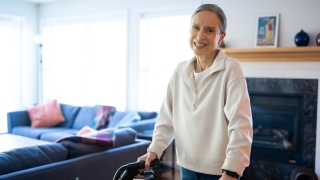
Helen Scott’s multiple sclerosis had made taking a shower feel like an extreme sport.
In recent years, the disease had increasingly limited her ability to walk, turning everyday activities at home into potential hazards. Getting in and out of the shower required careful planning, and a slippery bathroom floor could mean a serious fall. With declining mobility came grief, fear and a growing sense of lost independence.
Late this summer, during a wheelchair evaluation at the Fanny Allen Rehabilitation Clinic, Scott learned about a program called Home Interventions for Safety Solutions (HISS).
Through the program, UVM Medical Center paramedics visit patients at home, assess health and safety risks, develop personalized safety plans and help make practical modifications such as installing grab bars, handrails and anti-slip mats.
A Home Built for Safety
Shortly after her visit, Lisa Servino, a paramedic with UVM Health’s Mobile Integrated Health team, conducted a home safety assessment at Scott's home. Fellow paramedic Nick Deavitt followed up to evaluate the improvements Scott needed and install them. By the end of September, Scott had two new grab bars in her bathroom and a plan for making her home safer and more accessible in the years ahead.
A Letter of Gratitude
Moved by the experience, Scott wrote a letter to the team. With her permission, we are sharing an excerpt here.
As anyone facing decreased mobility knows, grief and fear can be overwhelming and lead to feelings of helplessness, hopelessness and loss of control. When Lisa and Nick came into my home, they brought not only empathy and competence but also a wave of positive energy that countered all the negativity that’s out there. I felt good about taking measures to increase my independence in the domestic realm, but I also felt encouraged and moved that there are people in the world like Lisa and Nick who genuinely want to improve the lives of others and have taken measures to do so. They were both passionate about and dedicated to their mission, and it was a pleasure to meet and work with them.
I am so impressed, and frankly somewhat stunned, that a program like this exists. From every perspective, it is compassionate and practical. All too often traumatic falls could have been prevented with some simple technical fixes. But people with impaired mobility are typically not in the position to make these changes themselves. We are physically limited, financially strapped due to decreased earning power, and short on time and energy due to the burdens of living with disability. That’s when an intervention from [this] team makes a world of difference.
Now that I have grab bars in my bathroom, I am much more secure. Taking a shower no longer seems like an extreme sport! I wonder how on earth I was managing before and feel grateful that I was able to make this change before having a serious accident. It makes me happy to know that Home Interventions for Safety Solutions is giving the same experience to other Vermonters, saving who knows how many trips to the emergency room.
So, I extend my heartfelt gratitude, to Nick, Lisa, and the other paramedics; to UVM Medical Center for supporting their work; and to the foundations and individuals who provide financial backing.
More About Mobile Integrated Health
The Home Interventions for Safety Solutions (HISS) program is part of UVM Health’s Mobile Integrated Health team, which brings care and support to patients where they are and connects them with the services they need.
In addition to HISS, Mobile Integrated Health offers:
Heart Failure Care at Home: Mobile Integrated Health paramedics visit patients with congestive heart failure at home after a hospital stay, helping them manage their condition and reduce the risk of readmission.
Street Medicine: Paramedics and volunteer health care professionals partner with community organizations to deliver low-barrier health care to people who may have difficulty accessing traditional medical services in the Burlington area.
Learn more about the Home Interventions for Safety Solutions program.