Caring Hands, Guided by Experience
A skilled LNA mentors a student in the field.
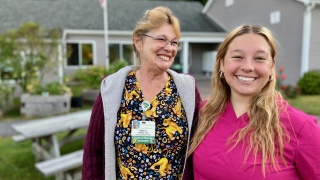
It’s 8:05 am and Sheila Kleptz and Amber Doyle are already laughing. Sheila, a licensed nursing assistant (LNA) at University of Vermont Health – Home Health & Hospice with over two decades of experience, and Amber, a junior at University of Vermont who recently completed her LNA training, are about to begin a morning of home visits across Chittenden County. As a community LNA, Amber is balancing her academic journey with hands-on care.
Kick-start. Sheila sips Dunkin’ drip coffee from her thermos while Amber fuels up with a Celsius “Playa Vibe” sparkling piña colada-flavored energy drink. “It’s like Red Bull, but supposedly better for you” Amber explains.
Pep talk. Sheila checks the schedule and confirms the care plan. “You’re going to make mistakes a couple times before you remember,” Sheila says. “But those mistakes, so long as they’re nothing major, are what make us learn faster.”
First visit. Inside, they provide personal care for an adult home care client. They give him a bath in his wheelchair and help with compression stockings, which improve circulation and reduce swelling in the legs. Because he’s managing a pressure injury and awaiting surgical care, their focus is on gentle bathing and safe positioning.
Dialing in. Before going in for their next visit, Sheila walks Amber through the Telephony system, a touch-tone phone app used to track time and visits. “Everybody’s worst nightmare,” Sheila says with a grin, “because of all the codes.” Amber nods, tapping through the steps. “You’ll get there,” Sheila assures her. “Remembering that stuff will be automatic.”
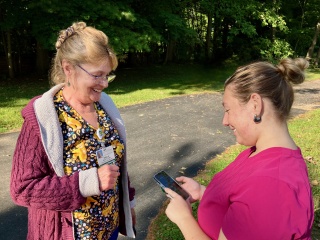
Second visit. At this home, Sheila and Amber provide care for a bedbound man on hospice. They complete a full bed bath — washing his hair in bed, applying lotion and dressing him slowly to protect a painful left shoulder.
Learning curve. Heading back to their cars after the visit, Sheila and Amber share another laugh as they troubleshoot the app together. Sheila puts it all in perspective. “I always tell people, ‘I have more confidence in you than you think. Accept your best as good enough and strive for a better day tomorrow.’”
Detour ahead. En route to the next visit, traffic delays push their schedule back. Before going in, Sheila dials a later client to reschedule. Her voice is calm and reassuring. The call goes well. “We can only control what we can control,” she says afterward. “The scheduler sends us where we’re needed, and we make it work.”
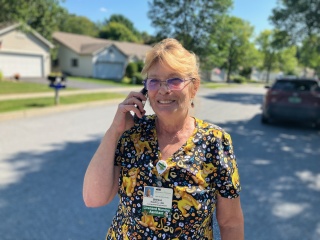
Third visit. They go in to see another hospice patient. Today the care centers on a bed bath and nail care — clipping fingernails and toenails — so she feels clean and comfortable. No shower today, just quiet, unhurried support that meets her where she is.
Gut check. Back outside, their conversation shifts toward the subtler challenges of supporting clients who may be agitated due to their circumstances. “It’s part of learning,” Amber says. “You can’t take it personally.” Sheila nods and says, “If you ever get into a situation where you feel like you can’t turn it around, take a breather. Step outside. If you can go back in and finish, great. If not, call the office. We’re human.”
Time well spent. By early afternoon, they’ve arrived at their fourth location. The pace hasn’t slowed, but there's no sense of hurry. Sheila reflects on what keeps her grounded in the work. “Some of these older people, they want your ear,” she says. “And I don’t rush them.” Amber nods. “You have more time than in acute care,” she adds. “That’s one of the wonderful things about this job.”